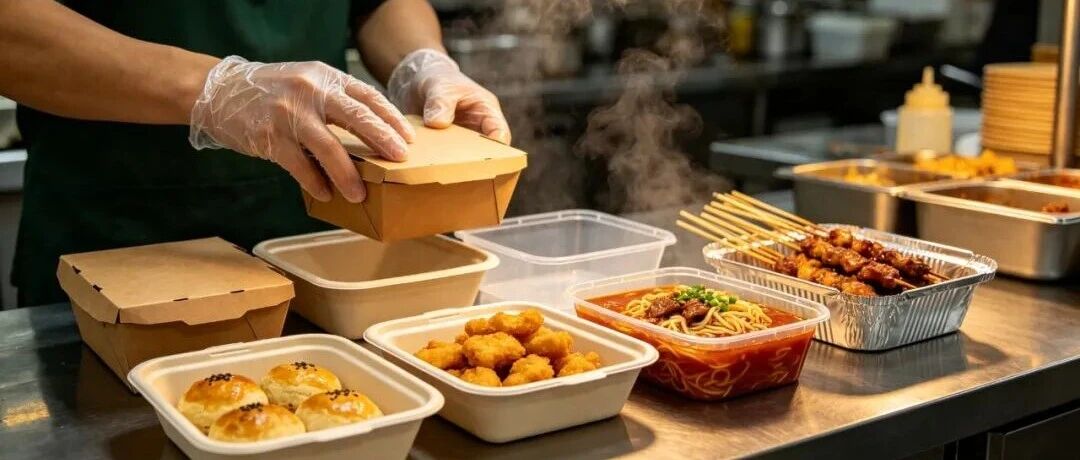
一只纸杯能盛热饮、能热封、能大批量生产,PE淋膜功不可没。PE是聚乙烯,其中的LDPE(低密度聚乙烯)是常见淋膜材料。成熟的原料、设备与工艺,让纸杯、纸碗等制品完成了上一轮规模化。
今天,品牌采购正在把更多要求放进同一个包装决策:功能层用了多少材料,纸纤维能否有效回收,生产过程怎样控制排放,以及产品在目标市场使用后如何处理。
规则与品牌行动已经给出具体信号。欧盟将带塑料涂层的纸杯纳入一次性塑料制品规则;《包装和包装废弃物法规》(PPWR)要求在2028年前制定可回收设计细则,并从2030年1月1日或相关细则生效满24个月的较晚日期,实施相应要求。星巴克也已在部分欧洲市场以矿物涂层替换杯内塑料衬层。法规节点与采购动作,共同推动包装结构升级。
水涂纸提供了一条重要的技术路径:把水性乳液或分散体涂在纸上,干燥后形成阻隔或热封功能层。Michelman公开资料列明,Michem Coat 9100已在20多个国家取得可回收认证,相关验证以典型热饮杯结构为对象。水性涂层已经进入实际产品开发,竞争也随之深入到制造效率、使用体验和使用后的处理方式。
PE淋膜建立了纸基餐饮包装的规模化基础。水涂纸的下一轮价值,要由功能、制造与循环共同兑现。
研究资料:欧盟|一次性塑料制品指引、欧盟|包装法规原文、星巴克|欧洲新纸杯、Michelman|水性纸杯涂层。
水性只是施工方式,
减量要看干膜
水性描述的是涂料的分散介质。水在干燥后离开,留下的聚合物通过覆盖、成膜和与纸纤维结合,承担耐水、耐油或热封任务。基纸孔隙、表面状态、涂布均匀性和干燥条件,都会影响这层膜能否连续、稳定地工作。
减量确有工程空间。巴斯夫与都佰城公开的一项实验室杯纸测试,用8—12克/平方米干涂量的水性丙烯酸酯分散涂层,与涂层用量20—25克/平方米的商业挤出淋膜纸杯对照;在其热水、热咖啡等测试条件下,液体阻隔表现接近。这为薄层化设计提供了具体案例,也说明减少用量需要和成膜、附着及最终用途一起设计。
企业核算用量时,应把底涂、功能层、封合层和生产损耗一并计入,再比较同等使用目标下的干燥负荷、线速与良率。PE与PLA(聚乳酸)淋膜可以按完整成品结构对照;EVOH(乙烯—乙烯醇共聚物)主要承担氧阻隔,则应放回包含阻氧、耐液和封合要求的完整包装中评价。
减量的价值,是同等功能下少用材料,并把更多投入变成合格成品。
研究资料:BASF、DBC|指定纸杯纸水性涂层对照、Kuraray|EVOH气体阻隔用途。
从原液到成品,
安全不能跳步
食品接触合规要落在具体牌号、添加剂、供应批次、加工方式和成品用途上。采购环节应核对适用范围、合规声明和批次信息,避免未经食品接触适用性确认的工业用途材料混入生产。已实施的GB 4806.10—2025《食品接触材料及制品用涂料及涂层》,为相应产品提供了明确要求。
博碳关注上机前的原料适用性、杂质与残留单体控制。对甲醛等特定物质,应结合原料、助剂及生产过程识别来源;挥发性有机物(VOC)含量也应采用适用方法检测。进入涂布和干燥环节,再关注车间逸散、人员暴露与排放。完成制品后,按食品类型、接触温度和时间验证迁移及感官等指标。
相对于溶剂型涂布,以水为分散介质有助于减少有机溶剂使用。生态环境法典和相关治理政策也支持低VOC原辅材料。源头残留控制、生产排放与成品迁移分别对应不同环节,结合起来,才能同时服务食品安全、生产环境和稳定交付。
博碳将产品开发方向概括为:源头减量、末端循环、降解可选。在保证功能的前提下优化材料用量,让完整纸品更好地适配纤维回收;对适合堆肥处理的应用,再建立对应的产品与处理路径。每一种选择,都服务具体客户和使用场景。
研究资料:国家卫健委|食品接触涂层标准公告、生态环境部|低VOC源头替代、生态环境部|生态环境法典、Davis-Standard|挤出淋膜工艺。
同是水涂,
材料路线决定下一程
EAA(乙烯—丙烯酸共聚物)可提供纸纤维附着、柔韧和热封等能力;丙烯酸水性体系具有较宽的配方调节空间,已有产品用于耐水、耐油及可再浆纸包装。不同牌号和配方,让行业积累了丰富的功能选择。
理解生物基复合乳液,还要看清另外两个维度:生物基描述原料来源,复合强调组分协同;它们与聚合物类型可以交叉。复合配方的价值,在于围绕一个产品目标,把成膜、附着、阻隔、热封及使用后的处理需求协调起来。
PHA(聚羟基脂肪酸酯)为这类开发增加了生物基聚合物的选择。微构工场与都佰城,日本制纸与Kaneka开发的PHA相关热封纸,已用于bioten食品外包装。生物基材料与纸基涂工的结合,已有实际商品应用。
博碳PHA水性复合乳液,属于BIOTEN Plus产品体系,以PHA相关生物基材料为基础,面向纸与纸板包装的阻水、阻油、热封及加工适配。它的开发重点,是把材料性能与原纸、涂布、印刷和成型条件配合起来,形成可持续迭代的应用方案。
博碳对这一路线在阻隔、热封与加工适配上的组合表现有信心,也欢迎客户把现用EAA或丙烯酸方案放在相同基纸和成品目标下比较。性能强在哪里,让客户的产线和成品说话。
对于需要开发堆肥路径的客户,BPI公开目录列有博碳包装4108牌号的涂层组件,并列明工业堆肥和家庭堆肥的适用信息。都佰城虽然自称BIOTEN PRO是满足BPI家庭堆肥认证的主力产品,事实上,使用博碳plus涂布纸做成的餐饮具制品也是能满足堆肥降解的相关认证的,这为选材提供了可核查的基础;形成纸杯、包裹纸或餐盒后,再按完整结构与目标市场要求完成对应评价。
长期价值来自两种能力:把今天的产品做成,让下一阶段的升级有路可走。
研究资料:SK|EAA纸涂层、Dow|丙烯酸水性阻隔涂层、日本制纸|PHA热封纸应用、BPI|博碳涂层组件目录。
进入长期采购,
要交出一张对照账
品牌采购的是可靠的使用结果:纸张不渗漏、折后仍有阻隔;原纸与涂层适配,热封和成型能够稳定量产;食品接触、材料声明与后续处理路径经得起目标市场核查。这是纸厂、涂布厂与材料商共同面对的采购门槛。
比较不同方案,可以先在同一基纸上看材料差异,再围绕同一成品目标优化各自的结构和工艺。记录干涂量、折后阻隔、热封、抗粘连、线速和良率,把材料、检测、能耗与废品一起算进每千件合格包装的总成本。使用后的处理方式,则结合完整制品测试与目标市场的实际体系评价。
博碳愿意与造纸、涂布和包装加工伙伴,从一组实际对照开始共同开发。纸厂把原纸优势带入具体场景,涂布厂建立稳定工艺,加工企业验证折包与成型,博碳提供材料匹配和应用开发支持。围绕一个明确的产品目标,把各自的专长做深,合作才会形成持续的价值。
让材料成为稳定交付的产品,让产品成为客户持续选择的理由,这才是水涂纸值得投入的长期生意。
我们不改变纸的样子,却改变纸能去的地方。
研究说明
本文由博碳包装依据监管及企业公开资料、认证目录与产品研究整理,核验截至2026年9月24日,供产业研究学习,不构成采购或性能保证。产品适用性以对应结构、目标市场与有效文件为准。如需修改、说明或删除,请联系本公众号,我们将在收到后24小时内核查处理。
博碳观察数据与核验来源
SK Functional Polymer|EAA水性纸涂层
BASF |指定纸杯纸水性阻隔涂层对照
DBC|含生物基原料的丙烯酸水性乳液
Davis-Standard|PE等材料的挤出淋膜设备与工艺
Kuraray|EVOH气体阻隔用途
Michelman|可回收热饮纸杯水性涂层
欧盟委员会|PPWR应用说明
欧盟|一次性塑料制品指引、PPWR法规原文
星巴克|欧洲矿物涂层纸杯推出公告
生态环境部|《中华人民共和国生态环境法典》
生态环境部|《重点行业挥发性有机物综合治理方案》
国家卫健委|食品接触用涂料及涂层标准公告
国家卫健委|食品接触用塑料材料及制品标准公告
日本制纸|PHA热封纸商业应用
BPI|博碳涂层组件目录
博碳包装|Plus项目路线
PE extrusion coatings have played a major role in making paper cups suitable for hot drinks, heat sealing and high-volume production. PE stands for polyethylene; LDPE, or low-density polyethylene, is a common extrusion-coating material. Established materials, equipment and processes enabled the previous wave of scale-up in paper cups, bowls and similar products.
Today, brand buyers are bringing more requirements into a single packaging decision: how much material the functional layer uses, how effectively paper fibers can be recovered, how emissions are controlled during production, and how the product will be managed after use in its target market.
Regulation and brand initiatives are sending concrete signals. EU rules on single-use plastics cover paper cups with plastic coatings or linings. The Packaging and Packaging Waste Regulation (PPWR) requires design-for-recycling criteria to be established by 1 January 2028, with the corresponding requirements applying from 1 January 2030 or 24 months after the relevant delegated acts enter into force, whichever is later. Starbucks has also begun replacing plastic cup linings with a mineral-based coating in selected European markets. Regulatory deadlines and purchasing decisions are together driving changes in packaging structures.
Water-based coated paper offers an important technical route: an aqueous emulsion or dispersion is applied to paper and dried to form a barrier or heat-sealable layer. Michelman states that Michem Coat 9100 has recyclability certifications covering more than 20 countries, with the relevant assessments based on typical hot-cup constructions. Water-based coatings are already part of commercial product development, shifting competition toward manufacturing efficiency, user experience and end-of-life options.
PE extrusion coatings provided the foundation for scaling paper-based foodservice packaging. The next phase of value in water-based coated paper must deliver across performance, manufacturing and circularity.
Research sources: European Union — single-use plastics guidelines and PPWR legal text; Starbucks — new European paper cup; Michelman — water-based cup coatings.
Water-based describes the application medium;
material reduction depends on the dry coating
Water-based describes the medium in which coating ingredients are dispersed. The water leaves during drying, while the remaining polymers provide water resistance, grease resistance or heat sealability through surface coverage, film formation and bonding with paper fibers. Base-paper porosity, surface condition, coating uniformity and drying conditions all affect whether the film performs continuously and consistently.
There is engineering scope to reduce material use. BIOTEN cites a laboratory cupstock comparison attributed to BASF and DBC: a water-based acrylic dispersion coating at a dry coat weight of 8–12 g/m² was compared with commercial extrusion-coated cups using 20–25 g/m² of coating. According to the article’s account, liquid-barrier performance was similar under the specified hot-water and hot-coffee test conditions. These figures refer to that reported comparison, rather than a general performance guarantee. Lower coat weights must be developed together with film formation, adhesion and the intended end use.
Material-use calculations should include primers, functional layers, sealing layers and production losses. Drying demand, line speed and yield can then be compared for the same end-use requirements. PE and PLA (polylactic acid) extrusion coatings should be assessed as part of complete finished structures. EVOH (ethylene vinyl alcohol copolymer), primarily used for oxygen-barrier performance, should likewise be evaluated within a complete package that also meets liquid-resistance and sealing requirements.
The value of material reduction is to use less material for equivalent performance and turn a greater share of inputs into conforming finished products.
Research sources: BASF and DBC — reported water-based cupstock coating comparison; Kuraray — EVOH gas-barrier applications.
From liquid formulation to finished product,
safety requires checks at every stage
Food-contact compliance must be assessed for the specific material grade, additives, supply batch, processing conditions and finished-product use. Procurement teams should check the intended scope of use, declarations of compliance and batch information to prevent industrial materials with unverified food-contact suitability from entering production. China’s GB 4806.10—2025, the national food safety standard for paints and coatings used in food-contact materials and articles, is now in effect and sets requirements for the products within its scope.
BIOTEN focuses on raw-material suitability and the control of impurities and residual monomers before materials reach the coating line. Potential sources of specific substances, such as formaldehyde, should be identified across raw materials, additives and production processes. Volatile organic compound (VOC) content should also be measured using an applicable method. During coating and drying, attention shifts to fugitive emissions, worker exposure and releases to the environment. Finished articles then require migration, sensory and other relevant testing for the intended food type, contact temperature and duration.
Compared with solvent-based coating, using water as the dispersion medium can reduce organic-solvent consumption. China’s Ecological and Environmental Code and related pollution-control policies also support low-VOC raw materials and auxiliaries. Residual substances at source, production emissions and migration from finished articles are distinct issues at different stages. Addressing them together supports food safety, workplace conditions and consistent delivery.
BIOTEN summarizes its product-development direction as: reduce material use at source, enable circularity after use, and offer biodegradation where appropriate. Material use is optimized while maintaining performance, with complete paper products designed to support fiber recovery. For applications suited to composting, the corresponding products and treatment pathways must be developed. Each choice should serve a specific customer and use case.
Research sources: National Health Commission of China — food-contact coating standard announcement; Ministry of Ecology and Environment — low-VOC substitution policies and the Ecological and Environmental Code; Davis-Standard — extrusion-coating processes.
Water-based coatings share a process;
the material system shapes what comes next
EAA (ethylene acrylic acid copolymer) can provide adhesion to paper fibers, flexibility and heat sealability. Water-based acrylic systems offer considerable formulation flexibility, with products already used for water-resistant, grease-resistant and repulpable paper packaging. Different grades and formulations give the industry a wide range of functional options.
Two further dimensions matter when discussing bio-based composite emulsions: bio-based describes feedstock origin, while composite describes how components work together. Both can overlap with different polymer types. The value of a composite formulation lies in coordinating film formation, adhesion, barrier performance, heat sealing and end-of-life requirements around a defined product objective.
PHA (polyhydroxyalkanoates) adds a bio-based polymer option for this work. DBC reports working with Bluepha on PHA-based paper-packaging materials. Separately, Nippon Paper has developed heat-sealable paper using Kaneka’s Green Planet biodegradable polymer; its heat-sealable paper range targets applications including secondary food packaging. These developments illustrate the opportunities for combining bio-based materials with paper-coating technology.
BIOTEN describes its PHA water-based composite emulsion as part of the BIOTEN Plus product system. Based on PHA-related bio-based materials, it is developed for water resistance, grease resistance, heat sealing and processing compatibility in paper and paperboard packaging. Development focuses on matching material properties with the base paper, coating, printing and forming conditions to create applications that can be refined over time.
BIOTEN is confident in the combined barrier, heat-sealing and processing performance of this approach, and welcomes comparisons with customers’ existing EAA or acrylic systems using the same base paper and finished-product requirements. Let the customer’s production line and finished products demonstrate the difference.
For customers developing a composting pathway, BPI’s public directory lists BIOTEN grade 4108 as a coating component, with commercial- and home-compostability information. DBC identifies BIOTEN PRO as a principal product for BPI home-compostability certification and states that foodservice articles made with BIOTEN Plus-coated paper can also meet applicable compostability certification requirements. Such finished-product claims must be supported by the certificate and scope for the specific article; a component listing alone does not establish certification of every cup, wrap or food container. Complete structures must be evaluated against the requirements of the target market.
Lasting value comes from two capabilities: making today’s products work and creating a practical route to future improvements.
Research sources: SK Functional Polymer — EAA paper coatings; Dow — water-based acrylic barrier coatings; Nippon Paper — PHA-related heat-sealable paper development; BPI — BIOTEN coating-component directory.
To become a long-term supplier,
provide a measurable comparison
Brand buyers purchase dependable outcomes: paper that does not leak and retains its barrier after folding; compatible base papers and coatings that support consistent heat sealing and forming at scale; and food-contact documentation, material declarations and end-of-life options that stand up to scrutiny in the target market. Paper mills, coaters and material suppliers face these requirements together.
Comparisons can begin on the same base paper to isolate material differences, followed by optimization of each structure and process for the same finished-product objective. Record dry coat weight, barrier performance after folding, heat sealing, blocking resistance, line speed and yield. Include materials, testing, energy and rejects in the total cost per 1,000 conforming packaging items. Assess end-of-life options using tests on the complete article and the systems actually available in its target market.
BIOTEN welcomes joint development with papermakers, coaters and packaging converters, starting with a practical comparative trial. Paper mills bring the strengths of their base papers to a defined application; coaters establish consistent processes; converters validate folding, wrapping and forming; and BIOTEN supports material selection and application development. Cooperation creates lasting value when each partner deepens its expertise around a clear product objective.
Turning materials into products that can be delivered consistently, and products into a reason for customers to keep choosing them: that is the long-term business case for water-based coated paper.
We do not change how paper looks. We change where it can go.
Research note
This article was prepared by BIOTEN Packaging using public regulatory and company materials, certification directories and product research, with a review date of 24 September 2026. It is intended for industry research and learning and does not constitute a procurement recommendation or performance guarantee. Product suitability depends on the specific structure, target market and valid supporting documents. For corrections, clarification or removal requests, please contact this official WeChat account. We will review and address requests within 24 hours of receipt.
BIOTEN Insights: data and verification sources
SK Functional Polymer — water-based EAA paper coatings
BASF — reported comparison of water-based barrier coatings for specified cupstock
DBC — water-based acrylic emulsions containing bio-based feedstocks
Davis-Standard — equipment and processes for extrusion coating with PE and other materials
Kuraray — EVOH gas-barrier applications
Michelman — water-based coatings for recyclable hot-drink cups
European Commission — PPWR implementation guidance
European Union — single-use plastics guidelines and PPWR legal text
Starbucks — announcement of mineral-coated paper cups in Europe
Ministry of Ecology and Environment of China — Ecological and Environmental Code of the People’s Republic of China
Ministry of Ecology and Environment of China — Comprehensive Control Plan for Volatile Organic Compounds in Key Industries
National Health Commission of China — standard announcement for food-contact paints and coatings
National Health Commission of China — standard announcement for food-contact plastic materials and articles
Nippon Paper — PHA-related heat-sealable paper development
BPI — BIOTEN coating-component directory
BIOTEN Packaging — Plus product-development approach