中国造纸二十强 · 第18位
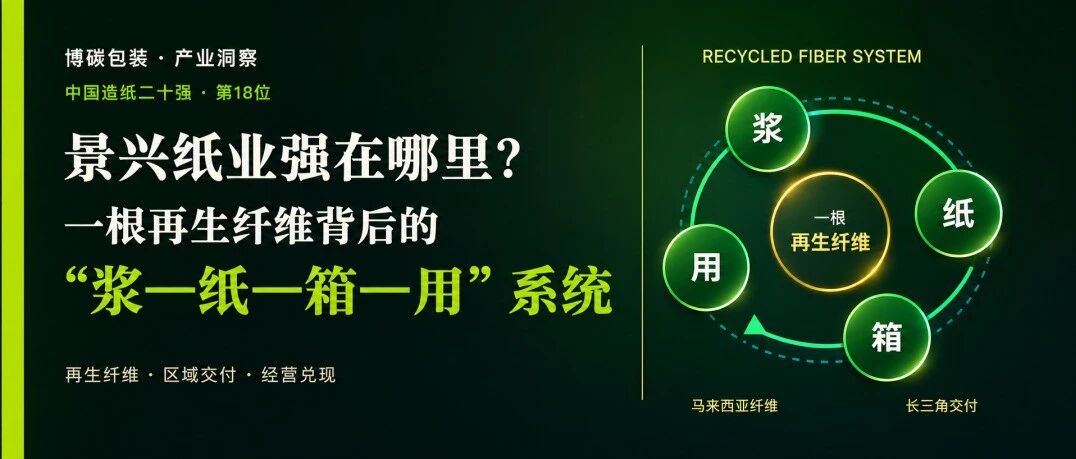
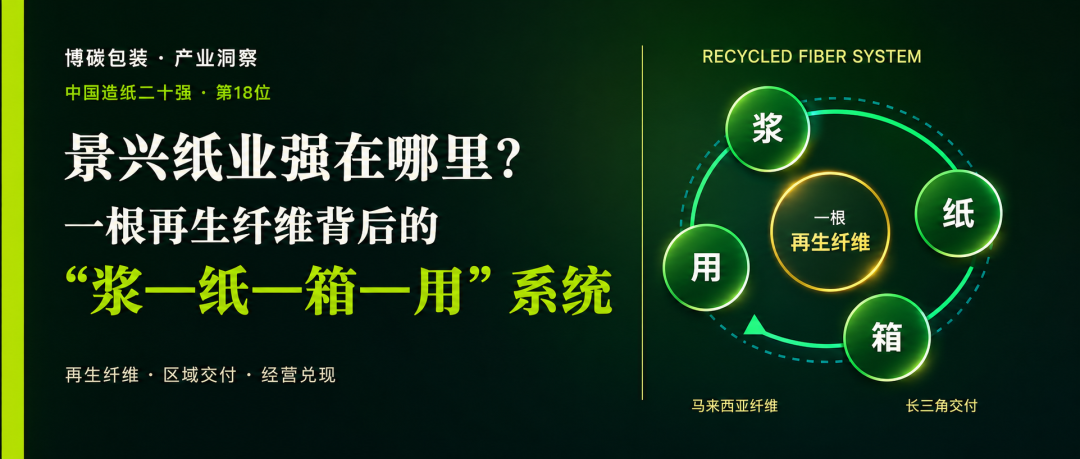
景兴纸业强在哪里?一根再生纤维背后的“浆—纸—箱—用”系统
从马来西亚再生浆、长三角包装原纸到纸箱和再生生活纸,拆解景兴的循环制造底盘,以及这套系统仍需兑现的五道门。
景兴真正的强,不只是一张箱板纸,也不只是把产能建到马来西亚。它正在把长三角回收纤维、海外再生浆、工业包装原纸、纸板纸箱和再生生活纸,组织成一套“浆—纸—箱—用”的循环制造系统。
这套系统已经有真实产量,却还不是完整闭环。再生浆利用率、纸箱盈利、TM7试产和马来西亚二期爬坡,决定产业链布局能否变成有效产能。
协会169.26万吨为2025年度重点造纸企业产量;年报产品、产量与财务为上市公司合并或事业部口径;设计产能、试生产、企业表述和实际利润分开。
企业坐标|2025年
169.26 万吨 协会调查产量,位列第18位。
155.13 万吨 公司包装原纸产量。
49.24 万吨 马来西亚一期再生浆产量。
章节01 · 规模坐标
第18位只是坐标,真正的看点是纤维怎么流动
协会排名回答“做了多少纸”,不能直接回答“为什么能持续做”。景兴的基本盘仍是牛皮箱板纸、瓦楞原纸和白面牛卡纸。2025年,公司包装原纸产量155.13万吨、销量148.35万吨,收入40.16亿元。
公司年报披露,包装原纸保持“国产废纸为核心、进口再生纤维浆补充长纤维缺口”的采购结构,国产废纸按采购重量约占80%。它要同时处理国内废纸价格与质量波动、优质长纤维缺口,以及进口再生浆的监管和物流不确定性。
2025年,马来西亚一期生产再生浆49.24万吨,对外销售30.64万吨,同时自用消耗22.27万吨。销售、自用与当期产量不能简单相加,因为还涉及期初库存和内部流转。真正值得关注的不是“海外有80万吨产能”,而是纤维能否稳定达到不同纸种的强度、洁净度和成本要求。
研究资料:中国造纸工业2025年度报告;景兴纸业2025年年度报告
章节02 · 海外纤维
马来西亚不是孤立浆厂,而是纤维配置的第二支点
景兴披露,海外再生浆分为不同等级,已在箱板纸、本色擦手纸、水泥袋纸、本色卫生纸等产品中开展应用。海外回收纸先经过分选、制浆和干燥,再以浆板形式进入市场;纸厂仍要据纤维长度、杂质、强度和成本决定替代比例。
2025年,马来西亚一期全年产能利用率61.55%,12月单月达到96.49%;全年再生浆板业务毛利率仍为-8.60%。到2026年上半年,该业务收入4.10亿元,毛利率转为3.45%。产量、开机率和毛利并不同步,稳定盈利还要看原料、能源、海运、汇率、售价和客户结构。
亚洲开发银行披露,马来西亚扩建项目总投资约2.99亿美元,并批准6000万美元贷款,用于新增60万吨再生包装纸生产线。景兴半年报显示,二期截至2026年6月底工程进度90%,预计11月启动设备调试。
状态边界:调试不是达产,融资也不是盈利;实际开机率、良率、订单去向和单位现金成本,才是第二支点能否成立的证据。
章节03 · 区域交付
从纸到箱,区域优势才开始兑现
包装原纸有明显运输半径,纸板纸箱更“短腿”。景兴位于平湖,销售半径覆盖上海、浙江和江苏,又靠近乍浦港。按2025年公司全部营业收入的地区口径,浙江、江苏、上海合计占79.56%。这不是全国市场份额,却能说明其核心经营建立在长三角制造、物流、电商和消费需求密度上。
公司官网披露,平湖景包纸板线设计年产能1亿平方米,柔印制箱联动线最高速度2.4万个纸箱/小时;2025年报披露纸箱、纸板实际产量1.0277亿平方米、销量1.0175亿平方米。设备速度和年产能是制造条件,实际产销量才是经营结果。
但自己有纸厂和纸箱厂,不等于自动获得更高利润。纸箱及纸板业务2025年毛利率5.53%,2026年上半年为5.10%;同期上半年原纸毛利率为9.50%。纵向延伸的价值更多体现在缩短交付、验证纸张、处理小批量和反馈失效,不会自动把上游毛利搬到下游。
章节04 · 消费纸延伸
从包装纸到消费纸,是再生纤维的新出口
2025年,公司生活用纸原纸产量14.78万吨,同比增长7.33%;成品销量263.27万箱,但年报同时说明生活用纸收入九成以上仍来自原纸销售。因此,它还不能被简单描述成成熟的全国消费品牌平台。
2026年5月28日,年产5万吨再生环保生活用纸技改项目TM7开机并进入试生产。公司称该线使用100%再生纤维,采用长网多缸湿法起皱工艺,定位环保生活擦手纸。开机证明进入试生产,不证明5万吨已经形成有效产量,也不证明合格率、销量、复购和毛利已经稳定。
工业包装纸重视抗压、耐破和纸箱加工;擦手纸则要重新解决洁净、吸水、手感、掉粉、气味和终端体验。只有把纤维经过分级、净化和工艺重构,做进不同用途,循环系统才可能从“多用废纸”升级为“提高纤维价值”。
研究资料:TM7再生环保生活用纸项目开机
章节05 · 最强反方
有产业链,不等于产业链已经赚钱
景兴的优势组合已经可见:长三角既提供废纸,也提供包装需求;国内基地拥有原纸与纸箱加工;马来西亚基地补充再生纤维,并向当地造纸延伸;生活用纸打开新的纤维应用。但每一段都有独立经营门槛。
2026年上半年,原纸、纸箱及纸板、再生浆板毛利率分别为9.50%、5.10%和3.45%。这不是企业优劣排名,而是一张系统压力图。若下游利润过薄、海外项目靠高负荷却不能形成现金、消费纸只有试产没有复购,那么“浆—纸—箱—用”仍只是资产连接,不是经营闭环。
章节06 · 兑现指标
判断这套系统是否真正变强,看五个指标
01|纤维兑现:自用比例、到厂成本、批次质量和对木浆或其他长纤维的实际替代量。
02|原纸兑现:可比净价、吨毛利、库存天数和核心客户复购。
03|纸箱兑现:订单结构、换单损耗、单位平方米贡献、交付半径和应收账期。
04|消费纸兑现:TM7稳定运行后的合格率、实际产量、客户验证、销量、复购和毛利。
05|海外兑现:二期调试、开机率、良率、订单地区、单位现金成本和现金覆盖。
纸上谈兵·数说本质
景兴的强,不在某一张纸上,而在一根再生纤维可以被组织到更多产品和市场里。
系统真正成立的标志,不是“浆、纸、箱、用”四个环节都拥有资产,而是每一段都能稳定交付,并最终回到毛利、现金和复购。一根再生纤维能走多远,取决于它每经过一道工序,是否都增加了可验证的客户价值。
博碳包装·产业洞察·研究说明
本文依据中国造纸协会、景兴纸业交易所法定披露、企业公开资料及亚洲开发银行项目资料,由博碳包装独立研究整理,核验截至2026年8月29日,仅供造纸、包装、再生纤维与材料产业链研究学习,不构成投资、采购、产品合规或工程决策依据。协会产量、公司合并数据、事业部数据、设计产能与试生产状态分别标注;企业表述不代替第三方验证。如对内容、数据或权益存在异议,可提出修改、说明或删除要求,我们将在收到后24小时内核查处理。
博碳观察数据与核验来源
01|中国造纸协会|中国造纸工业2025年度报告
02|景兴纸业|2025年年度报告
03|景兴纸业|2025年度ESG报告
04|景兴纸业|2026年半年度报告
05|景兴纸业|TM7再生环保生活用纸项目开机
06|景兴纸业|先进制造
07|亚洲开发银行|浙江景兴纸业回收与循环经济项目
08|景兴纸业|景兴控股(马)有限公司
China’s Top 20 Paper Companies · No. 18
What Makes Jingxing Paper Strong? The “Pulp–Paper–Box–Use” System Behind a Single Recycled Fiber
From recycled pulp in Malaysia and containerboard in the Yangtze River Delta to corrugated boxes and recycled tissue, this analysis examines Jingxing’s circular-manufacturing foundation—and the five tests the system still needs to pass.
Jingxing’s real strength lies neither in a single grade of linerboard nor merely in locating capacity in Malaysia. It is organizing recovered fiber from the Yangtze River Delta, overseas recycled pulp, industrial packaging paper, corrugated board and boxes, and recycled tissue into a circular manufacturing system spanning “pulp–paper–box–use.”
This system already generates real output, but it is not yet a fully closed loop. Recycled-pulp utilization, profitability in corrugated packaging, the TM7 trial run and the ramp-up of Phase II in Malaysia will determine whether its value-chain footprint becomes effective capacity.
The association’s figure of 1.6926 million tonnes represents Jingxing’s 2025 output among key paper producers. Product, output and financial data in the annual report use either consolidated listed-company or business-segment scopes. Design capacity, trial production, company statements and realized profit are treated separately.
Company Snapshot | 2025
1.6926 million tonnes — output reported in the association survey, ranking No. 18.
1.5513 million tonnes — Jingxing’s containerboard output.
492,400 tonnes — recycled pulp output from Phase I in Malaysia.
SECTION 01 · SCALE POSITION
No. 18 Is Only a Reference Point; the Real Question Is How Fiber Flows
The association ranking answers how much paper a company produced; it does not directly explain why that output can be sustained. Jingxing’s core products remain kraft linerboard, corrugating medium and white-top kraftliner. In 2025, it produced 1.5513 million tonnes and sold 1.4835 million tonnes of containerboard, generating revenue of RMB 4.016 billion.
According to its annual report, Jingxing’s procurement mix for containerboard is anchored by domestically recovered paper, with imported recycled fiber pulp filling the long-fiber gap. Domestically recovered paper accounted for approximately 80% by procurement weight. The company must simultaneously manage domestic recovered-paper price and quality volatility, a shortage of high-quality long fiber, and regulatory and logistics uncertainty associated with imported recycled pulp.
In 2025, Phase I in Malaysia produced 492,400 tonnes of recycled pulp, sold 306,400 tonnes externally and consumed 222,700 tonnes internally. Sales, internal consumption and current-period output cannot simply be added because beginning inventory and internal transfers are also involved. The key issue is not that Jingxing has 800,000 tonnes of overseas capacity, but whether the fiber can consistently meet the strength, cleanliness and cost requirements of different paper grades.
Research sources:China Paper Industry 2025 Annual Report; Jingxing Paper 2025 Annual Report
SECTION 02 · OVERSEAS FIBER
Malaysia Is Not a Stand-Alone Pulp Mill but a Second Pillar of Jingxing’s Fiber Strategy
Jingxing discloses that its overseas recycled pulp is produced in multiple grades and has been used in linerboard, unbleached hand towels, cement sack paper and unbleached tissue. Recovered paper sourced overseas is sorted, pulped and dried before entering the market as pulp sheets; mills still determine the substitution ratio based on fiber length, contaminants, strength and cost.
In 2025, Phase I in Malaysia operated at 61.55% capacity utilization for the full year and reached 96.49% in December, while the recycled-pulp-sheet business still recorded a gross margin of -8.60% for the year. In H1 2026, the business generated revenue of RMB 410 million and its gross margin turned positive at 3.45%. Output, operating rate and margin do not move in lockstep; sustainable profitability also depends on feedstock, energy, ocean freight, exchange rates, selling prices and customer mix.
The Asian Development Bank disclosed total investment of approximately USD 299 million in the Malaysian expansion and approved a USD 60 million loan to add a 600,000-tonne recycled packaging-paper line. Jingxing’s interim report states that Phase II was 90% complete as of the end of June 2026, with equipment commissioning scheduled to begin in November.
Boundary condition:Commissioning is not the same as reaching design output, and financing is not profitability. Actual operating rates, yield, order destinations and unit cash cost are the evidence needed to prove that this second pillar works.
SECTION 03 · REGIONAL DELIVERY
The Regional Advantage Begins to Pay Off Only When Paper Becomes Boxes
Containerboard has a pronounced economic delivery radius, and corrugated board and boxes travel even less efficiently. Based in Pinghu and close to Zhapu Port, Jingxing serves a sales radius covering Shanghai, Zhejiang and Jiangsu. On the geographic basis used for total company revenue in 2025, Zhejiang, Jiangsu and Shanghai accounted for a combined 79.56%. This is not a national market-share figure; it shows that Jingxing’s core operations are anchored in the dense manufacturing, logistics, e-commerce and consumer-demand network of the Yangtze River Delta.
According to the company website, Pinghu Jingxing Packaging’s corrugated-board line has a design capacity of 100 million square meters per year, while its integrated flexographic boxmaking line can run at up to 24,000 boxes per hour. The 2025 annual report records actual corrugated box and board output of 102.77 million square meters and sales of 101.75 million square meters. Machine speed and nameplate capacity describe manufacturing conditions; actual output and sales are operating results.
Owning both paper mills and box plants, however, does not automatically produce higher margins. Gross margin for corrugated boxes and board was 5.53% in 2025 and 5.10% in H1 2026, versus 9.50% for containerboard in the same half-year. The value of vertical integration lies more in shortening lead times, validating paper performance, accommodating small batches and feeding failure data back upstream; it does not automatically transfer upstream margin downstream.
SECTION 04 · EXTENSION INTO TISSUE
From Packaging Paper to Tissue: A New Outlet for Recycled Fiber
In 2025, the company produced 147,800 tonnes of tissue base paper, up 7.33% year on year, and sold 2.6327 million cases of finished products. However, the annual report also states that more than 90% of tissue revenue still came from base-paper sales. Jingxing therefore cannot yet be described as a mature nationwide consumer-brand platform.
On 28 May 2026, the TM7 line under the 50,000-tonne-per-year recycled, environmentally friendly tissue technical-upgrade project started up and entered trial production. The company says the line uses 100% recycled fiber and a Fourdrinier multi-cylinder wet-creping process to make environmentally friendly hand towels. Start-up proves that trial production has begun; it does not prove that 50,000 tonnes of effective output has been achieved, nor that yield, sales, repeat purchasing and margins have stabilized.
Industrial packaging paper is engineered for compression strength, burst strength and box converting. Hand towels must instead address cleanliness, absorbency, feel, linting, odor and end-user experience. Only by grading, cleaning and re-engineering fiber for different uses can the circular system progress from “using more recovered paper” to “raising the value of each fiber.”
Research source:Start-up of the TM7 Recycled, Environmentally Friendly Tissue Project
SECTION 05 · THE STRONGEST COUNTERARGUMENT
Owning the Value Chain Does Not Mean the Value Chain Is Already Profitable
Jingxing’s combination of strengths is already visible: the Yangtze River Delta supplies both recovered paper and packaging demand; domestic sites combine containerboard production with box converting; the Malaysian operation adds recycled fiber supply and is extending into local papermaking; and tissue opens new applications for the fiber. Yet each stage has its own operating threshold.
In H1 2026, gross margins for containerboard, corrugated boxes and board, and recycled pulp sheets were 9.50%, 5.10% and 3.45%, respectively. This is not a ranking of business quality but a pressure map of the system. If downstream margins remain too thin, overseas projects run at high load without generating cash, or tissue reaches only trial production without repeat orders, then “pulp–paper–box–use” remains an asset connection rather than an operating closed loop.
SECTION 06 · PROOF POINTS
Five Metrics That Show Whether the System Is Truly Getting Stronger
01 | Fiber performance:Internal-consumption ratio, delivered cost, batch quality and actual displacement of wood pulp or other long-fiber furnish.
02 | Containerboard performance:Comparable net selling price, gross profit per tonne, inventory days and repeat purchases from core customers.
03 | Corrugated-packaging performance:Order mix, changeover losses, contribution per square meter, delivery radius and accounts-receivable terms.
04 | Tissue performance:Yield after TM7 reaches stable operation, actual output, customer qualification, sales, repeat purchases and gross margin.
05 | Overseas performance:Phase II commissioning, operating rate, yield, geographic mix of orders, unit cash cost and cash coverage.
Paper Intelligence · Numbers Reveal the Fundamentals
Jingxing’s strength does not reside in any single sheet of paper, but in its ability to direct one recycled fiber into more products and markets.
The system will be proven not when assets exist across all four stages—pulp, paper, boxes and use—but when each stage delivers reliably and ultimately translates into gross profit, cash generation and repeat business. How far a recycled fiber can travel depends on whether every processing step adds verifiable value for customers.
BIOTEN Packaging · Industry Insight · Research Notes
This article was independently researched and compiled by BIOTEN Packaging from China Paper Association data, Jingxing Paper’s statutory exchange filings, company public information and Asian Development Bank project materials. Information was verified through 29 August 2026. It is provided solely for research and learning across the papermaking, packaging, recycled-fiber and materials value chains, and does not constitute investment, procurement, product-compliance or engineering advice. Association output data, company consolidated figures, business-segment data, design capacity and trial-production status are identified separately; company statements do not substitute for third-party verification. If you have concerns regarding content, data or rights, you may request a correction, clarification or removal. We will review the request within 24 hours of receipt.
BIOTEN Observer Data and Verification Sources
01 | China Paper Association | China Paper Industry 2025 Annual Report
02 | Jingxing Paper | 2025 Annual Report
03 | Jingxing Paper | 2025 ESG Report
04 | Jingxing Paper | 2026 Interim Report
05 | Jingxing Paper | Start-up of the TM7 Recycled, Environmentally Friendly Tissue Project
06 | Jingxing Paper | Advanced Manufacturing
07 | Asian Development Bank | Zhejiang Jingxing Paper Recycling and Circular Economy Project
08 | Jingxing Paper | Jingxing Holdings (M) Sdn. Bhd.