
客户还在采购你的老产品,却可能在开发新包装时,先找了别的供应商。对包装企业来说,守住今天的订单,并不等于参与了明天的增长。
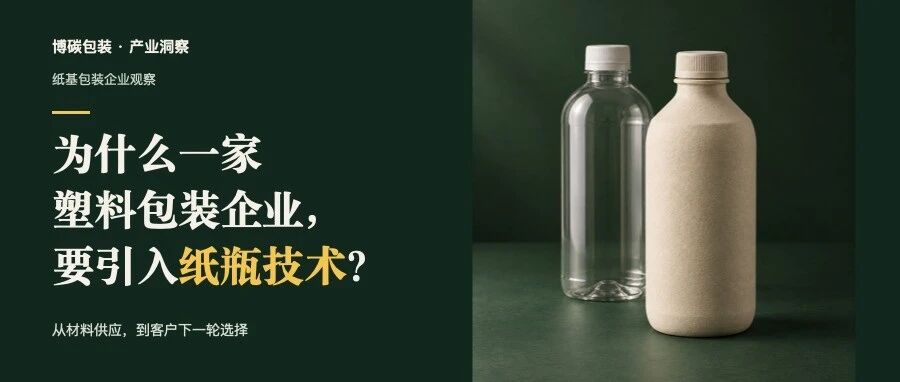
2026年10月6日,印度硬质塑料包装企业Alternicq(前身为Manjushree Technopack)与英国Pulpex公布独家合作,将纸浆纤维瓶技术引入印度,并共同评估客户需求与本地制造条件。
它没有宣布退出塑料业务,而是为客户增加一种包装选择。合作公告明确提出,企业要从以规模为主的包装供应商,向跨材料、跨品类的一站式解决方案伙伴扩展。
一边继续塑料业务,一边增加纸瓶技术,这场合作指向一个更深的经营问题:供应商怎样让多年积累的客户关系,能够承接新的包装需求?
守住老订单,也要进入新项目
Alternicq官网披露,其服务客户超过1000家,业务覆盖食品、饮料、个人护理和家庭清洁用品等领域。这是它原有业务的客户基础,也让它有机会从熟悉的客户中寻找新的包装需求。
供应端可以按纸种、树脂和工艺分工,品牌面对的却是一个完整产品:装得住、保护得好、灌装顺利,既有货架辨识度,也有合理成本和使用后去向。
当客户开始评估纤维包装,如果原供应商仍只提供塑料方案,新项目就可能流向别的技术伙伴。扩展材料与制造能力,争取的是继续参与客户产品开发的机会。
这时,多年积累的价值就不只是设备。熟悉客户的内容物、灌装线、运输条件和质量问题,能够把这些要求转化为产品规格,同样是难以轻易复制的能力。
客户想换包装,内容物的保护、灌装与储运要求仍然要守住。把这些既有条件带进选材、结构和工艺讨论,原有的客户经验才有机会成为新项目中的开发优势。
越早参与产品开发,越有机会讨论“需要什么包装”,而不只是等规格确定之后,回答“多少钱能做”。
客户需要新的包装选择时,守住客户关系,比守住单一材料的边界更重要。
做得出瓶身,更要做成可靠包装
纸浆纤维成型解决了瓶身结构的问题,装液体还需要阻隔与封合。Pulpex合作公告介绍,其瓶内采用喷涂阻隔层,技术平台也将灌装适配与瓶身装饰纳入开发。
英国家清品牌smol在9月22日公布,计划于今年秋季推出与Pulpex共同开发的纸浆纤维瓶洗衣液。品牌披露的结构包括纤维瓶身、内侧薄水性涂层和再生聚丙烯计量盖,并建议在英国使用后,将瓶盖与瓶身分别投入塑料和纸类回收渠道。
洗衣液装进去以后,内壁要持续提供阻隔,瓶口与瓶盖要配合可靠,包装还要经得起灌装、搬运和储存。产品保护不能只在刚做出的样瓶上成立。
对涂布和阻隔企业,纸样上的性能还要落实到三维瓶体上:瓶肩、内壁和瓶底能否均匀涂覆,干燥后能否形成连续阻隔,是否与结构及封合配合。单项材料表现良好,还要让整套包装在实际使用中可靠。
Pulpex目前公开说明,其瓶子面向非碳酸液体,碳酸饮料版本仍在开发。对产业链而言,这也是清楚的开发顺序:先把适合的场景做透,再扩大应用范围。
纸浆形成瓶身,阻隔与结构决定它能装什么,制造体系决定它能交付多少合格产品。
一份合作协议,要接上一整套交付能力
10月8日,Pulpex宣布格拉斯哥附近的商业制造工厂开放,初始配置年产能最高4000万只。公司将这座工厂定位为未来授权制造伙伴的参考工厂。这是公司披露的配置产能,并非已经实现的年销量。
这一安排的意义,是让合作方能够围绕实际制造体系评估技术,而不只看一只样瓶。
技术公司提供产品平台与工艺体系,当地包装企业带来客户理解、制造组织和市场服务。前者把技术做成可采用的系统,后者围绕当地需求组织产品开发与交付。两种能力接起来,新产品才有机会成为当地客户的采购选择。
印度合作仍要共同确定优先品类、产品与法规要求,以及当地制造的场地和设备条件。塑料包装经验是基础,纤维瓶的工艺与产线条件仍需专门验证。
独家合作能提供市场开发机会,但客户最终购买的,是持续交付的合格产品。
算账也不能停在纸浆与树脂的采购价。涂层用量、干燥能耗、设备与模具摊销、授权费用、生产损耗和运输,都要进入每千只合格交付包装的总成本。
比较方案时,还要放在相同容量、相同内容物保护目标与货架期要求下。少用材料如果伴随更多废品或更高能耗,原料账上的节省也可能被抵消。
把产品保护、灌装适配、交付成本和当地回收条件一起验证清楚,才有依据判断一款包装是否值得长期采用。
技术合作打开市场入口,稳定交付才让入口变成长期生意。
让自己的专长,进入客户的新项目
对中国纸包装产业链,这个案例更有价值的启示,是把已有优势接到新需求上。
有纤维处理优势的企业,可以研究浆料与成型适配;模塑企业可以解决瓶体一致性和制造效率;阻隔材料企业可以研究三维涂覆与内容物保护;具备客户和加工基础的包装企业,可以牵引联合开发与实际交付。
不必每家企业都自建纸瓶产线。更值得判断的是:自己的哪项专长,能够解决新包装中一个客户愿意付费的问题?
下一次与客户讨论,不妨先问清楚:哪款产品正在评估包装升级,哪些性能必须守住,现有方案最难改善的又是什么。
再从非碳酸饮料、调味品或家清用品中选定一个适合场景,明确容量、内容物、使用条件和成本目标,把材料、结构与制造放进同一组验证。
先找到具体项目,再选择技术组合。这样,研发投入更容易围绕客户的真实要求展开,技术交流也才有机会转化为产品开发。
这也是博碳包装持续关注应用与阻隔工程的原因:材料创新的价值,要落在客户用得上、产线做得稳、投入算得过账的产品上。
Alternicq引入纸瓶,争取的是客户下一轮产品开发中的参与机会;Pulpex寻找制造伙伴,拓展的是技术进入当地市场的路径。把客户、技术和制造接起来,合作打开的市场入口,才有机会成为长期生意。
客户换一种包装,不一定要换一家供应商。前提是,你能跟上他的下一次选择。
研究说明
本文由博碳包装依据合作方、品牌与企业技术公开资料独立研究整理,核验截至2026年10月10日,供产业研究学习,不构成具体采购或投资决策依据。如需修改、说明或删除,请联系本公众号,我们将在收到后24小时内核查处理。
博碳观察数据与核验来源
Pulpex|Alternicq纸浆纤维瓶合作公告
Alternicq|企业业务与客户资料
smol|纸浆纤维瓶洗衣液上市计划与产品结构
Pulpex|纤维瓶用途与功能说明
Pulpex|格拉斯哥附近商业制造工厂开放公告
Your customers may still be buying your existing products while turning to another supplier to develop their next packaging format. For a packaging company, retaining today’s orders does not necessarily mean participating in tomorrow’s growth.
On 6 October 2026, Indian rigid plastic packaging manufacturer Alternicq, formerly Manjushree Technopack, and UK-based Pulpex announced an exclusive partnership to bring pulp fibre bottle technology to India and jointly assess customer demand and local manufacturing requirements.
The company has not announced an exit from plastics. It is adding another packaging option for its customers. The partnership announcement explicitly describes a shift from a packaging supplier focused on scale towards a one-stop solutions partner spanning materials and product categories.
Continuing the plastics business while adding paper bottle technology raises a deeper business question: how can suppliers use long-standing customer relationships to meet emerging packaging needs?
Retain existing orders—and earn a place in new projects
Alternicq states on its website that it serves more than 1,000 customers across sectors including food, beverages, personal care and household cleaning. This established customer base also gives it an opportunity to identify new packaging needs among businesses it already knows.
Suppliers may organise their businesses around paper grades, resins and processes. Brands, however, need a complete package: one that contains and protects the product, runs smoothly on filling lines, stands out on the shelf, offers reasonable costs and has a viable end-of-life route.
When customers begin evaluating fibre packaging, new projects may go to other technology partners if their existing supplier can offer only plastic solutions. Expanding materials and manufacturing capabilities helps suppliers remain involved in their customers’ product development.
At that point, the value accumulated over the years extends beyond equipment. Understanding customers’ contents, filling lines, transport conditions and quality issues—and translating those requirements into product specifications—is also a capability that is difficult to replicate.
A change of packaging does not remove the need to protect the contents or meet filling, storage and transport requirements. Bringing these established requirements into discussions about materials, structure and processes allows existing customer knowledge to become a development advantage in new projects.
The earlier a supplier participates in product development, the greater its opportunity to discuss what packaging is needed, rather than simply quoting a price once the specifications have been set.
When customers need new packaging options, maintaining the relationship matters more than staying within the boundaries of a single material.
From a formed bottle body to reliable packaging
Moulding pulp fibres creates the bottle structure, but holding liquids also requires barrier performance and effective sealing. According to the Pulpex partnership announcement, the bottle uses a spray-applied internal barrier coating, and the technology platform also addresses filling-line compatibility and bottle decoration.
On 22 September, UK household cleaning brand smol announced plans to launch laundry liquid in a pulp fibre bottle developed with Pulpex in autumn 2026. The brand describes a fibre body, a thin water-based inner coating and a recycled polypropylene dosing cap. For disposal in the UK, it advises separating the cap into the plastics recycling stream and the bottle into paper and card recycling.
Once filled with laundry liquid, the inner surface must maintain its barrier performance, the bottle neck and cap must seal reliably, and the package must withstand filling, handling and storage. Product protection must last beyond the freshly made sample bottle.
For coating and barrier specialists, performance demonstrated on flat paper samples must also be achieved in a three-dimensional bottle. Can the shoulder, inner walls and base be coated evenly? Does drying produce a continuous barrier? Does that barrier work with the structure and closure? A material that performs well on its own must also help the complete package work reliably in use.
Pulpex currently states that its bottles are intended for non-carbonated liquids, while a version for carbonated drinks remains in development. This also points to a clear development sequence for the supply chain: establish reliable performance in suitable applications before expanding into others.
Pulp forms the bottle body; the barrier and structure determine what it can hold; and the manufacturing system determines how many conforming units can be delivered.
A partnership agreement needs a complete delivery capability
On 8 October, Pulpex announced the opening of its commercial manufacturing facility near Glasgow, fitted for an initial capacity of up to 40 million bottles per year. The company positions the site as a reference facility for future licensed manufacturing partners. This figure represents announced installed capacity, not annual sales already achieved.
This gives partners a way to assess the technology through an operating manufacturing system, rather than judging it solely by a sample bottle.
The technology company supplies the product platform and process system; the local packaging manufacturer contributes customer knowledge, production management and market support. One turns the technology into an adoptable system, while the other organises development and delivery around local demand. Connecting these capabilities gives the new product a chance to become a purchasing option for local customers.
The partners in India still need to jointly determine priority categories, product and regulatory requirements, and the site and equipment requirements for local manufacturing. Experience in plastic packaging provides a foundation, but fibre bottle processes and production-line requirements still need dedicated validation.
An exclusive partnership creates market development opportunities. What customers ultimately buy, however, is a consistent supply of products that meet their specifications.
The cost calculation must go beyond the purchase prices of pulp and resin. Coating consumption, drying energy, equipment and tooling amortisation, licensing fees, production losses and transport all contribute to the total cost per 1,000 conforming packs delivered.
Competing solutions must also be compared at the same capacity and against the same product-protection and shelf-life requirements. If reduced material use leads to more rejects or higher energy consumption, the raw-material savings may be cancelled out.
Validating product protection, filling-line compatibility, delivery costs and local recycling conditions together provides a sound basis for deciding whether a packaging format merits long-term adoption.
Technology partnerships open the door to a market; reliable delivery turns that access into lasting business.
Bring your expertise into your customers’ new projects
For China’s paper packaging supply chain, the more valuable lesson is how to connect existing strengths with emerging demand.
Companies with fibre-processing expertise can investigate pulp formulations and their suitability for moulding. Moulded fibre producers can address bottle consistency and manufacturing efficiency. Barrier material suppliers can develop three-dimensional coating processes and product protection. Packaging companies with established customers and converting capabilities can lead joint development and commercial delivery.
Not every company needs to build its own paper bottle line. The more useful question is: which area of your expertise can solve a problem in new packaging that a customer is willing to pay to address?
In the next customer discussion, start by identifying which product is being considered for a packaging upgrade, which performance requirements must be maintained, and which limitations of the existing solution are hardest to overcome.
Then select a suitable application in non-carbonated beverages, condiments or household cleaning products. Define the capacity, contents, conditions of use and cost targets, and evaluate materials, structure and manufacturing within the same validation programme.
Identify a specific project before selecting the combination of technologies. This makes it easier to direct R&D investment towards actual customer requirements and turn technical discussions into product development.
This is also why BIOTEN Packaging continues to focus on applications and barrier engineering: materials innovation must translate into products that customers can use, production lines can manufacture consistently, and economics can justify.
By introducing paper bottles, Alternicq seeks a role in its customers’ next round of product development. By finding manufacturing partners, Pulpex expands the routes through which its technology can reach local markets. Connecting customers, technology and manufacturing is what gives the market access created by a partnership the potential to become a long-term business.
A change in packaging need not mean a change of supplier—provided you can support your customer’s next choice.
Research Note
This article was independently researched and prepared by BIOTEN Packaging using publicly available information from the partners, brands and technology companies discussed. Information was checked as of 10 October 2026. It is intended for industry research and learning and should not be used as the basis for specific procurement or investment decisions. To request a correction, clarification or removal, please contact our WeChat official account. We will review and address the request within 24 hours of receipt.
BIOTEN Insights: Data and Verification Sources
Pulpex | Announcement of the Alternicq pulp fibre bottle partnership
Alternicq | Company operations and customer information
smol | Pulp fibre laundry bottle launch plans and packaging structure
Pulpex | Fibre bottle applications and functional specifications
Pulpex | Announcement of the commercial manufacturing facility opening near Glasgow