9月1日,《餐饮外卖商户绿色包装使用指南》(DB11/T 2510-2026)在北京正式实施,到今天不过九天。这是全国第一个专门面向餐饮外卖商户的绿色包装地方标准。仅仅一天之后的9月2日,食品接触涂层强制性新国标GB 4806.10-2025也正式实施:前者从教商户"怎么选"的需求端入手,后者守住材料安全的供给端底线,两份文件隔一天落地,指向的是同一件事。很多人把这份地标当成又一轮限塑,翻原文并非如此:它没有点名禁用哪种材料,而是按菜品和场景给商户列了一张包装选型表。
这张表为什么值得材料厂和包装厂认真对待?因为外卖是一次性纸餐盒、纸杯、纸碗用量极大、使用频次极高的场景,商户按什么规则选包装,直接决定上游材料的订单流向。下文说清三件事:这份地标到底写了什么,为什么没有一边倒押注可降解,以及PP、纸基、铝箔、可降解材料各自的适用边界在哪,产业链该怎么卡位。
01全国首个外卖绿色包装地标,管的是"怎么选"不是"禁什么"
先把标准身份说准。这份指南编号DB11/T 2510-2026,2026年5月批准发布、9月1日正式实施,由北京市市场监督管理局统一发布。编号里的"T"说明它是一份推荐性地方标准,落地方式是技术指引而非强制罚则。但"推荐"不等于没分量。把它从立项到推广的过程捋一遍,就知道这份全国首个为什么落在北京。
标准由北京市发展和改革委员会提出并归口,具体由其资源环境处统筹布局,与另一项《餐饮流通绿色包装评价要求》地方标准成体系推进。主管部门没有直接下禁令,而是先解决"商户到底怎么选",把它做成可操作的规则;专业内容交给中国物流集团所属中国出口商品包装研究所牵头制定,第一起草人、研究所副总工程师冯清正牵头打磨,中国包装联合会、国家包装产品质量检验检测中心(济南)、北京节能环保中心和美团(北京三快在线科技有限公司)共同参与。行业协会、检测机构、本地节能机构和头部平台都在起草组里,标准才能细到"哪类菜配哪种盒"。6月15日,北京市市场监督管理局在2026年全国节能宣传周北京系列活动启动仪式上,由标准化处现场宣读发布公告,选在城市节能治理的主场发布,本身就说明了分量。
发布只是开始,后续怎么推也已经明确:北京市发展改革委、市场监管局将联合培育外卖绿色包装示范商户,优先推动连锁餐饮和商圈头部商户率先达标,建立包装采购台账与回收处置台账,并同步回应商户关心的成本问题。北京市发展改革委还明确,此次实施将为全国其他城市提供有益借鉴,引领行业绿色低碳转型;把时间线拉长,它正是国家塑料污染治理部署在外卖场景落地的一份地方操作指引,深圳也已在2026年4月先行启动城市级全链路绿色行动。从立项、起草、发布到示范推广,每个环节都有明确主体,这份全国首个并非偶然。
另一点容易被忽略:这份标准本身不带罚则,但头部平台深度参与起草,主管部门也明确要引导、鼓励平台和商户参照执行。一旦相关要求写进平台商户规则和绿色采购目录,对上游供应商就是接近刚性的入围门槛。推荐性标准真正的约束力,通常来自平台采购规则。
标准给绿色包装下的定义是:在包装产品全生命周期中,在满足包装功能的前提下,对人体健康和生态环境危害小、资源能源消耗少的包装。它面对的市场体量不小:截至2025年12月,我国外卖用户规模已达6.3亿人;据外卖平台披露,截至2026年7月底,累计已有5.9亿用户使用过"无需餐具"选项,相关订单超过130亿单,减碳超过50万吨,平台还在二十余个省份布局餐盒规模化回收。场景高频、平台又已经动起来,这份地标才有落地的基础。
所以它管的不是"禁掉什么",而是"什么菜优先用什么包装"。治理思路从按材料下禁令,变成按场景给指引,上游材料订单也会跟着重新分。
02先分简易还是密封,再看汤汁和温度
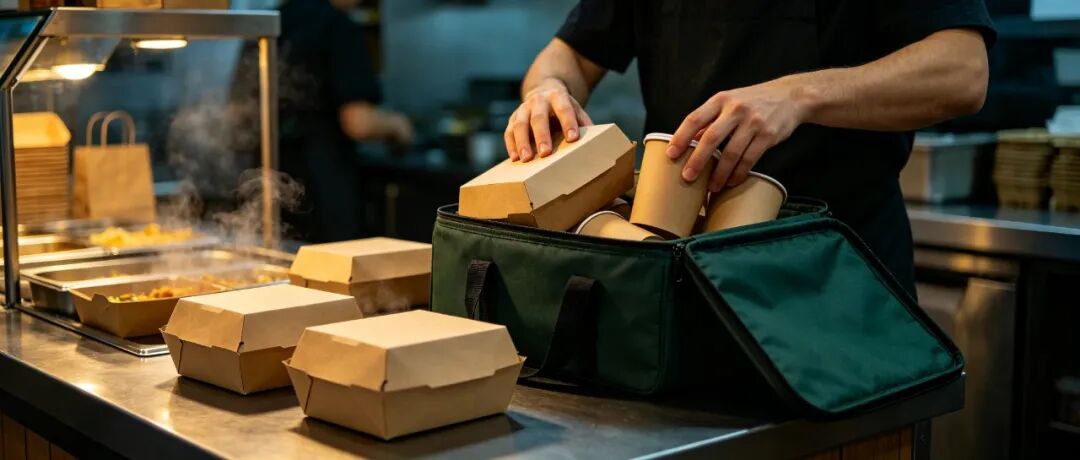
指南确立了四条核心原则:安全性、减量化、易回收或可降解、重复使用。安全性要求商户必须使用符合国家食品安全标准的包装材料,并宜采用一次性封口、开启后无法复原的封签;减量化要求按餐品精准匹配尺寸、尽量降低空隙率,印刷简约,没有保温需求时不使用无纺布袋;易回收或可降解要求优先选用单一材质或易于分离的包装,重点推广易回收或生物降解材料;重复使用则鼓励引导消费者以非食品接触的方式把包装二次利用起来。
四条原则之下,指南再按汤汁多少、洒漏风险和温度,把外卖包装分成简易、密封两类,对常见菜品逐一给建议。这部分离商户的日常操作最近。
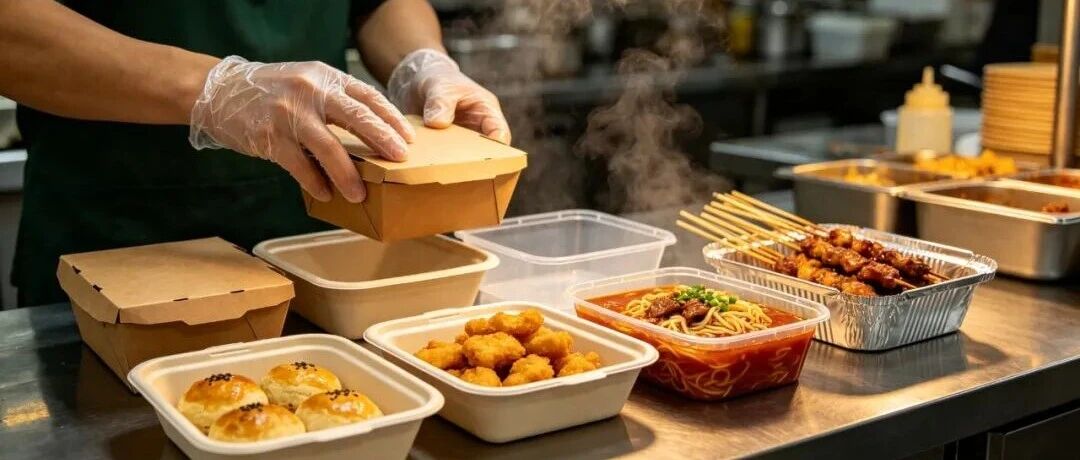
简易包装对应无汤汁或汤汁极少、可以整体包裹的餐品。包子、饼类等形态完整的餐品可采用袋包装;汉堡、三明治、热狗宜减少包装层数;披萨、蛋糕等需要防变形、防粘连的餐品推荐使用纸餐盒;炒菜、盖饭等少汤汁餐品采用带盖、无密封设计的包装;烧烤类可直接用铝箔包裹并搭配有封口作用的包装袋;炸糕、油炸轻食等无汤汁、高温高油餐品宜使用生物降解材料;饺子、寿司可采用分格设计。
密封包装对应汤汁较多、需要保证不洒漏的餐品。冰粉、水果捞、冷串等常温少油多汤汁餐品,可采用PP餐盒、纸碗或生物降解餐盒;米皮、麻辣拌等常温多油多汤汁餐品,可采用纸杯、纸碗或生物降解餐盒;汤面、馄饨、粥品等高温少油多汤汁餐品,可采用PP餐盒、纸碗或生物降解餐盒;毛血旺、水煮鱼、麻辣烫、冒菜等高温多油多汤汁餐品,可采用PP餐盒配合缠绕膜、生物降解餐盒或铝箔餐盒;冰沙等冰品可采用PP、PET餐盒或纸碗;茶饮、咖啡、果汁等饮品可采用纸杯、PP杯、PET杯,并配套再生材料底托。
指南同时压缩了塑料缠绕膜的空间:常温、低温和冰品非必要不使用缠绕膜封口,高温餐品确需封口时只可少量使用窄幅封边缠绕膜;饮品建议根据温度选用易于物理分离的封口纸,并减少吸管使用,商户也不宜主动提供一次性餐具。这些要求已经在门店发生。有媒体在北京一家火锅店看到:店长反馈,改用密封性更好的结构后,过去汤底餐盒要一层层缠绕保鲜膜、费时费工,如今不用缠绕膜也不漏汤,出餐反而更快。减量化没有牺牲体验,耗材和人工反倒一起省了。通看整张表,分类依据从来不是"塑料还是非塑料",而是汤汁多少、温度多高、洒漏风险多大,材料跟着菜品走。也正因为这样,纸杯、纸碗、纸餐盒在简易、密封、饮品三类场景里都排得上,是覆盖面明显更宽的一类材料。
03易回收与可降解并重,没有哪种材料能包打天下
读这份指南,要先避开两个常见误读。
第一个误读,是以为它要全面替塑。并不是。PP、PET在多汤汁密封场景里依然是被明确列出的选项,毛血旺这类高温、多油、多汤、极考验材料的场景,PP餐盒配合缠绕膜仍被排在可选方案前列。标准行文大量使用"可采用""宜",是分场景指引,而不是对某类材料的淘汰令。
第二个误读,是以为可降解材料可以躺赢。同样不是。指南原文把"易回收"和"可降解"并列写作"易回收或可降解",行业组织的解读也明确指出,标准并非以可降解作为唯一取向,绿色包装要在包装功能、食品安全、使用成本与回收体系之间综合权衡。油炸轻食明确宜用生物降解材料,但更多场景是把纸碗、PP餐盒与生物降解餐盒并列给出,选择权交回给商户按场景判断。
能不能用,看三条是否同时成立。一是食品安全,材料要符合相应的食品接触国家安全标准,刚落地的涂层新国标GB 4806.10-2025就是其中一环;二是尽量单一材质、易于分离、便于回收或可降解;三是成本和使用体验要扛得住。三条都过,才算合格的绿色包装。
现实约束同样要讲。中餐高油高盐、汤汁偏多,使用后的餐盒往往附着大量油污,消费者大多不会清洗后再分类投放,这让"易回收"在实际回收端会打折扣;全生物降解材料的研发和生产成本目前普遍高于普通塑料,商家还存在透明餐盒盛放多油菜品后观感不佳的体验顾虑。也正因如此,这份指南给出的是方向,落地节奏仍受回收体系和成本约束。中国农业大学食品科学与营养工程学院副教授、食品安全系副主任吴晓蒙长期研究食品绿色包装,在他看来,这份指南从选材、设计、使用到回收再利用做了全链条系统设计,又按每类菜品给出具体建议,既守住餐饮配送的食品安全底线,也通过避免过度包装推动绿色升级。方向明确、过程渐进,真正受益的是一类材料:接得住中餐多油多汤,末端又易回收或可堆肥。单一材质、易分离、无氟、可再浆,已经是每条技术路线都绕不开的要求。
04四类材料各归其位,纸基扩容的关键在内壁
回到材料层面,四类材料各自的位置并不复杂。
PP、PET是密封多汤汁场景的基本盘,短期内难以替代。但在新规则下,它们被要求更易分离、配套再生材料底托、减少缠绕膜,增量主要来自回收再生与减量设计,而不是用量扩张。
铝箔是细分补位。它耐温、可直接加热,在烧烤、烤鱼、高温多油餐品上有独特位置,但受成本和形态限制,更像是特定场景的专用解,而不是主流方案。
生物降解材料受益于"可降解"原则。它在油炸轻食中被明确推荐,在多汤汁场景中被列入并列选项,但仍要逐场跨过耐温、成本和堆肥处置体系这三道坎。
纸基材料,包括纸杯、纸碗、纸餐盒和纸浆模塑,是这张选型表里覆盖面明显更宽的一类。逐场景对照,披萨、蛋糕明确推荐纸餐盒,冷串、汤面、粥品列出纸杯、纸碗,饮品端又优先推荐纸杯并配套再生底托,纸基同时出现在简易、密封、饮品三条线上,这在几类材料里并不多见。供给端也已形成体量:据观研天下统计,2025年前三季度中国纸浆模塑产能突破250万吨、约占全球总产能的56.8%,同期产量182万吨、同比增长25%,增速远高于纸制品制造业3.38%的平均水平;另据Grand View Research测算,2025年全球纸浆模塑包装市场约62.1亿美元,到2033年预计增至101.8亿美元(均为第三方测算,统计口径不同,仅供参考)。需求端往哪扩,也由此更清楚。
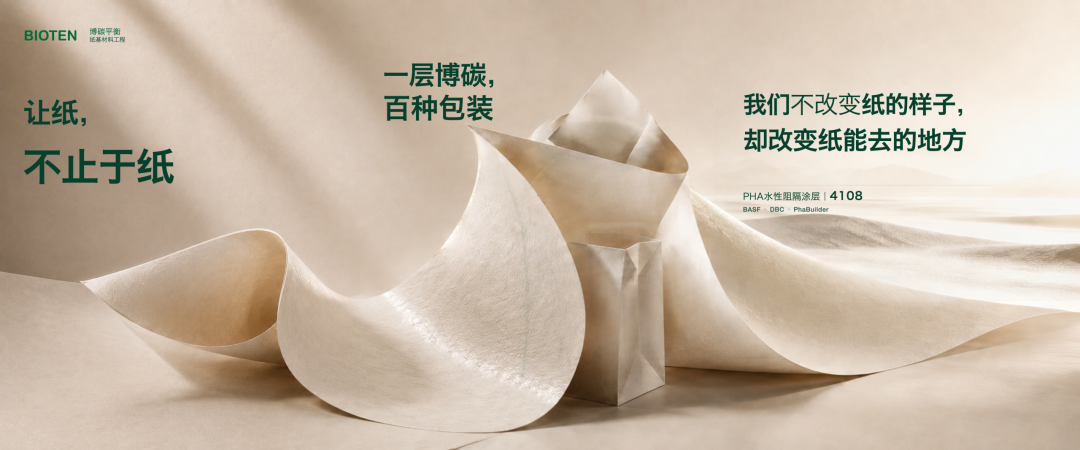
纸基能走多远,关键在内壁那层功能材料。纸和纸浆本身怕水怕油,要接住中餐的多油多汤和热饮,靠的是内壁涂层或内施胶。PE淋膜至今仍是存量市场里成熟、便宜的主流方案,含氟防油剂也曾被广泛使用;但PE淋膜会在纸面形成一层独立塑料膜,带来纸塑分离的回收难题,含氟路线在欧盟等出口市场又在持续退场,全球连锁餐饮的采购规则也在同向收紧:麦当劳已承诺面向顾客的主包装不有意添加氟化物,并大规模采用认证原纸与生物基包装;星巴克提出到2030年前面向消费者的包装全部可重复使用、可回收或可堆肥;百胜中国旗下肯德基,截至2025年底已在中国大陆门店全面停用一次性塑料餐具和塑料袋,外卖塑料袋改用纸袋或可降解袋,并把部分门店杯盖由PS升级为更易回收的PP;国内门店规模领先的瑞幸咖啡,也在2026年8月推出主打减量化与"易回收、易再生"的"双易好杯",推动一次性饮品杯循环再生。从国际巨头到本土头部连锁,采购语言正在收敛到"单一材质、易回收、无氟"这几个关键词上。而新落地的GB 4806.10-2025已把纸杯内涂层、纸盒密封胶等纸基涂层明确纳入强制管控,涂层纸需同时满足该标准与纸基标准GB 4806.8-2022;以水性丙烯酸、PHA为代表的无氟水性阻隔涂层,能让纸餐盒、纸杯内壁耐水、耐油、防粘,同时保持可再浆、可回收或可堆肥,兼顾了易回收与可降解。这是纸基能从简餐、烘焙进一步扩到多汤汁场景的技术前提,也是材料企业差异化竞争的焦点。博碳包装的Pro PHA水性阻隔乳液走的正是这条路径,以PHA生物基水性乳液为纸基和纸浆模塑提供耐水、耐油与热封性能,不有意添加PFAS、可再浆,2026年1月在GB 4806.10-2025新国标下取得全项合格报告,并先后取得ABA、BPI、DIN CERTCO堆肥认证。
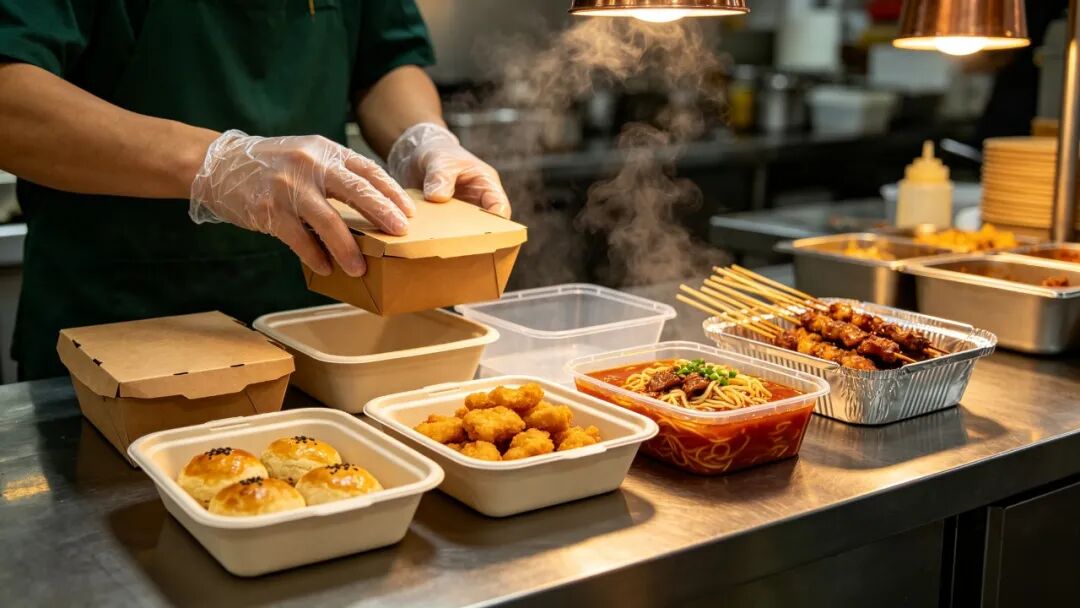
特性不同的中餐,在后厨被分装入纸基、塑料、铝箔等不同材质的包装。
05产业链怎么卡位,以及要盯的先行信号
具体怎么动,四个环节各有一份能立刻上手的清单。
餐盒厂和纸制品厂:按"简易或密封、再叠加汤汁与温度"两个维度重排产品矩阵,为每款产品标注适配菜品、材质、是否单一材质易分离、是否可再浆或可堆肥,并同步补齐纸基GB 4806.8与涂层GB 4806.10的双标检测,把合规证据做在客户问之前。
材料与涂层企业:把耐多油多汤、耐温、无氟、可再浆、可堆肥做成可验证的数据,包括迁移量、防油等级、再浆率和堆肥证书,按菜品场景交付整体方案,而不是只卖一袋原料。
品牌连锁与商户:用三句话筛选供应商:材质是否单一或易于分离,能否提供食品接触合规检测报告,面向出口或绿色门店时能否同时满足易回收与可降解;并把无需餐具、精准匹配尺寸、减少缠绕膜写进出餐操作规范。
平台侧:采购规则、流量与补贴向绿色包装倾斜,是传导直接、见效也快的一环。平台已围绕16大类餐品推出绿色包装方案,在22个省份的29个城市开展规模化餐盒回收、累计回收餐盒超过4.6万吨,饮品杯专项回收一年间再生超过1亿个、联动64个品牌近10万家门店;供应商要盯紧的,是平台何时把这份地标写进商户规则和绿色集采目录、变成入围条件,那才是订单层面的分水岭。
接下来有四个先行信号值得盯:一是其他城市是否跟进类似地标,以及跟进时如何按本地饮食结构和供应链条件做本地化调整;二是平台绿色采购目录与流量倾斜的力度;三是可降解、纸基餐盒与普通塑料餐盒之间的成本价差如何变化;四是前端易回收设计与后端回收体系能否真正衔接,已布局城市的餐盒回收能否继续扩围。
北京这份地标只是开始,需求端的规则一旦立住,很可能被更多城市参照。一种材料最终能拿多少订单,不看口号站队,看它在一只麻辣烫碗、一只咖啡杯里,能不能同时扛住食品安全、多油多汤和末端回收。对纸基产业链来说,把内壁阻隔能力做成真实订单,窗口已经打开。
本文由博碳包装依据公开资料、政府及标准平台公开信息(含DB11/T 2510-2026标准文本,北京市市场监督管理局、北京市发展和改革委员会公开信息,央视新闻、千龙网等媒体报道,美团、麦当劳、星巴克、百胜中国、瑞幸咖啡等企业公开披露,以及第三方市场研究整理,核验截至2026年9月9日;文中市场规模与产能为第三方测算口径,不同机构统计范围不同,仅供产业研究参考。本文供产业研究学习,不构成采购或性能保证;如需修改、说明或删除,可通过本公众号联系,我们将在收到后24小时内核查处理。
原来源已下线
Beijing's Guidelines for the Use of Green Packaging by Food Delivery Merchants (DB11/T 2510-2026) took effect on 1 September 2026. By 9 September, the city was in its second week of implementation. The municipal market regulator describes it as China's first local standard specifically addressing green packaging use by food delivery merchants. One day later, on 2 September, the mandatory food-contact coatings standard GB 4806.10-2025 also took effect. The Beijing guide helps merchants choose packaging, while the national standard addresses coating safety. The guide does not impose a blanket ban on a named material: it sets out packaging options according to the food and delivery conditions.
This matters to material producers and packaging converters because food delivery is a major, high-frequency use of disposable paper containers, cups and bowls. Merchants' selection criteria influence upstream demand. This article explains the guide, why it does not favour biodegradable materials in every case, and where PP, paper, aluminium foil and biodegradable materials fit. It also considers practical actions across the value chain.
01 Choosing packaging under China's first merchant-focused local guide
DB11/T 2510-2026 was issued by the Beijing Administration for Market Regulation on 27 May 2026 and took effect on 1 September. The 'T' denotes a recommended local standard. It provides technical guidance rather than establishing a new penalty regime, while applicable food-safety and other legal duties still apply. Its recommended status does not make it commercially insignificant: the way it was developed and is promoted helps explain its potential influence.
The Beijing Municipal Commission of Development and Reform proposed the standard and oversees its technical coordination. The source article describes coordination by its resources and environment division alongside DB11/T 2246-2024, the local standard on evaluating green packaging in food delivery. The China National Export Commodities Packaging Research Institute, part of China Logistics Group, led drafting, with deputy chief engineer Feng Qingzheng as the first drafter. Participants included the China Packaging Federation, the National Center for Quality Inspection and Testing of Packaging Products (Jinan), the Beijing Energy Conservation and Environmental Protection Center, and Meituan through Beijing Sankuai Online Technology Co., Ltd. This combination brought packaging expertise, testing and merchant experience into the work. The standard was also presented at the launch of Beijing's 2026 National Energy Conservation Publicity Week activities on 15 June.
The source article reports plans for the city's development and reform commission and market regulator to cultivate demonstration merchants, starting with restaurant chains and leading businesses in commercial districts. Proposed actions include packaging procurement and recycling records, together with attention to merchants' cost concerns. The municipal authorities see the guide as a possible reference for other cities. It translates the broader plastic-pollution agenda into practical advice for food delivery; the source also cites a citywide green initiative launched in Shenzhen in April 2026. The significance lies in connecting technical guidance with implementation by identifiable organisations.
Platform participation could amplify that influence. The guide itself does not create penalties, but requirements incorporated into merchant rules or green procurement catalogues could become commercial qualification criteria for suppliers. This remains a potential route for implementation, rather than proof that every platform has already adopted the standard as a binding rule.
Green packaging is understood in terms of its life cycle: it fulfils the packaging function while limiting harm to human health and the environment and reducing resource and energy use. The source article cites an estimated 630 million food delivery users in China by December 2025. It also cites platform disclosures that, by the end of July 2026, 590 million users had selected 'no cutlery', covering more than 13 billion orders and an estimated carbon reduction of over 500,000 tonnes, with container-recycling programmes in more than 20 provinces. These are attributed market and platform figures; the imported article does not provide the underlying reports for independent verification. The scale nevertheless explains the industry's interest in merchant-level packaging choices.
The guide's organising question is which packaging suits which food. A shift towards selection by use case could alter demand across competing materials, although the size and pace of that change will depend on adoption.
02 Start with simple or sealed packaging, then assess liquid content and temperature
The guide has four principles: safety, material reduction, ease of recycling or degradability, and reuse. Packaging must meet applicable national food-safety standards; tamper-evident seals or outer packaging that cannot be restored after opening are recommended. Sizes should fit the meal closely, with limited empty space and simple printing; non-woven bags should be avoided where insulation is unnecessary. Single-material or readily separable structures are preferred to support end-of-life handling. Consumers can also be encouraged to reuse containers for non-food-contact purposes, such as household storage.
Within those principles, the guide distinguishes simple packaging from sealed packaging, using liquid content, leakage risk and temperature to organise advice for common dishes. This makes it directly relevant to daily restaurant operations.
Simple packaging suits foods with little or no liquid that can be wrapped or contained as a whole. Bags can be used for steamed buns and flatbreads. Burgers, sandwiches and hot dogs should have fewer packaging layers. Paper boxes are recommended for pizzas and cakes that need protection against deformation or sticking. Stir-fries and rice dishes with little sauce can use lidded containers without a sealing design. Barbecue foods can be wrapped in aluminium foil and placed in a bag that closes securely. Biodegradable packaging is recommended for hot, oily fried snacks with no broth, such as fried rice cakes. Divided compartments can be used for dumplings and sushi.
Sealed packaging suits foods with more liquid that need protection against leakage. For room-temperature foods with little oil and substantial liquid, such as chilled jelly desserts, fruit desserts and cold skewers, the options include PP containers, paper bowls and biodegradable containers. Room-temperature dishes with more oil and sauce, such as rice sheets and spicy mixed dishes, can use paper cups, paper bowls or biodegradable containers. Hot, relatively low-oil foods with broth, including noodle soup, wontons and congee, can use PP containers, paper bowls or biodegradable containers. Hot, oily, liquid-rich dishes such as maoxuewang, Sichuan-style fish in chilli oil, malatang and maocai can use PP containers with sealing wrap, biodegradable containers or aluminium-foil containers. Frozen desserts such as slushes can use PP or PET containers or paper bowls. Tea, coffee and juice can use paper, PP or PET cups with recycled-material cup carriers. Every option must be suitable for the actual food and temperature; listing PET here is not a recommendation to use every PET grade for hot filling.
The guide also seeks to reduce plastic stretch wrap: avoid unnecessary wrapping for ambient, chilled and frozen foods, and use only small amounts of narrow edge-sealing wrap where hot dishes require it. Beverage seals should be selected for temperature suitability and ease of physical separation; straw use should be reduced, and disposable cutlery should not be supplied automatically. The source article cites a Beijing hotpot restaurant where a better-sealing container eliminated repeated wrapping, prevented leaks and reduced preparation time. This example suggests that less packaging can also save labour. Across the selection table, liquid content, temperature and leakage risk drive the choice. Paper cups, bowls and boxes appear in simple-packaging, sealed-packaging and beverage applications, giving paper a broad range of potential uses.
03 Recycling and degradability are alternative pathways, not a universal material ranking
Two common misreadings should be avoided.
The first is that the guide requires complete replacement of conventional plastics. It does not. PP and PET remain options for appropriate sealed-packaging uses. For demanding hot, oily dishes with substantial broth, the listed options include PP containers with sealing wrap. Their position in a list does not establish a performance ranking. The guide uses language such as 'may' and 'should' to distinguish options and recommendations; it is not a blanket phase-out order for an entire material category.
The second is that biodegradable materials are guaranteed to win. Again, they are not. The guide presents ease of recycling or degradability as alternatives. Packaging function, food safety, cost and available collection and treatment systems must be considered together. Biodegradable materials are recommended for fried snacks, but many liquid-rich dishes have parallel options including paper bowls, PP containers and biodegradable containers. Merchants still need to choose by application.
Three practical checks follow. First, assess food-contact safety under the standards applicable to the finished construction, including GB 4806.10-2025 where a coating falls within its scope. Second, favour simpler or readily separable structures and a credible recycling or degradation route. Third, check cost and user experience. These are procurement considerations, not a substitute for formal testing or certification.
Real-world constraints matter. Oily food residues and limited cleaning or separation can impede container recycling. Biodegradable products may carry a cost premium, while appearance after contact with oily food can affect customer acceptance. The source article cites Wu Xiaomeng, an associate professor at China Agricultural University's College of Food Science and Nutritional Engineering, on the guide's integration of material selection, design, use and recovery with dish-specific advice. Implementation will still be gradual and depend on local infrastructure. Suppliers need products that withstand the intended food conditions and have a demonstrable end-of-life route. Fluorine-related claims, repulpability and compostability should be assessed where relevant; they are not universal properties or identical requirements for every material.
04 Four material groups, with barrier performance central to paper's wider use
Each material group has a distinct role.
PP and PET remain established options for appropriate sealed-packaging applications. Their temperature capabilities differ, so material and grade must be matched to use. Opportunities include easier separation, reduced wrapping and recycled-material cup carriers where specified. The guide does not itself establish that plastic demand will grow or shrink.
Aluminium foil serves specialised applications. It offers useful temperature performance for barbecue foods, grilled fish and hot, oily dishes. Heating is only appropriate where the finished product and appliance instructions allow it. Cost and container design constrain its use, making it an application-specific option rather than a universal solution.
Biodegradable materials benefit from the guide's recognition of degradability. They are recommended for fried snacks and listed alongside other options for foods with broth. Heat resistance, cost and suitable treatment infrastructure must still be checked for each product. Biodegradability does not automatically establish compostability under every set of conditions.
Paper-based products, including cups, bowls, boxes and moulded-fibre containers, appear across a broad range of applications. Paper boxes are recommended for pizza and cake, paper bowls are among the options for selected cold dishes, noodle soup and congee, and paper cups are among the beverage options. This is broad coverage, not a blanket preference over all other materials. On the supply side, the source article attributes to Guanyan Tianxia estimates that China's moulded-pulp capacity exceeded 2.5 million tonnes during the first three quarters of 2025, representing about 56.8% of global capacity, while output reached 1.82 million tonnes, up 25% year on year. It compares this with a cited 3.38% growth figure for paper-product manufacturing, although the statistical bases should be checked before direct comparison. Grand View Research estimates the global moulded-pulp packaging market at about USD 6.21 billion in 2025, rising to USD 10.18 billion by 2033. These are third-party estimates with different scopes, not interchangeable measures of demand or capacity.
Paper's wider use depends heavily on the barrier layer or internal sizing that protects fibres from water and grease. PE extrusion coating remains an established, economical option, but fibre recovery depends on the construction and recycling process; fluorinated grease treatments face tighter substance restrictions and procurement policies. The source article cites McDonald's commitments on no intentionally added fluorinated compounds in primary guest packaging, certified fibre and bio-based materials; Starbucks' 2030 reusable, recyclable or compostable customer-packaging ambition; KFC China's reported substitution of certain plastic bags and cutlery and some PS lids with PP alternatives; and Luckin Coffee's August 2026 cup initiative focused on material reduction and recycling. These company-specific statements should be checked against the underlying disclosures and their geographic and product scope. They illustrate growing attention to material choice and recovery, rather than one universal specification. Coated paper may require compliance with both GB 4806.8-2022 and GB 4806.10-2025; adhesives must be assessed under their own applicable provisions and are not automatically classified as coatings. Water-based acrylic or PHA barriers can be designed for water and grease resistance, release performance and sealing, but being water-based does not itself prove absence of PFAS, repulpability, recyclability or compostability. Finished-product evidence is essential. BIOTEN Packaging positions its Pro PHA waterborne barrier emulsion for paper and moulded fibre. According to the company disclosures cited in the source article, it provides water resistance, grease resistance and heat sealing, is made without intentionally added PFAS, and is repulpable; the company reports passing tests under GB 4806.10-2025 in January 2026 and certifications from ABA, BPI and DIN CERTCO. Buyers should check the test reports, certificate scope and intended-use conditions for the product supplied.
Chinese dishes with different characteristics are packed in paper, plastic or aluminium-foil containers according to their needs.
05 Practical actions across the value chain and signals to watch
Four groups can take practical steps now.
Container manufacturers and paper converters: Organise the product range by simple or sealed packaging, then by liquid content and temperature. State suitable dishes, material composition, ease of separation and any verified repulpability or compostability. Arrange the relevant substrate and coating tests, including GB 4806.8 and GB 4806.10 where applicable, so the evidence is available before customers ask.
Material and coating suppliers: Support claims about resistance to oily liquids and heat, fluorinated substances, repulpability and compostability with relevant data. This can include migration results, grease-resistance testing, fibre-recovery results and appropriate certificates. Offer an application-tested system rather than raw material alone.
Restaurant chains and merchants: Ask whether the construction is single-material or readily separable, whether relevant food-contact test reports are available, and whether the proposed recycling or degradation route suits the target market. The guide does not require every product to be both recyclable and biodegradable. Incorporate no-cutlery requests, correctly sized packaging and reduced wrapping into operating procedures.
Platforms: Procurement criteria, visibility incentives and subsidies could transmit the guide's principles quickly. The source article cites platform programmes covering 16 food categories, container recycling in 29 cities across 22 provinces with more than 46,000 tonnes collected, and a beverage-cup programme reporting over 100 million cups recycled in one year with 64 brands and nearly 100,000 stores. These figures remain attributed disclosures requiring the original reports to verify scope and timing. Suppliers should watch whether and when the Beijing guide enters merchant rules or group-purchasing qualification criteria.
Four early signals merit attention: adoption of similar guidance by other cities and adaptation to local food and supply chains; the strength of platform procurement and visibility incentives; changes in the cost gap between biodegradable, paper-based and conventional plastic containers; and whether design for recovery connects with real collection and treatment capacity, including expansion of existing container-recycling programmes.
Beijing's guide could become a reference for other cities. Orders will ultimately depend on how a product performs in uses such as a bowl of malatang or a cup of coffee: food-contact safety, resistance to the intended contents and a credible route after use. For the paper packaging value chain, validated barrier performance could turn broader application coverage into business opportunities.
This article was compiled by BIOTEN Packaging from public materials, government and standards information, including DB11/T 2510-2026, publications from Beijing's market regulator and development and reform commission, media reports including CCTV News and Qianlong, disclosures attributed to Meituan, McDonald's, Starbucks, Yum China and Luckin Coffee, and third-party market research. Information cutoff: 9 September 2026. Market and capacity figures are third-party estimates with differing scopes; some underlying reports and company claims cited in the source article have not been independently verified here. This article is for industry research and learning and does not constitute a procurement or performance guarantee. For corrections, clarification or removal requests, contact this WeChat official account; we will review requests within 24 hours of receipt.
Original source unavailable