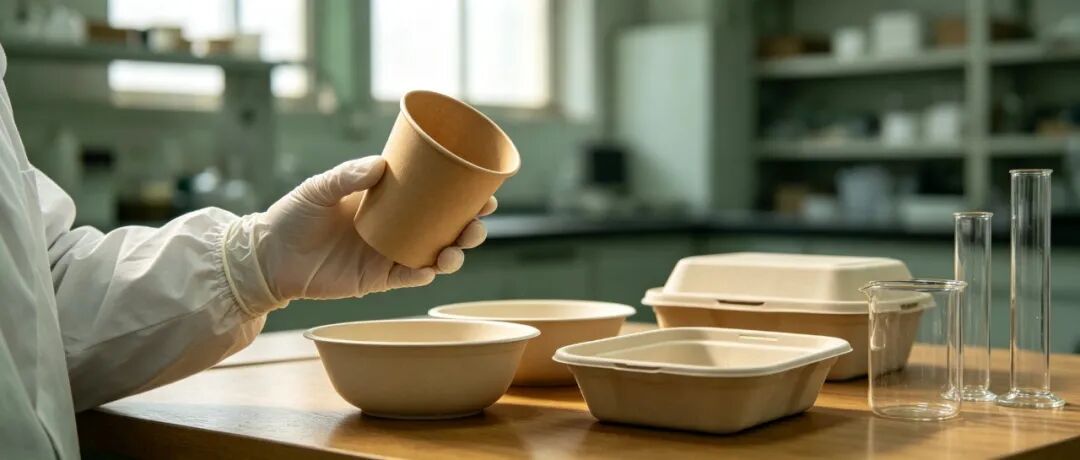
2026年9月2日,强制性国家标准GB 4806.10-2025《食品安全国家标准 食品接触材料及制品用涂料及涂层》正式实施,到今天刚好满一周。很多人把它当成一次普通的标准换版,但把时间轴拉长一个月就会发现:它不是孤立事件,而是一连串法规拼图中最新落下的一块。
8月12日,欧盟包装和包装废弃物法规PPWR全面强制适用;8月15日,《中华人民共和国生态环境法典》正式施行;9月2日,涂层新国标落地。一个月内,安全、回收、减塑三条线同时收紧。当规则同时从三个方向压向纸杯纸餐盒内壁那层薄薄的功能层,一个沉寂多年的品类开始被重新定价,它就是水涂纸,也就是水性涂布纸。这篇文章讲清楚三件事:法规到底改了什么,为什么承接这轮行情的是水涂纸,以及产业链各环节该怎么卡位。
01 生效首周,被管住的是那层"无标可依"的内壁
先看新国标解决的老问题。2016版标准在适用范围里把纸涂层排除在外,结果纸和纸板归GB 4806.8管,涂在纸面上的功能层却长期没有专门强标对口,实际操作中常有机构把纸基材按GB 4806.8测、把涂层硬套塑料标准GB 4806.7,同一只纸杯拆成两套口径,报告之间难以衔接。热饮纸杯内壁、汉堡纸和防油纸的防油层、纸浆模塑餐盒内涂、纸盒封口胶,长期处在"知道要安全、却没有专门标尺"的状态。
新版标准删掉了这条例外。施涂于金属、塑料、陶瓷、玻璃、纸和纸板等各类基材的食品接触涂层都要符合本标准,间接接触食品的涂层也一并纳入,并且按涂料固化后的终产品取样考核。一只热饮纸杯、一只纸模餐盒,从此既要对纸本身负责,也要对内壁涂层单独负责。这层几微米到几十微米的膜,从成本和工艺问题,变成了合规准入问题。
02 一个月内,三块法规拼图接连落下
要看懂这次变化的分量,得把三件事放在同一条时间线上。
8月12日,欧盟PPWR全面强制适用。这部法规号为(EU)2025/40,直接取代沿用近三十年的94/62/EC包装指令,从"指令"升格为在各成员国直接适用的"法规",且不设库存消耗过渡期,该日之后不合规包装不得再投放欧盟市场。它管的是包装"回不回得去":对故意添加的PFAS严格限制,合规判定推荐先用总氟分步筛查,以总氟50毫克/千克为初筛阈值,低于阈值视为合规、超标再做有机氟分析;铅、镉、汞、六价铬四项重金属合计不超过100毫克/千克;当塑料部件占整个包装单元总重量达到5%,复合纸包装就会按塑料包装管理,落入一次性塑料限制,并自2030年1月1日起承担再生塑料含量义务,归入其他塑料包装的,2030年再生塑料占比不低于35%、2040年不低于65%;低于5%的微量塑料部件可予豁免,包装按单一材质纸管理。
2026年8月15日,《中华人民共和国生态环境法典》施行。法典于2026年3月12日经十四届全国人大四次会议通过,共五编、1242条,是继民法典之后第二部以"法典"命名的法律,系统整合了三十余部生态环境法律。法典第四编绿色低碳发展编的发展循环经济一章,为纸包装行业定下长期框架:第九百五十七条要求制定绿色设计、绿色制造、废弃物综合利用和生活垃圾回收利用等循环经济标准,第九百五十九条建立健全生产者责任延伸制度,第九百九十六条鼓励、引导使用绿色包装、减量包装;第九百九十八条则明确,国家依法禁止和限制生产、销售、使用不可降解塑料袋等一次性塑料制品,推广应用可循环、易回收、可降解且无害的替代产品。
9月2日,GB 4806.10-2025实施。它管的是涂层"迁不迁得出来",即化学安全。三部法规分工清晰:PPWR约束可回收与受限物质,生态环境法典确立国内减塑循环的长期法治方向,涂层新国标守住食品接触的安全底线。三者叠加,等于给纸食品包装的内壁同时上了三把尺子。
还有第四块容易被忽略的拼图:专门的产品标准《食品包装用水性涂布纸和纸板》已由全国食品直接接触材料及制品标准化技术委员会组织制定并形成报批稿,按用途分为Ⅰ、Ⅱ、Ⅲ型,分别对应汉堡糕点包装、干果纸袋与一次性饮水器具等场景。水涂纸正在从"各家各自命名"走向统一的国家标准,这正是一个品类放量前的基础设施。
03 新国标五处硬变化,对所有涂层一视同仁
三把尺子中,企业最先要应对的是新国标的五处实质性收紧。
第一,纸基涂层首次入标,直接与间接接触全覆盖。纸杯内涂、防油纸、纸模餐盒内壁、纸盒密封胶全部纳入,按固化后的终产品考核。
第二,原料清单扩容并实施"身份证"管理。据技术机构对新旧版本的梳理,附录A允许使用的基础原料由约105种扩充到约346种,逐一列明CAS号、最大使用量和特定迁移限量,配方里每种成膜物质和助剂都要能对表,清单之外需另行论证。
第三,双酚A特定迁移限量大幅收严。由0.6毫克/千克下调到0.05毫克/千克,降到原来的十二分之一、收严约92%,采用环氧类成膜树脂的体系需要切换低双酚A牌号。
第四,新增芳香族伯胺迁移总量要求。含芳香族异氰酸酯、偶氮类着色剂的涂层,迁移总量"不得检出",检出限0.01毫克/千克(以苯胺计),并在固化完成后对终产品检测。
第五,迁移与理化指标更新。直接接触涂层总迁移量不超过10毫克/平方分米(计量单位由毫克/升统一为毫克/平方分米),重金属以铅计不超过1毫克/千克,高锰酸钾消耗量不超过10毫克/千克,婴幼儿专用材料按质量计不超过60毫克/千克。
需要强调,新标不替代纸和纸板标准而是叠加:纸基材仍要符合GB 4806.8-2022,涂层符合GB 4806.10-2025,添加剂符合GB 9685。尺子对PE淋膜、PLA、含氟、水性等各条路线一视同仁,但不同路线的答题难度并不相同,这正是下一节要回答的问题。
04 四条内壁路线同台过秤,为什么是水涂纸
纸餐具内壁处理主要有四条路线,放在三部法规下同时称量,差异会越来越清楚。
PE淋膜是存量最大的路线。防水成熟、成本低、加工性好,目前仍是热饮杯主流。但它本质是一层石油基独立塑料膜,纸塑分离和再生难度大;在欧盟,按重量塑料占比达到5%的复合纸包装就会被认定为塑料包装。PE采用熔融挤出成膜、几乎不含挥发分,淋上纸面的克重几乎全部留下,纸杯和食品卡单面淋膜通常不低于18克/平方米,以300克食品卡计仅这层膜就占约6%,已经越过5%这条线;新国标下PE涂层同样要完成食品接触迁移考核。它不会立刻退出,但在以可回收为导向的高端和出口订单里空间会被压缩。
PLA淋膜属于生物基膜材。可工业堆肥、防油优于PE,但仍是一层挤出塑料膜,耐热和在现有回收流中的可识别性有限、成本更高,更适合对堆肥有明确要求的细分场景。
在出口和品牌合规导向的市场,含氟防油剂路线承压最明显。含氟体系防油突出,却正撞上PPWR对PFAS的限制和全球退场。已有研究指出纸浆模塑食品具是欧盟食品接触包装中氟含量的高发品类,PPWR对食品接触包装中故意添加PFAS的限制,恰恰封堵了这条路径,面向出口和注重可持续形象的客户,替代只是时间问题。
水涂纸,也就是水性涂布纸,是少数能同时回应三部法规、又与现有涂布产线最易衔接的方向。它以水为介质,把丙烯酸类或PHA等功能性聚合物分散并渗入纸张纤维,不再覆一层独立塑料膜,也不使用含氟化合物。对照三把尺子:在GB 4806.10下,它不含PFAS、不依赖双酚A环氧,可以按涂层加纸基做双标迁移验证;在PPWR下,它没有独立塑料膜、塑料含量远低于5%红线且无氟,更易回到纸回收流;在生态环境法典下,它正属于法条所鼓励的可循环、易回收、可降解且无害替代的方向。克重账更能说明问题。水性乳液是含水分散体系,固含量通常在20%到40%,上机时是湿料,真正留在纸面的是干燥成膜后的干涂量,一般不到10克/平方米;同样以300克食品卡计,PE单面淋膜不低于18克、占比约6%已经越线,水性干膜不到10克、占比约3%上下,稳在5%线以下,且不构成独立塑料膜、可再浆、可回收。
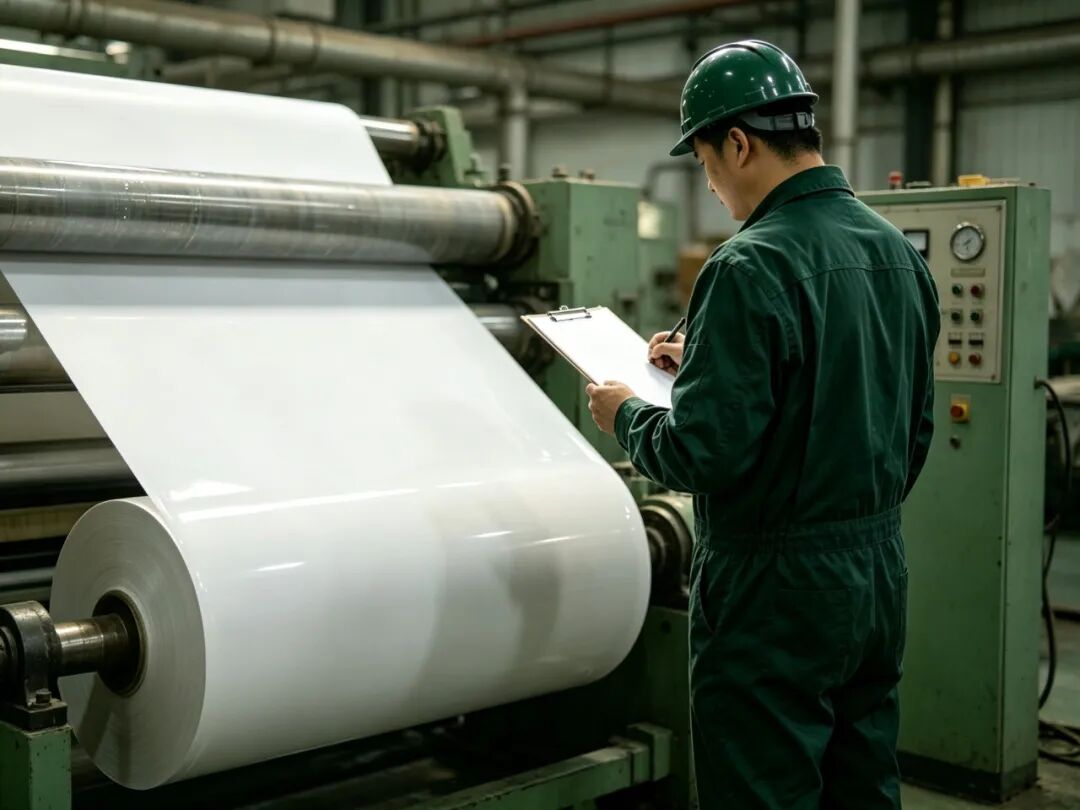
水性涂布以水为介质把功能聚合物渗入纤维,不覆独立塑料膜,是同时回应三部法规的内壁路线。
需求侧的增速已经在反映这种切换。据第三方市场研究测算,中国无塑涂层纸制品2025年市场规模约48.6亿元、同比增长约12.3%;作为对照,中国造纸协会数据显示,2025年全国造纸和纸制品业营业收入约1.42万亿元、同比下降约2.6%,利润总额同比下滑约13.6%,全行业增量不增利,细分赛道的两位数增长与大盘的负增长形成鲜明反差;食品级无塑涂层纸2026年规模预计约21.6亿元、同比增长约16.1%;全球水性涂布纸市场预计到2032年达到约163.1亿美元,年复合增速约14.25%;在热封食品纸中,水性分散涂层2026年预计占比约36%。这里要做口径消歧:几组数字统计范围不同,48.6亿元对应无塑涂层纸制品整体、21.6亿元对应食品级无塑涂层纸原纸,全球数据为美元口径且来自不同机构,彼此不能直接横向比较,引用时须各自标注来源;它们多为第三方测算,高增速也建立在较小基数上。同时要提醒,叫"水性"不等于自动合规,终产品仍须按新国标完成迁移验证。
05 大行情的四个支点,与产业链卡位清单
把逻辑收束一下,水涂纸这轮行情不是概念炒作,而是四个支点同时到位。
需求侧,强制替换。新国标和PPWR之后,品牌与纸餐具厂必须把内壁换成能拿出合规证据的方案,水性路线从"高端可选项"变为"默认备选"之一,替换由自愿转向合规驱动。
供给侧,标准与产能成熟。水性涂布纸产品国标进入报批阶段,品类命名、分级和检测走向统一;国内水性阻隔乳液和涂布产能同步成熟,规模上来后成本继续下行。
出口侧,通行证效应。无氟、低塑、可回收正在成为对欧出口的硬门槛,水涂纸是少数能同时回应PFAS限制、5%塑料红线和可回收设计要求的基材,出口订单会优先流向已完成验证的企业。
工艺侧,克重与产线适配。水性涂层克重更省、可再浆,且能与现有涂布、印刷、成型线较好衔接,切换成本低于整体更换工艺。
沿产业链看,最先受益的是四类玩家:提供稳定水性阻隔乳液并给出迁移数据的涂层原料商、率先完成纸基加涂层双标验证的水性涂布纸厂、能向品牌交付完整合规证据链的纸餐具厂,以及提前锁定材料的品牌方。下面按原料与涂布、纸厂与纸餐具厂、品牌方与采购三个环节,各给一份本周就能启动的清单。
涂布厂和原料商:把配方逐项对照附录A,优先排查双酚A、芳香族伯胺和添加剂限量,向客户提供基础原料合规信息和迁移实测,而不是一句"符合食品级"。
纸厂和纸餐具厂:按"纸基GB 4806.8加涂层GB 4806.10"双线安排终产品检测,补齐总迁移、重金属、甲醛、双酚A,涉及异氰酸酯或偶氮着色剂的加测芳香族伯胺,并按热饮、烘焙等真实使用条件选择模拟物、温度和时间,更新符合性声明与标识。
品牌方和采购:用三句话筛供应商——内壁用的是PE、PLA、含氟还是水性体系;能不能提供按GB 4806.10-2025做的终产品迁移实测值而非"合格"二字;产品出口时能不能同时满足PPWR对无氟和可回收的要求,并把这三点写进供应商准入。
博碳PHA水性阻隔乳液走的正是水性加PHA路线:2026年1月,其PHA生物基水性阻隔涂层经国家食品接触材料检测重点实验室(常州)依据GB 4806.10-2025检测,4份报告全部项目合格,成为2026年首个在这一新国标下取得全项合格报告的涂层产品;此后又取得ABA、BPI、DIN CERTCO三大堆肥认证,并在2026年5月获得全球首张PHA水性阻隔涂层BPI家庭堆肥认证,围绕纸基阻隔布局了发明专利簇,产品定义本身就落在三部法规的交点上。需要再次强调,所谓大行情,本质是合规成本重估之后,订单向少数提前准备好材料、检测和证据链的企业集中;它不会均匀落在每个参与者身上,也不构成任何投资建议。新规生效的第一周,也是重新排队的第一周。
本文由博碳包装依据公开资料、政府及标准平台公开信息(含《中华人民共和国生态环境法典》、GB 4806.10-2025等标准文本、PPWR官方解读)、第三方市场研究、企业公开披露与检测机构公开报告整理,核验截至2026年9月9日;文中市场规模与增速为第三方测算口径,仅供产业研究参考。本文供产业研究学习,不构成采购或性能保证;如需修改、说明或删除,可通过本公众号联系,我们将在收到后24小时内核查处理。
On 2 September 2026, China's mandatory GB 4806.10-2025, National Food Safety Standard: Coatings and Coating Layers for Food Contact Materials and Articles, came into effect. Today marks its first full week. Seen over a month rather than a single day, this is more than a routine revision: it is the latest in a series of regulatory developments affecting packaging.
The EU Packaging and Packaging Waste Regulation (PPWR) began to apply on 12 August; China's Ecological and Environmental Code took effect on 15 August; and the revised coatings standard followed on 2 September. Together, these developments sharpen the focus on safety, recycling and plastic reduction, although individual requirements have different implementation dates. They are drawing attention to the thin functional layer inside paper cups and food containers, and to paper with water-based coatings. This article examines the regulatory changes, the opportunities for water-based coated paper and the practical implications across the value chain.
01 The first week: a clearer standard for the inner coating
The previous framework left an important gap. The 2016 edition excluded coatings on paper, while the paper and board substrate was covered by GB 4806.8. In practice, some laboratories assessed the substrate against GB 4806.8 and applied the plastics standard GB 4806.7 to the coating, making the two sets of results difficult to reconcile. Inner cup coatings, grease-resistant layers on burger wrap and greaseproof paper, coatings inside moulded-fibre food containers and sealing materials all required a more clearly defined assessment of their function and applicable standards.
The revised scope removes the paper-coating exclusion. It covers coatings on food-contact materials and articles, including indirect-contact coatings whose constituents may transfer into food. For coated paper cups and moulded-fibre containers, the substrate and the coating must each be assessed under the relevant requirements, using representative finished articles and appropriate test conditions. Adhesives and plastic layers also require their own applicable standards. A layer only a few to a few dozen micrometres thick is therefore a market-access issue as well as a manufacturing and cost consideration.
02 Three regulatory developments in one month
The significance becomes clearer when the three developments are viewed together.
12 August: the PPWR begins to apply. Regulation (EU) 2025/40 replaces Directive 94/62/EC, subject to transitional provisions, and applies directly across Member States. Requirements are phased. Food-contact packaging must meet all PFAS limits: 25 ppb for any targeted PFAS, 250 ppb for their targeted sum, and 50 ppm including polymeric PFAS. Total fluorine below 50 mg/kg alone does not establish compliance. The combined lead, cadmium, mercury and hexavalent chromium limit is 100 mg/kg. Article 7 exempts plastic parts below 5% of total packaging-unit weight from specified recycled-content requirements; this is not a universal plastic-classification threshold. The 35% and 65% targets for 2030 and 2040 concern the 'other plastic packaging' category, not all food-contact packaging. Category-specific rules, exemptions and commencement provisions must be checked.
15 August 2026: China's Ecological and Environmental Code takes effect. Adopted on 12 March 2026 at the fourth session of the 14th National People's Congress, the Code has five books and 1,242 articles. It is China's second law titled a code, after the Civil Code, and consolidates a broad body of environmental legislation. The circular-economy chapter in Book Four, on green and low-carbon development, provides a long-term framework. Article 957 addresses standards for green design, green manufacturing, waste utilisation and household-waste recycling; Article 959 addresses extended producer responsibility; Article 996 encourages green packaging and packaging reduction; and Article 998 provides for lawful prohibitions and restrictions on certain non-degradable single-use plastic products and promotes reusable, easily recyclable, degradable and harmless alternatives.
2 September: GB 4806.10-2025 takes effect. Its focus is chemical safety, including migration from coatings. The PPWR addresses packaging circularity and restricted substances, the Chinese Code sets the broader domestic direction for resource circulation and plastic reduction, and the coatings standard defines food-contact safety requirements. Together, they require manufacturers to assess the inner surface of paper food packaging from several perspectives.
A further development is the proposed product standard for Water-Based Coated Paper and Board for Food Packaging. The source article reports that the relevant national technical committee has prepared a draft for approval, with Types I, II and III covering applications such as burger and pastry wraps, dried-fruit bags and disposable drinking vessels. A draft is not yet an implemented standard, but consistent terminology, classification and testing would support the category's development.
03 Five important changes in the coatings standard
For manufacturers, the revised coatings standard brings five immediate areas to review.
First: paper coatings enter the scope, including relevant indirect contact. Inner cup coatings, grease-resistant paper and coated moulded-fibre containers require assessment under the new scope. Sealing materials must be classified by function; an adhesive is not automatically a coating. Finished-article testing must reflect the construction and contact conditions.
Second: the expanded raw-material list requires traceable identification. The technical comparison cited in the source article puts the permitted base-material list at approximately 346 entries, up from about 105. Check CAS identities, maximum use levels, specific migration limits and other restrictions where specified. Base materials and additives follow different provisions: Annex A and relevant announcements for the former, and GB 9685 and relevant announcements for the latter. An unlisted ingredient cannot simply be justified by a generic 'food-grade' claim.
Third: a tighter specific migration limit for bisphenol A. The relevant limit falls from 0.6 to 0.05 mg/kg: one-twelfth of the previous value, or approximately a 92% reduction. Epoxy-based systems involving BPA must be assessed against the applicable entry and use restrictions; selecting a low-BPA grade alone is not proof of finished-product compliance.
Fourth: a total migration requirement for primary aromatic amines. For relevant coatings containing aromatic isocyanates, azo colourants or other potential sources of these amines, the total must be non-detectable at a detection limit of 0.01 mg/kg. Test the finished article after curing. Amines with their own limits in Annex A, GB 9685 or relevant announcements remain subject to those specific provisions.
Fifth: updated migration and physicochemical requirements. For direct-food-contact coatings, overall migration must not exceed 10 mg/dm², heavy metals expressed as lead must not exceed 1 mg/kg, and potassium permanganate consumption must not exceed 10 mg/kg under the prescribed conditions. For coatings on articles intended specifically for infants and young children, overall migration is converted using the actual surface-area-to-volume ratio and must not exceed 60 mg/kg. The indirect-contact test provisions differ and must be checked separately.
The coatings standard complements the substrate requirements. Paper and board remain subject to GB 4806.8-2022, coatings to GB 4806.10-2025 and additives to GB 9685 and relevant announcements. If the construction contains plastic layers, adhesives or inks, their applicable standards must also be checked. PE, PLA, fluorinated treatments and water-based systems all require an assessment appropriate to their chemistry and structure.
04 Comparing four barrier approaches: where water-based coatings fit
The main approaches to the inner surface of paper foodservice ware have different strengths and limitations when assessed for safety, circularity and production performance.
PE extrusion coating is the most established approach. Its mature water resistance, low cost and good processability make it common in hot-drink cups. However, a separate petroleum-based plastic layer can complicate fibre recovery, depending on the collection and recycling system. The source article uses a single-sided coating weight of 18 g/m² or more as an illustration, rather than a universal minimum. On 300 g/m² board, an 18 g/m² layer represents about 5.7% of the combined 318 g/m² sheet, not 6% of the finished packaging unit. This arithmetic does not determine legal classification. The structure still needs applicable food-contact testing. PE will not disappear immediately, but recovery requirements may encourage alternatives in some premium and export applications.
PLA extrusion coatings use a bio-based plastic. Suitable PLA products can be industrially compostable under specified conditions, but this requires product-level evidence and access to an appropriate treatment route. PLA still forms a plastic layer. Grease resistance, heat tolerance, recycling compatibility and cost depend on the grade and article design. It is therefore better suited to selected applications with a clearly defined collection and treatment system than presented as an automatic substitute in every use.
Fluorinated grease-resistant treatments face particular pressure in export and brand-led markets. Their strong grease resistance must now be weighed against PFAS restrictions and procurement policies. Research cited in the source article identifies moulded-fibre food packaging as one area of concern. The PPWR's food-contact PFAS limits are not confined to intentional addition, so removing intentionally added PFAS does not by itself demonstrate compliance. Exporters and brands need substance information and appropriate analytical evidence.
Water-based coated paper offers a promising option that can fit existing coating lines. These systems disperse functional polymers, including acrylic polymers or PHA, in water. After drying, the coating may penetrate the fibre network and form a barrier. Formulations can be designed without intentionally added fluorinated substances or BPA-based epoxy resins, but 'water-based' alone guarantees neither property. Food-contact safety, repulpability, recyclability and degradability must each be demonstrated for the finished structure. Nor does the absence of a separately extruded film automatically make a polymer coating legally plastic-free. Coating weight is nevertheless an important design variable. The source article cites emulsions with 20–40% solids and dry coat weights below 10 g/m². Wet application weight must be distinguished from the material left after drying. For 300 g/m² board, a 10 g/m² dry coating represents about 3.2% of the combined sheet, compared with about 5.7% for an 18 g/m² layer. Actual packaging-unit calculations must include the full construction, and regulatory exemptions require a separate assessment. Lower coat weight can support material efficiency when barrier performance and recovery compatibility are verified.
Water-based coating systems apply functional polymers from an aqueous dispersion. Barrier performance, coating weight and compatibility with fibre recovery must be verified for each finished construction.
The market estimates cited in the source article suggest growing interest. It reports a Chinese market for coated paper products marketed as 'plastic-free' of about RMB 4.86 billion in 2025, up approximately 12.3%. For comparison, it cites China Paper Association figures of roughly RMB 1.42 trillion in 2025 revenue for paper and paper-product manufacturing, down about 2.6%, with total profit down about 13.6%. The article also cites a 2026 estimate of RMB 2.16 billion for food-grade base paper marketed as having plastic-free coatings, up about 16.1%; a global water-based coated-paper market of approximately USD 16.31 billion by 2032, with a compound annual growth rate of about 14.25%; and an estimated 36% share for aqueous dispersion coatings in heat-sealable food paper in 2026. These figures cover different products, geographies and research providers and cannot be compared directly. The underlying market reports are not identified in the imported article, so these remain attributed estimates rather than independently verified market evidence. Growth also starts from a relatively small base. Commercial 'plastic-free' terminology does not establish regulatory classification, and all finished articles still require appropriate migration testing.
05 Four potential drivers and a practical checklist
The opportunity for water-based coated paper rests on four potential drivers, rather than on a guarantee that every product or supplier will benefit.
Demand: evidence-led material selection. Brands and foodservice-ware manufacturers need compliant constructions supported by evidence. Water-based barriers can become a routine option where they meet the intended-use requirements. The regulations do not require a blanket switch from every existing material.
Supply: developing standards and manufacturing capacity. The proposed product standard could bring greater consistency to naming, grading and testing. Domestic barrier-emulsion and coating capacity is also developing, with potential cost benefits as production scales.
Exports: documented compliance as a competitive advantage. Demonstrated PFAS compliance, reduced material use and validated recovery performance can strengthen an export offer. Suppliers should assess relevant recycled-content provisions separately, rather than use 5% as a general plastic-free or market-access threshold. Buyers are likely to favour suppliers with reliable evidence.
Processing: coat weight and production-line compatibility. Properly designed water-based coatings can reduce dry material use and work with existing coating, printing and forming operations. Potential advantages in repulping and changeover cost depend on the formulation, equipment and finished article.
Potential beneficiaries include raw-material suppliers that provide stable barrier emulsions and migration data, paper mills that validate substrate and coating together, converters that deliver complete compliance documentation, and brands that qualify materials early. The following actions can be started by three groups across the value chain.
Coaters and raw-material suppliers: review each formulation against the applicable base-material and additive provisions. Prioritise BPA, primary aromatic amines and relevant use limits. Provide material compliance information and actual migration results, rather than an unsupported 'food-grade' statement.
Paper mills and foodservice-ware converters: plan finished-article testing for the paper substrate and coating under the relevant standards. Include overall migration, heavy metals and other applicable parameters; assess formaldehyde, BPA and primary aromatic amines where the formulation triggers them. Select food simulants, temperature and duration to reflect uses such as hot drinks or baking. Update declarations of compliance and labelling.
Brands and procurement teams: establish whether the barrier is PE, PLA, fluorinated or water-based; request representative finished-article migration results under the applicable standards rather than a bare 'pass'; and obtain evidence for relevant PPWR substance and circularity requirements when exporting. Include these checks in supplier qualification.
BIOTEN's PHA waterborne barrier emulsion follows the aqueous PHA approach. According to the company's disclosures cited in the source article, its PHA-based waterborne barrier coating was tested in January 2026 by the National Key Laboratory for Food Contact Materials Testing (Changzhou) against GB 4806.10-2025, with all tested items passing across four reports. The company also reports compostability certifications from ABA, BPI and DIN CERTCO, a BPI home-compostability certification for its PHA waterborne barrier coating in May 2026, and a portfolio of inventions relating to paper barriers. Certification scope, report conditions and applicability to a customer's finished article must be checked against the actual documents. The commercial opportunity is ultimately about orders moving towards suppliers that have prepared materials, testing and documentation. Benefits will not be distributed evenly, and this is not investment advice. The first week of the revised standard is also a time for buyers to reassess supplier readiness.
This article was compiled by BIOTEN Packaging from public materials, government and standards information, including China's Ecological and Environmental Code, GB 4806.10-2025 and related standards, official PPWR explanations, third-party market research, corporate disclosures and public laboratory reports, with an information cutoff of 9 September 2026. Market sizes and growth rates are attributed third-party estimates for industry research only. This article is for research and learning and does not constitute a procurement or performance guarantee. For corrections, clarification or removal requests, contact us through this WeChat official account; we will review requests within 24 hours of receipt.