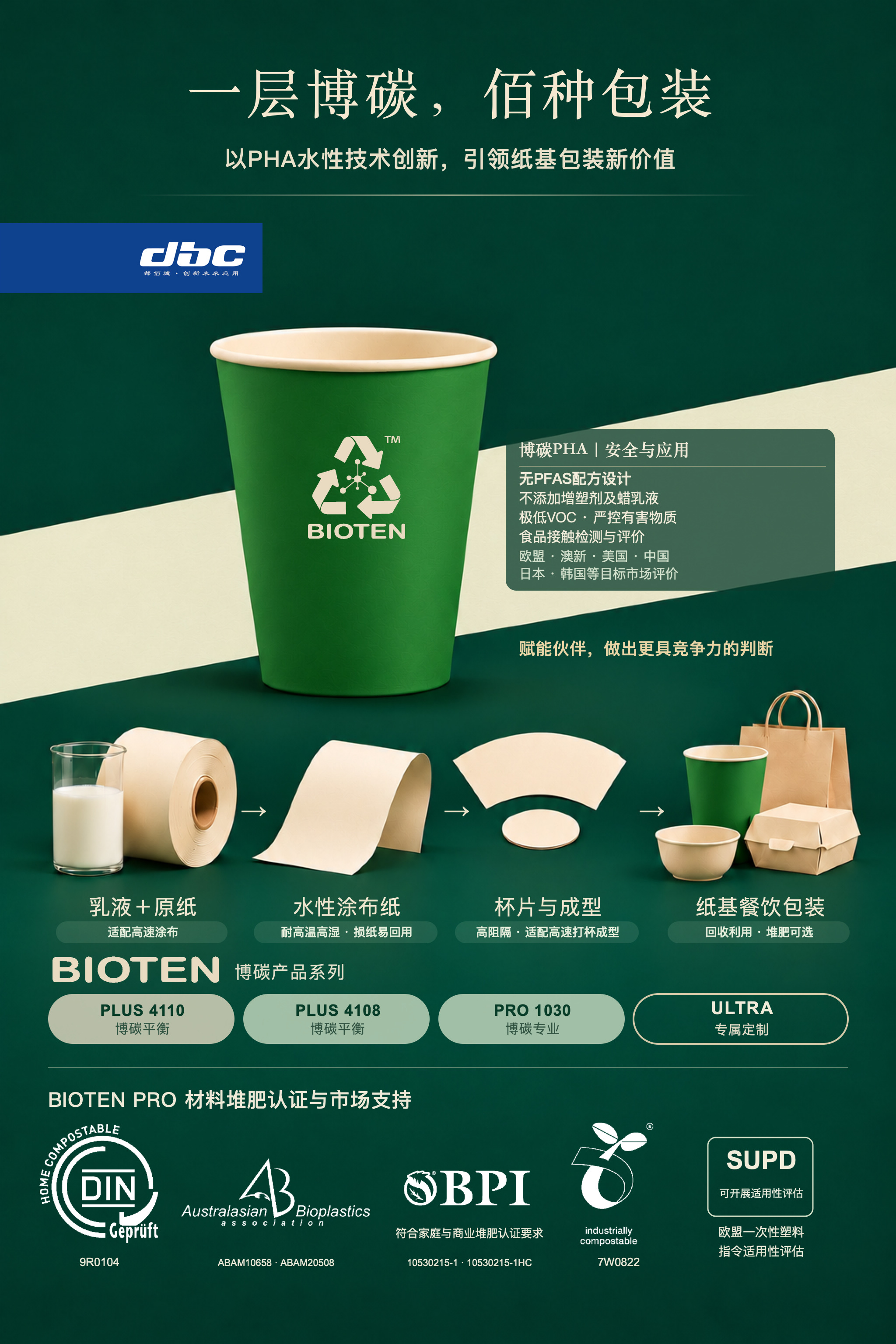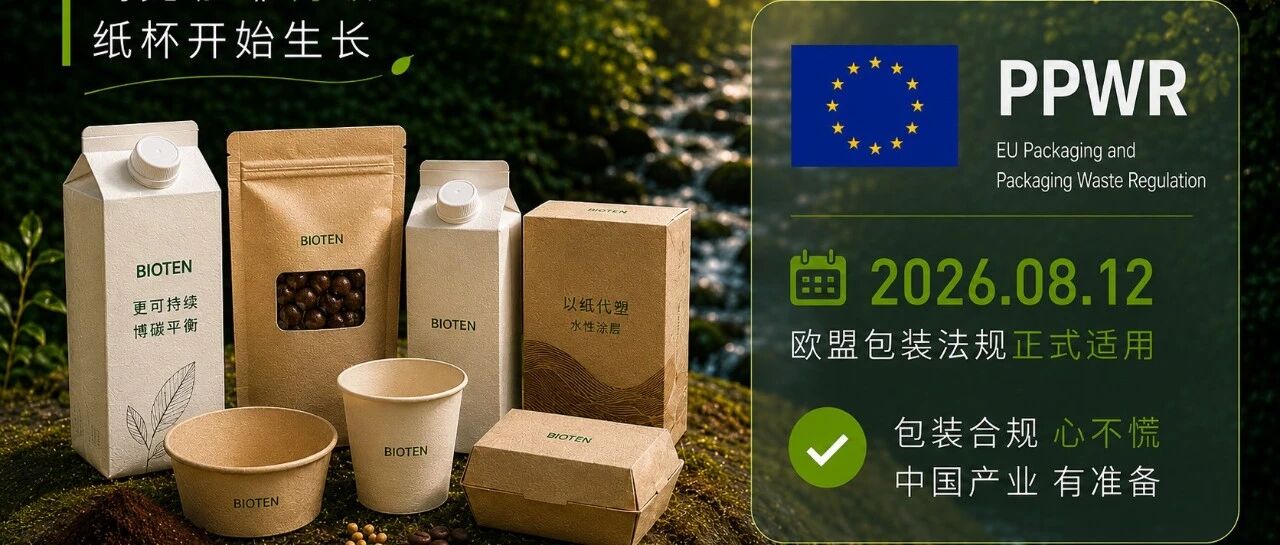
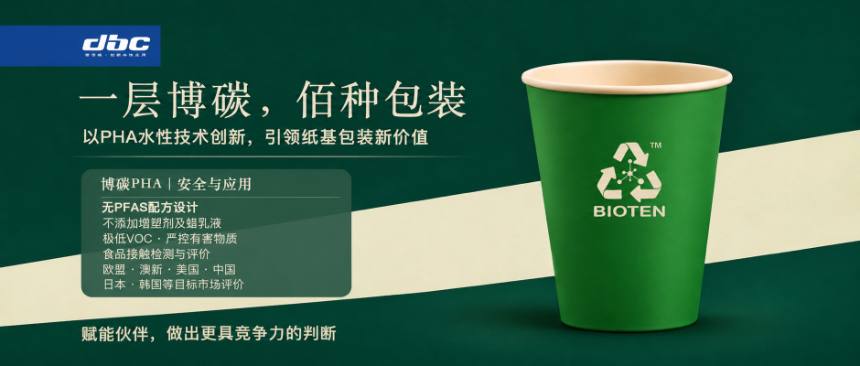
Starting with a layer of BIOTEN’s waterborne PHA barrier material, we work with partners across China’s paper packaging industry to reach the global market for paper-based packaging.
A sheet of paper must pass through coating, printing, die-cutting and forming before it can hold food or drink. The value of a material becomes apparent across that whole process.
At BIOTEN Packaging, we use waterborne PHA technology to connect materials research with papermaking, coating and converting, guided by food-contact safety, barrier performance and the needs of each application.
Drawing on DBC’s materials research and application development, BIOTEN works with BASF, Bluepha and paper packaging partners to bring material performance onto the production line, from the first sheet to a cup or a finished pack.
Food packaging starts with safety
A cup of hot coffee and a bowl of soup both expose packaging to a particular food, temperature and contact time.
We design our formulations without intentionally added PFAS. From raw material selection onward, we address volatile organic compounds (VOCs), odor and substances of concern.
In the published food-contact test reports, the samples submitted by BIOTEN met the criteria for the sensory, migration and residue tests listed. Material selection for each use also takes account of the food, contact temperature and duration, and the finished packaging structure.
This gives customers evidence on which to base their safety assessments.
Barrier performance on the production line
Cups need to hold hot drinks, bowls must contain broth and grease, and food wrapping paper must withstand folding, printing and further converting.
We select the waterborne barrier material together with the base paper, coat weight, drying and forming conditions to meet end-use requirements while preserving the feel of paper and compatibility with the production line.
Mills, coaters and converters need to know the cost per 1,000 cups that meet specification. That calculation includes base paper, coating material, drying energy, forming efficiency and converting losses.
Considering these costs together reveals what the material contributes to the finished product.
Performance must suit the application, the process must suit the line, and the overall cost must suit the market.
Choosing materials for different applications
BIOTEN offers waterborne acrylic and bio-based PHA systems for different packaging needs.
BIOTEN PLUS 4110 | Waterborne acrylic barrier emulsion
Designed for barrier performance and converting, 4110 balances heat-sealing compatibility with total cost. Selection also takes account of how the coated paper will perform in repulping for fiber recovery.
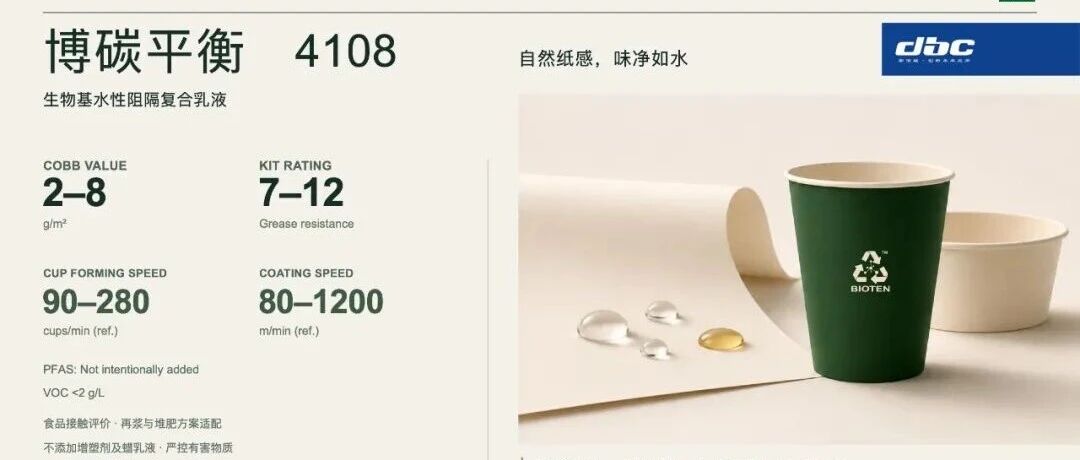
BIOTEN PLUS 4108 | Bio-based waterborne PHA composite emulsion
For cups and bowls, 4108 combines water and grease resistance with a natural paper feel and suitability for forming. Each finished article can be assessed for recycling, composting and applicable requirements under the EU Single-Use Plastics Directive (SUPD).
BIOTEN PRO 1030 | Waterborne PHA barrier emulsion
BPI has certified the coating material for home and commercial composting. It provides a starting point for developing compostable paper-based packaging, with further evaluation of each finished product’s structure.
BIOTEN ULTRA | Custom development
We work with customers to develop properties, material grades and product specifications tailored to their packaging applications and functional targets.
The end use, existing production line, cost target and intended market guide material selection. Each function should address a specific product need.
Resource efficiency throughout the product life cycle
Use less material at the source, recover resources after use and consider biodegradation where appropriate.
At the design stage, select materials and functions to avoid unnecessary consumption. In production, consider coating efficiency, forming yield and reuse of paper scrap together. After use, match the paper, coating and finished structure to an appropriate recycling, repulping or composting route.
Where materials come from, how the package will be used and where it will go afterward are questions for the start of development. The answers shape design and production decisions.
Combining expertise across the supply chain
A finished paper package depends on contributions from across the industry.
BIOTEN provides waterborne functional materials and application support. Paper mills develop the base paper, coaters establish the process, and printers, die-cutters and converters complete the package. Partners work toward the same performance, efficiency, cost and market requirements.
Each stage adds value, from barrier emulsion and coated paper to cup and bowl blanks and finished containers. A collaboration that begins with one cup can extend to bowls, meal boxes, food bags and other paper-based applications.
One BIOTEN layer, a hundred packaging possibilities.
To serve global markets, BIOTEN works with partners in China’s paper packaging industry, starting with a specific customer and end use. Together we connect materials innovation and manufacturing capabilities with demand to develop competitive products and support more sustainable production.
Bring us a paper sample, a cup or a packaging challenge. We welcome the opportunity to develop your next product together.
We keep the look of paper and expand what it can do.
BIOTEN Packaging