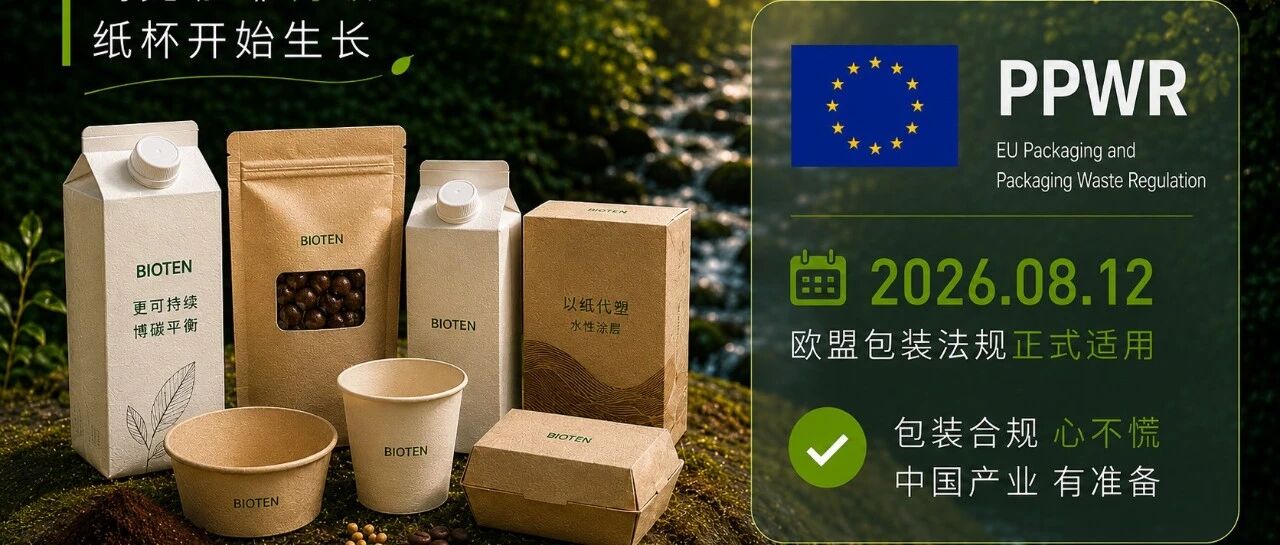



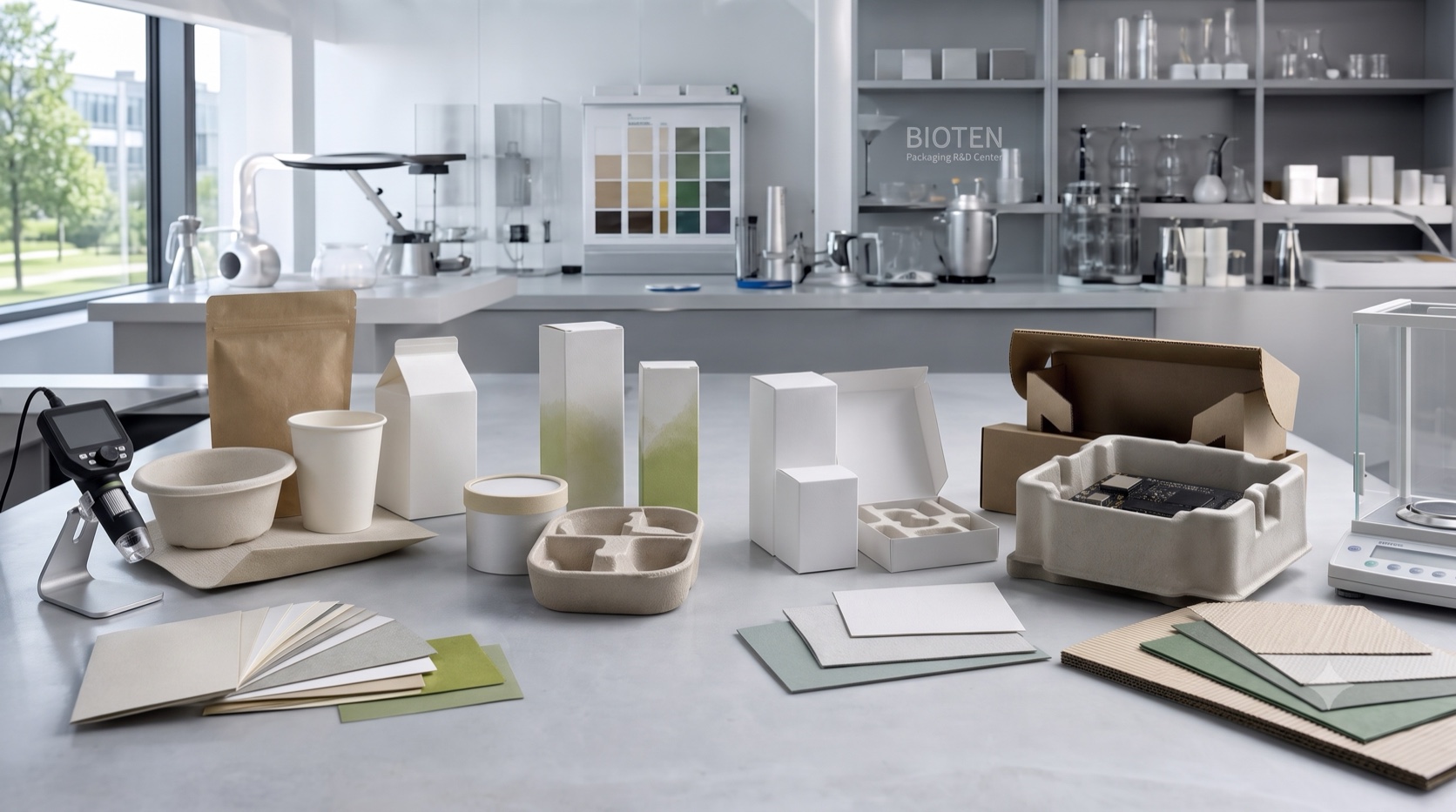
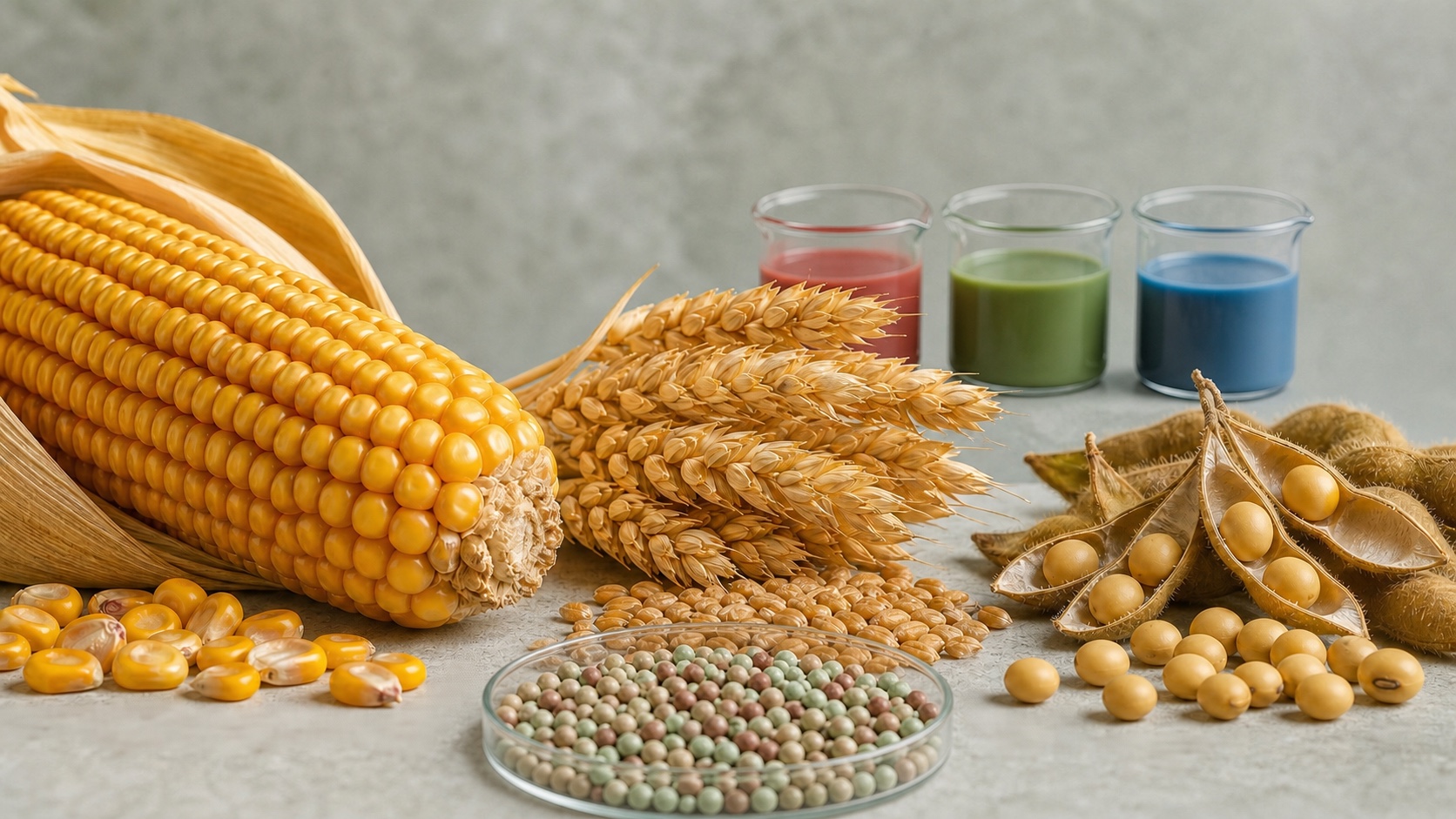
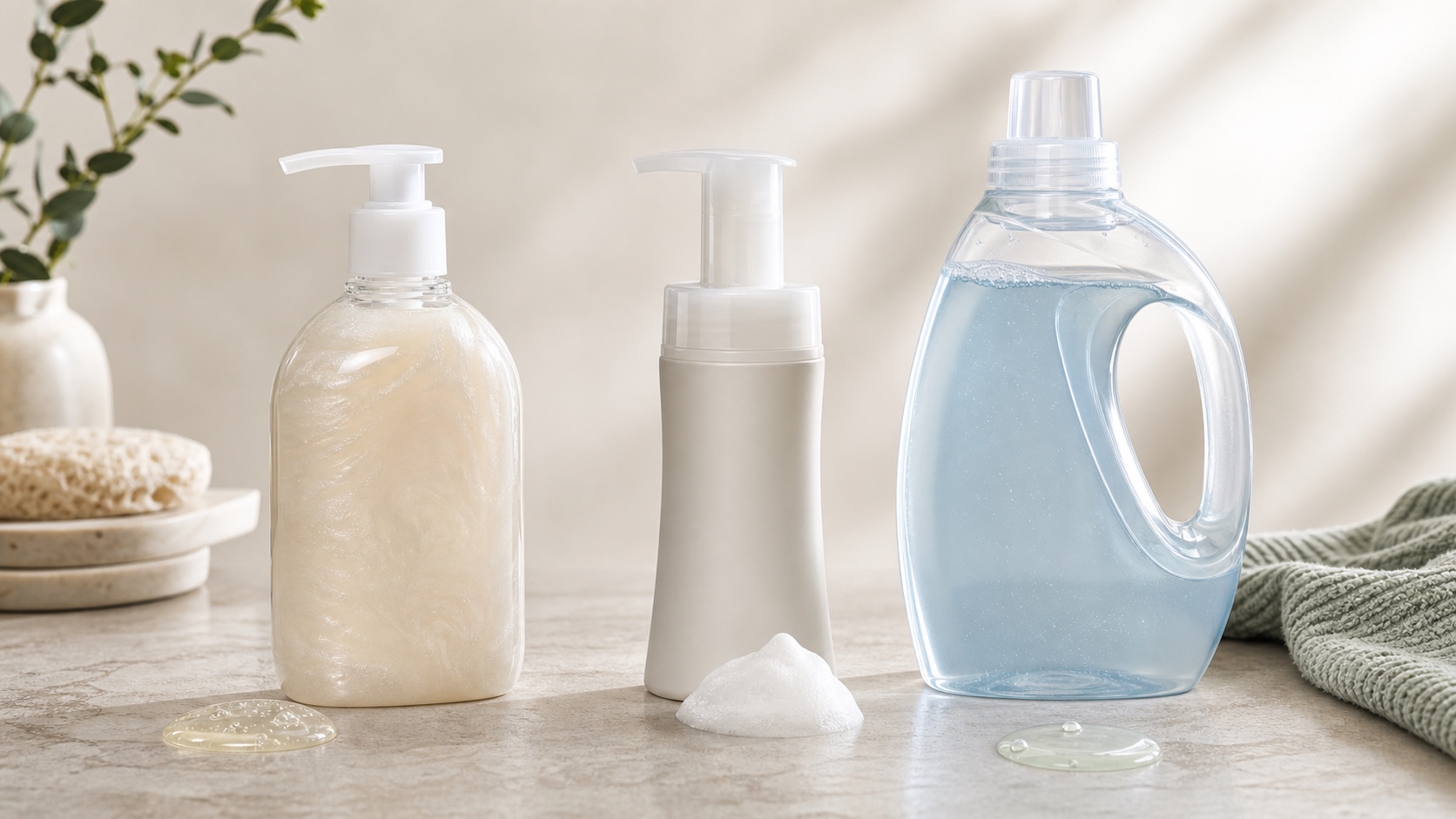
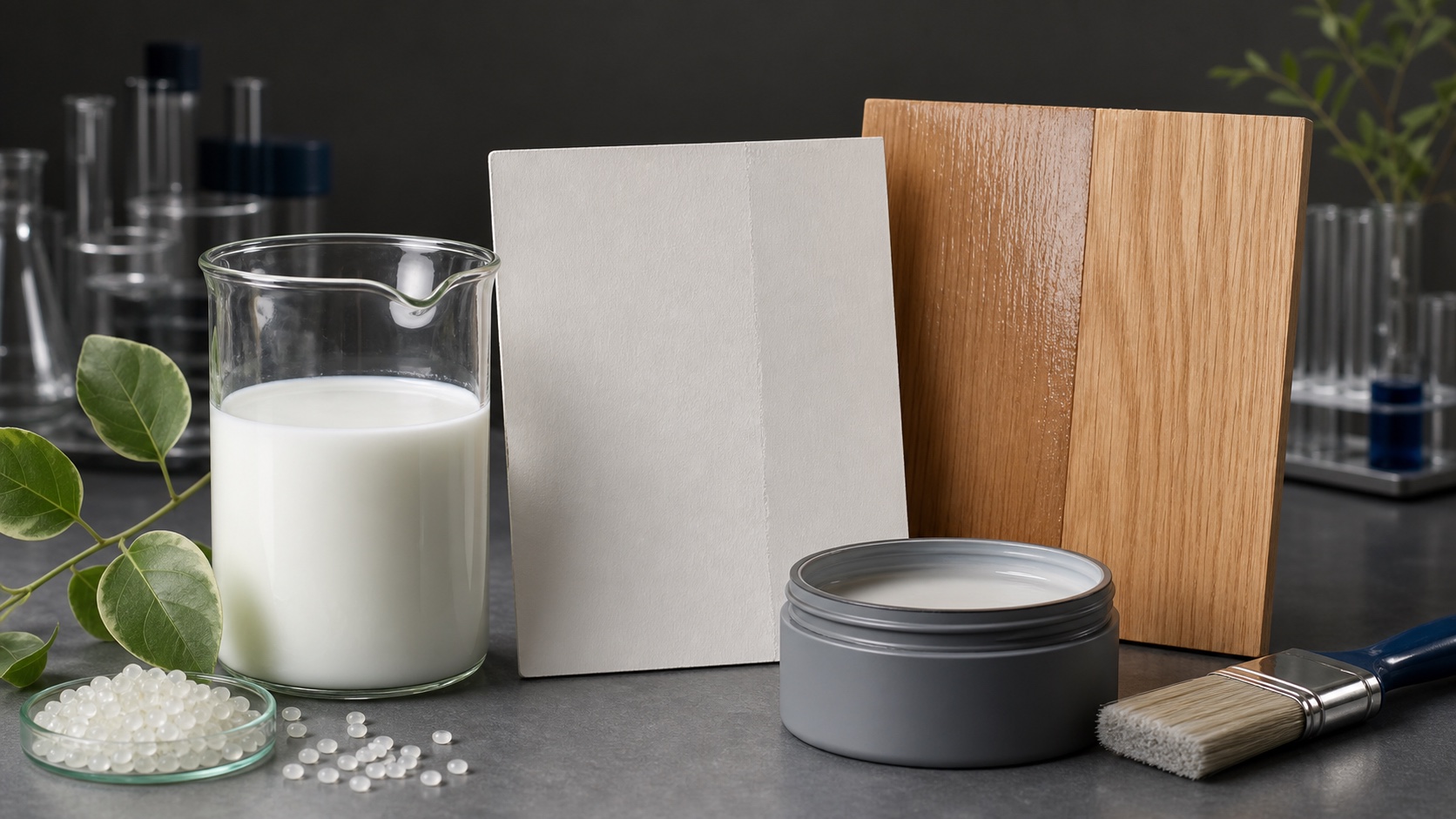


An integrated molded-fiber solution spanning functional barriers, surface protection, and fiber efficiency: value grows only when performance improves.
From an inner-surface barrier and exterior protection to fiber reduction within the structural network, this article explains the value logic of three engineering tracks for molded fiber.
BIOTEN Developer | Systems Engineering Innovation in Functional Paper-Based Materials
One Article, Three Engineering Tracks
From an inner-surface barrier and exterior protection to fiber reduction within the structural network, this article explains the value logic of three engineering tracks for molded fiber.
Value in molded fiber comes from more than the forming process. The inner surface must manage the contents, the exterior must withstand handling and abrasion, and the fiber structure must create room for material reduction without sacrificing function.
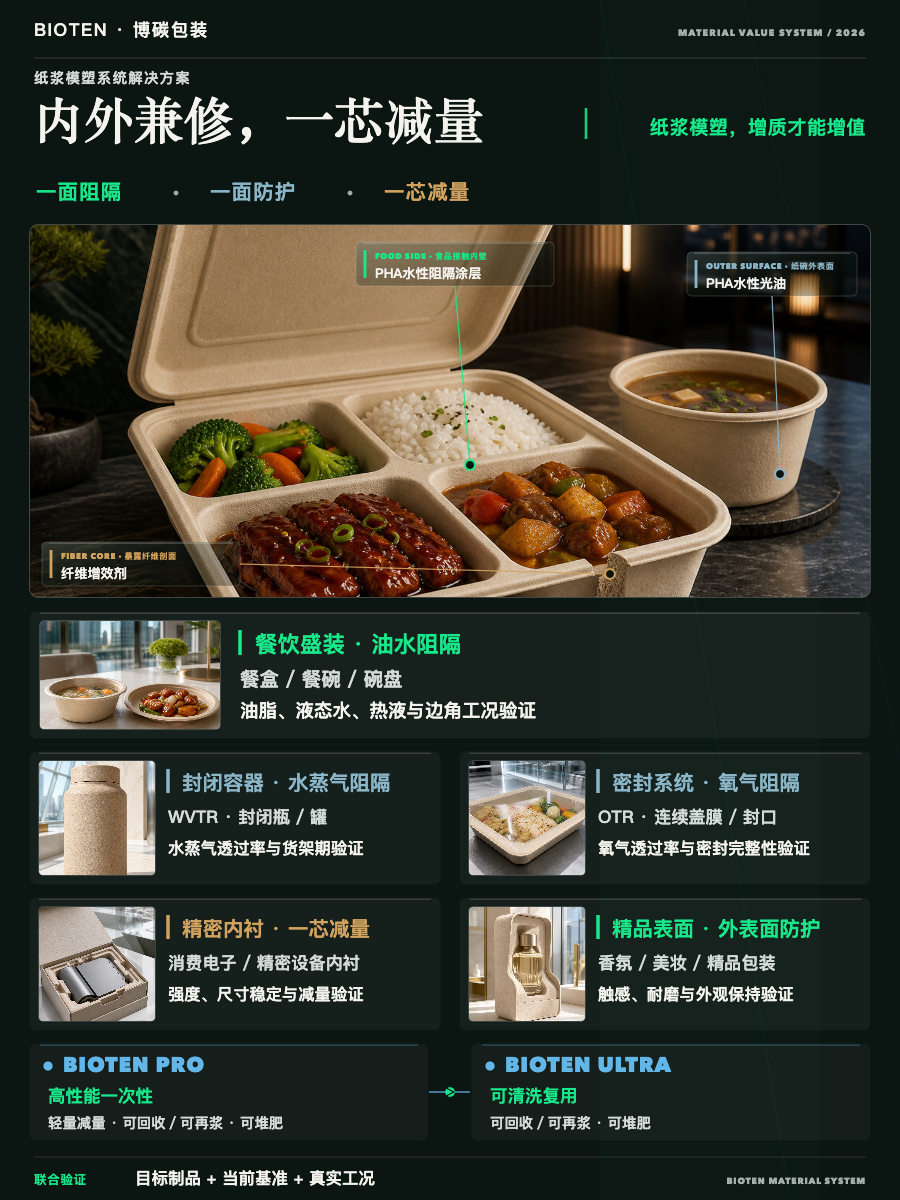
BIOTEN organizes its materials system around three functions—barrier performance inside, protection outside, and less fiber at the core—placing the respective materials on the inner surface, exterior surface, and within the fiber network. Each can be selected independently or validated in combination for the target article.
This article describes only material placement and application-development directions. Food-contact safety, barrier performance, strength, abrasion resistance, lightweighting, degradation, and end-of-life pathways must all be verified using the exact SKU, final bill of materials (BOM), and complete finished-article testing.
Our Inventions | An Original Technology Portfolio
The following are selected invention patents arising from DBC’s sustained systems R&D. Jointly filed by entities associated with the BIOTEN Packaging system and now granted and published, they cover selected innovations in barrier coatings, fiber reinforcement, and exterior-surface varnishes.
01 | Inner-Surface BarrierPolyhydroxyalkanoate (PHA) Waterborne Barrier-Coating Composition and Its ApplicationGranted Patent Publication No. CN120925356B
02 | Fiber ReinforcementAcid-Neutral Nano-PHA Paperboard Reinforcing Agent: Preparation and ApplicationsGranted Patent Publication No. CN121295549B
03 | Exterior-Surface VarnishLow-Odor, Low-VOC Waterborne Tactile Barrier Overprint-Varnish Composition Containing PHA, and Its Preparation and ApplicationsGranted Patent Publication No. CN121496785B
Patents demonstrate the originality and boundaries of the technology portfolio; they do not replace validation of the specific SKU, process window, or performance of the complete finished article.
01 · FOOD-CONTACT SURFACE
Barrier Performance Inside | Contents
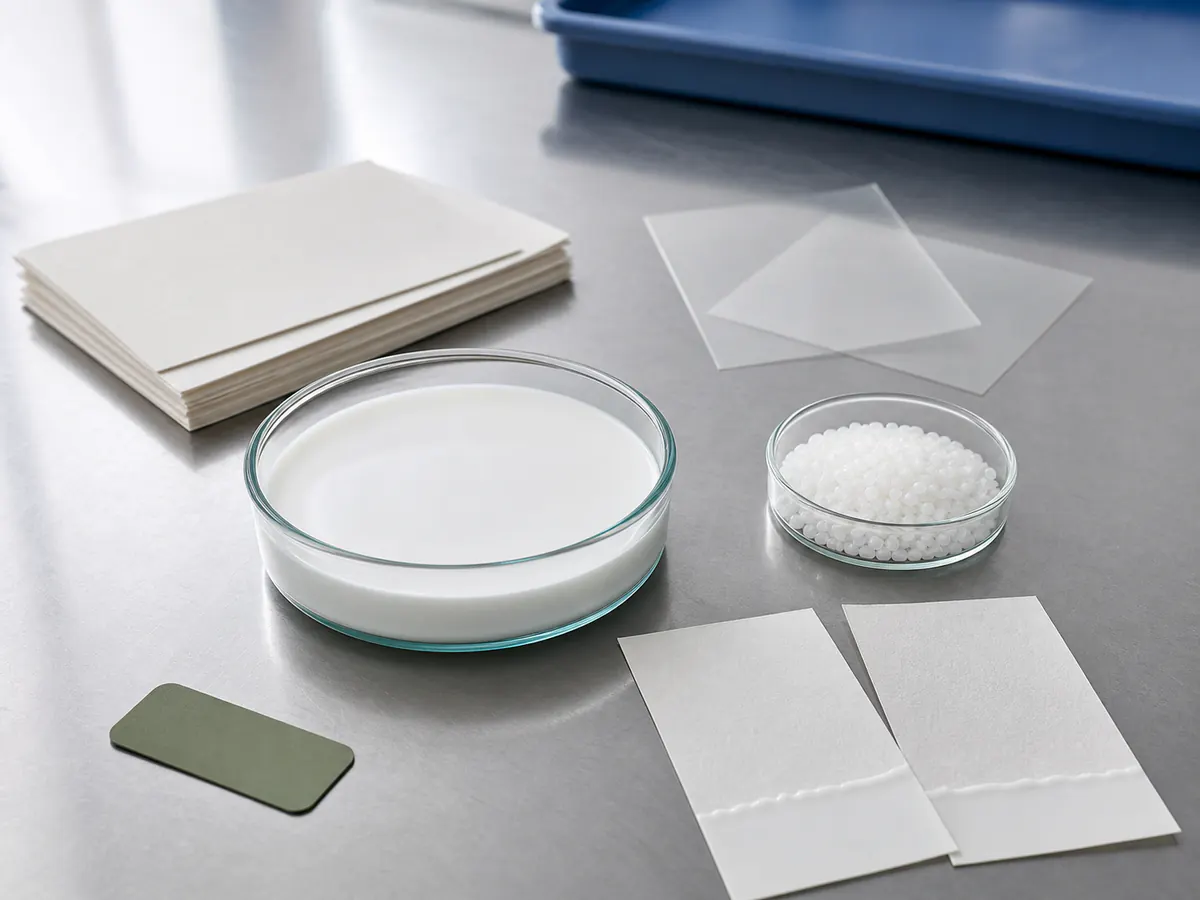
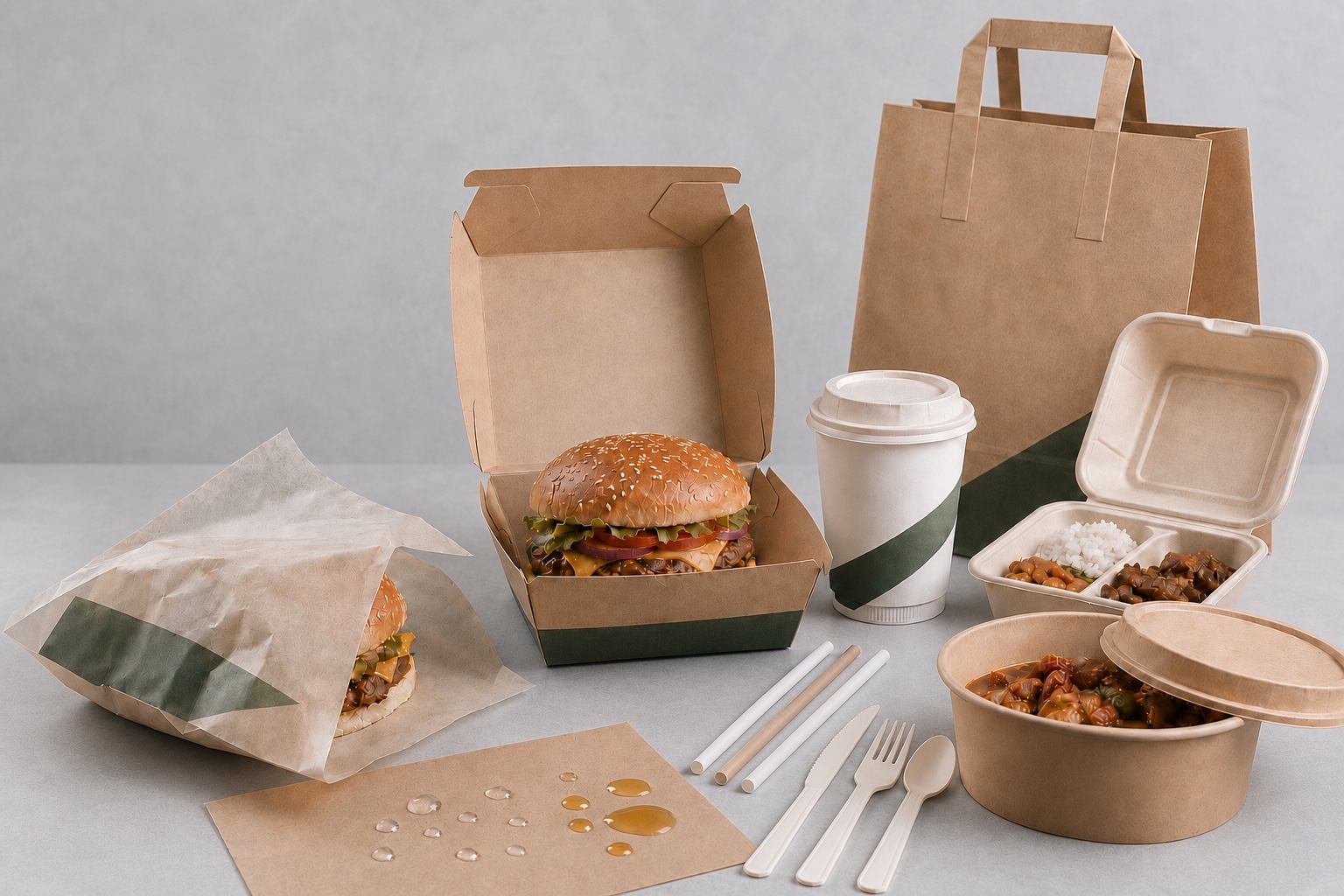
BIOTEN PHA waterborne barrier coating is applied to the food-contact surface and developed for grease, liquid water, hot liquids, and actual filling and use conditions. Foodservice containers require oil- and water-resistance testing, including at edges and corners; sealed bottles and jars require water vapor transmission rate (WVTR) testing; continuous lidding and sealing systems also require oxygen transmission rate (OTR) and seal-integrity testing. Different contents demand different barrier solutions.
02 · EXTERIOR SURFACE
Protection Outside | Exterior Surface
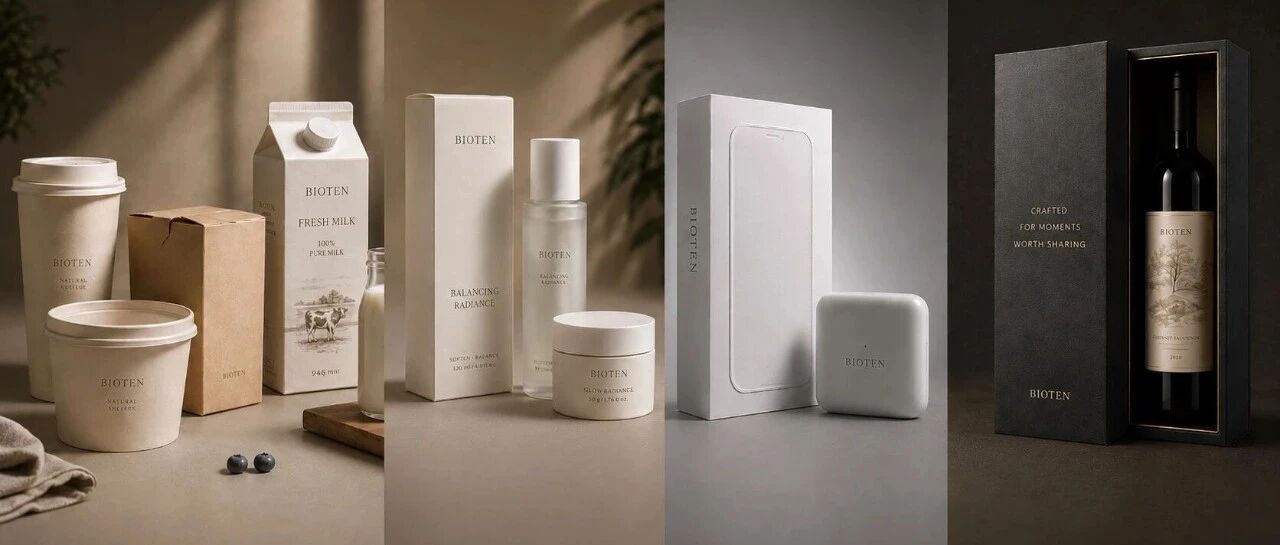
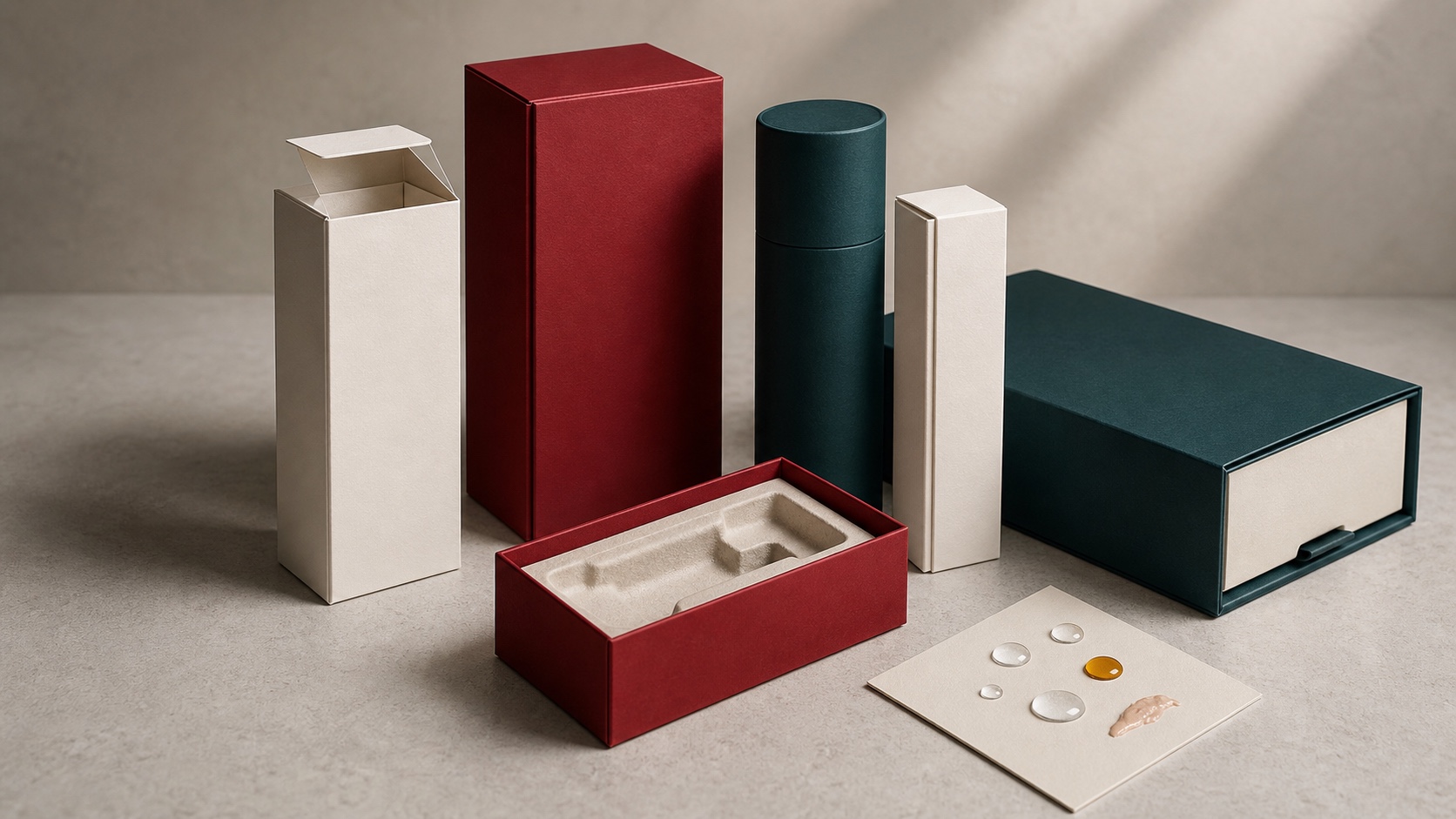
BIOTEN PHA waterborne overprint varnish is applied to the exterior surface to enhance appearance, haptics, abrasion resistance, and surface protection. It is suited to applications where the surface experience matters, including fragrance, beauty, premium consumer goods, and upscale foodservice packaging. This optional upgrade does not provide structural fiber reduction.
03 · FIBER CORE
Less Fiber at the Core | Fiber Network
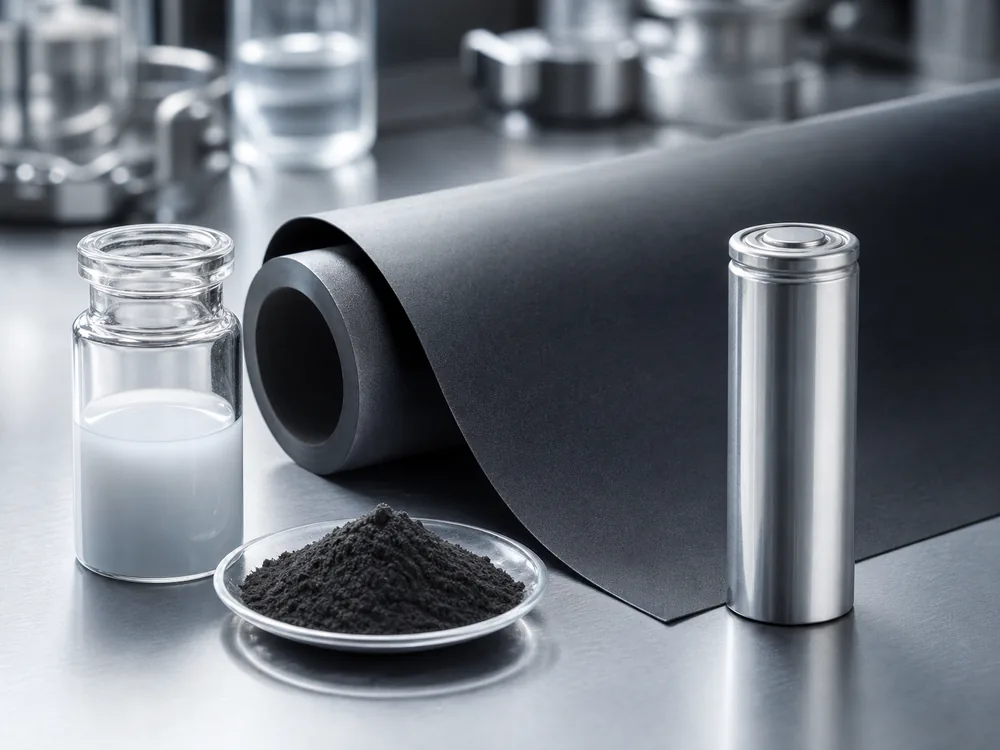
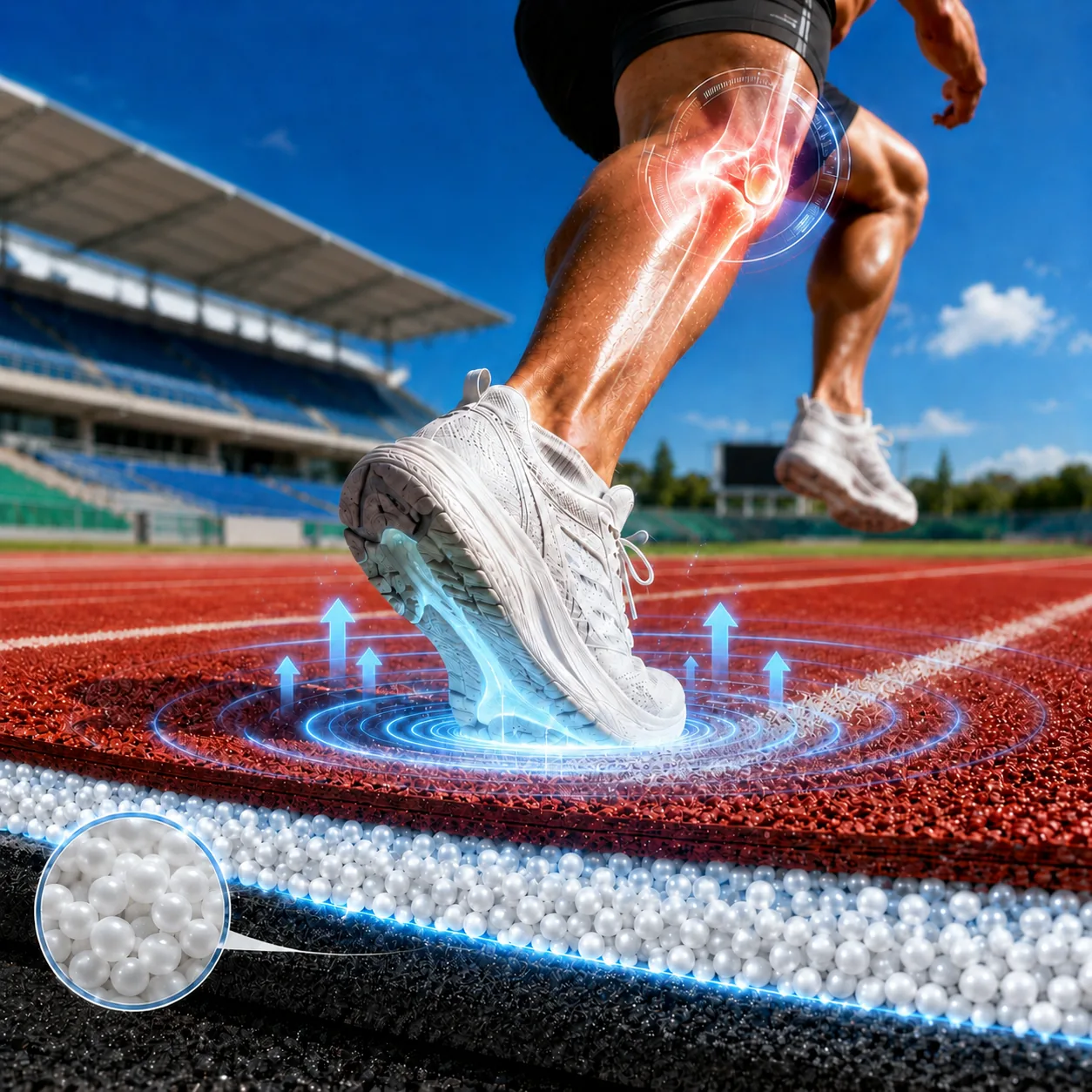
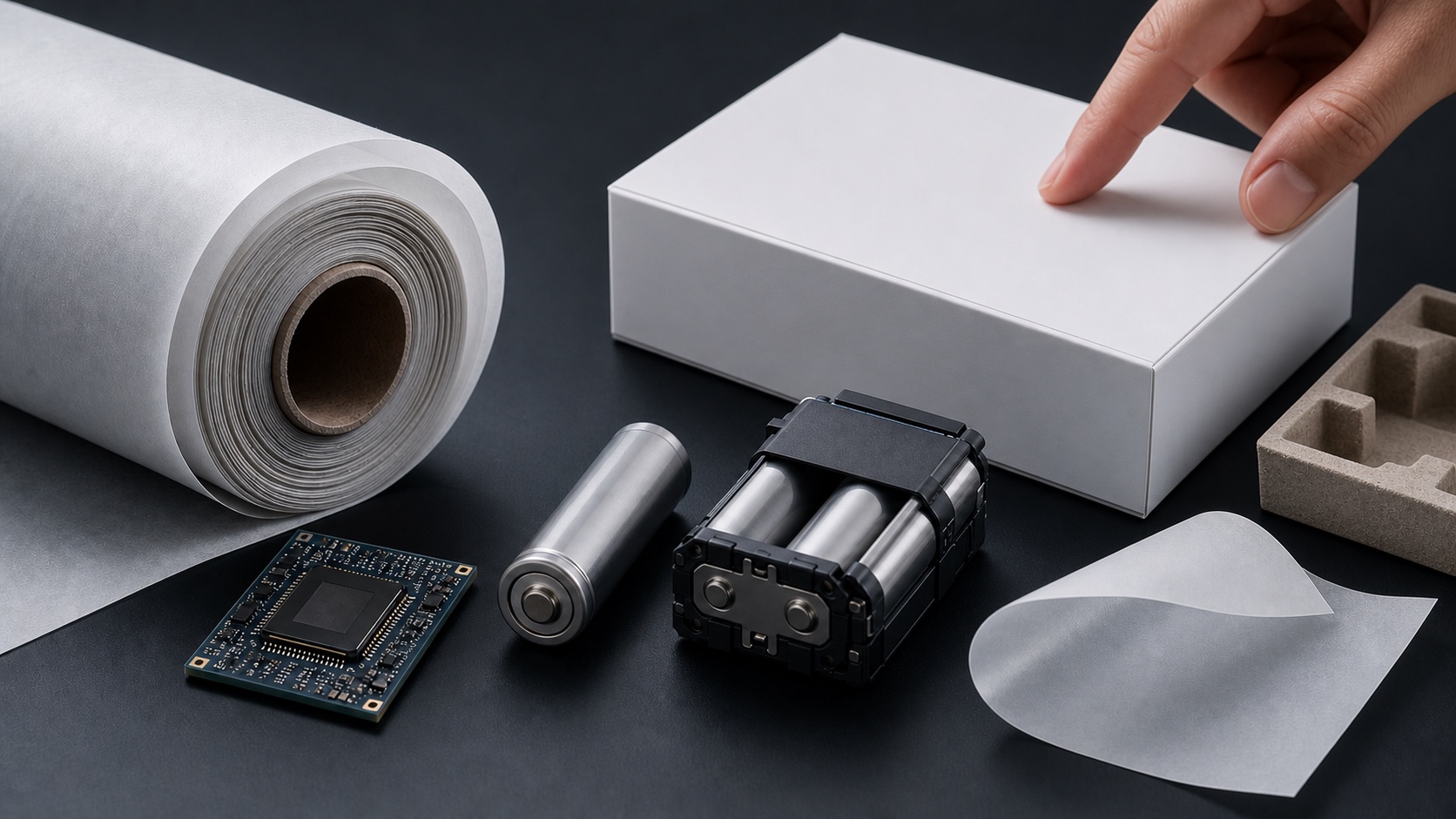
The fiber-efficiency additive is introduced into the furnish, wet preform, and internal fiber network. At addition levels of only a few parts per thousand, it can deliver a several-fold improvement in fiber reinforcement. Validation compares strength, dimensional stability, forming stability, and material use per article. The packaging-minimization trend is not simply about making packaging thinner; it is about reducing weight and volume to the minimum necessary to maintain functionality. Lightweighting must therefore be assessed using the same furnish, mold, and operating conditions, with dry weight per article and three-dimensional functional performance compared side by side.
Research references:Regulation (EU) 2025/40, Article 10 and Annex IV; BIOTEN Developer.
Select Validation Targets by Application
Foodservice containers |Grease, liquid water, hot liquids, and edges and corners.
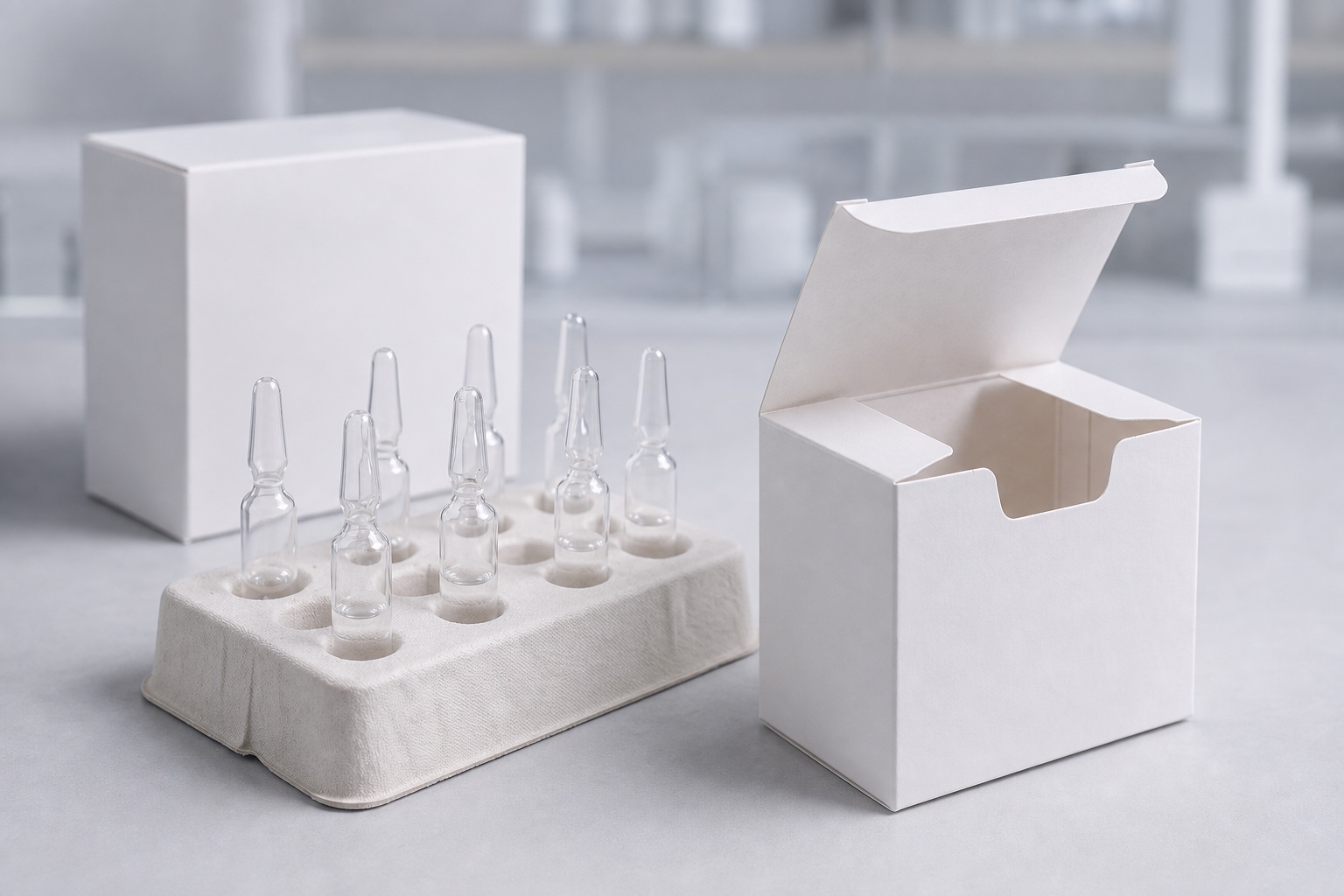
Sealed bottles and jars |WVTR and shelf life.
Lidding and sealing |OTR and seal integrity.
Protective inserts |Strength, dimensional stability, and lightweighting.
Premium exterior surfaces |Haptics, abrasion resistance, and appearance retention.
05 · JOINT VALIDATION
Start with One Target Article
The three engineering tracks can be selected independently or validated in combination. A project requires only three inputs to begin: one target article, one current baseline, and one actual use condition. Lightweighting validation must also compare dry weight per article and retention of functional performance.
Materials screening → 3D prototyping → functional-performance retention → lightweighting validation: a process that turns “less fiber at the core” into a comparable engineering result.
DBC · BIOTEN Packaging Developer | Research Notes
For BIOTEN/BIOTEN Packaging product-system information, product documentation, and technical data sheets (TDS), please contact us.
BIOTEN Developer | Data and Verification Sources
01 | ASTM International | Water Vapor Transmission Rate Test Method F1249
02 | ASTM International | Oxygen Transmission Rate Test Method for Complete Packages, F1307
03 | ASTM International | Seal Strength Test Method for Flexible Barrier Materials, F88/F88M
04 | TAPPI | Grease-Resistance Test Method for Paper and Paperboard, T 559
05 | ISO | Internal Bond Strength of Paper and Paperboard, ISO 16260
06 | EUR-Lex | Packaging-Minimization Requirements Under Regulation (EU) 2025/40
07 | Patent Search | Polyhydroxyalkanoate Waterborne Barrier-Coating Composition and Its Application
08 | Patent Search | Acid-Neutral Nano-PHA Paperboard Reinforcing Agent: Preparation and Applications
09 | Patent Search | Low-Odor, Low-VOC Waterborne Tactile Barrier Overprint-Varnish Composition Containing PHA
 (May require WeChat access)