

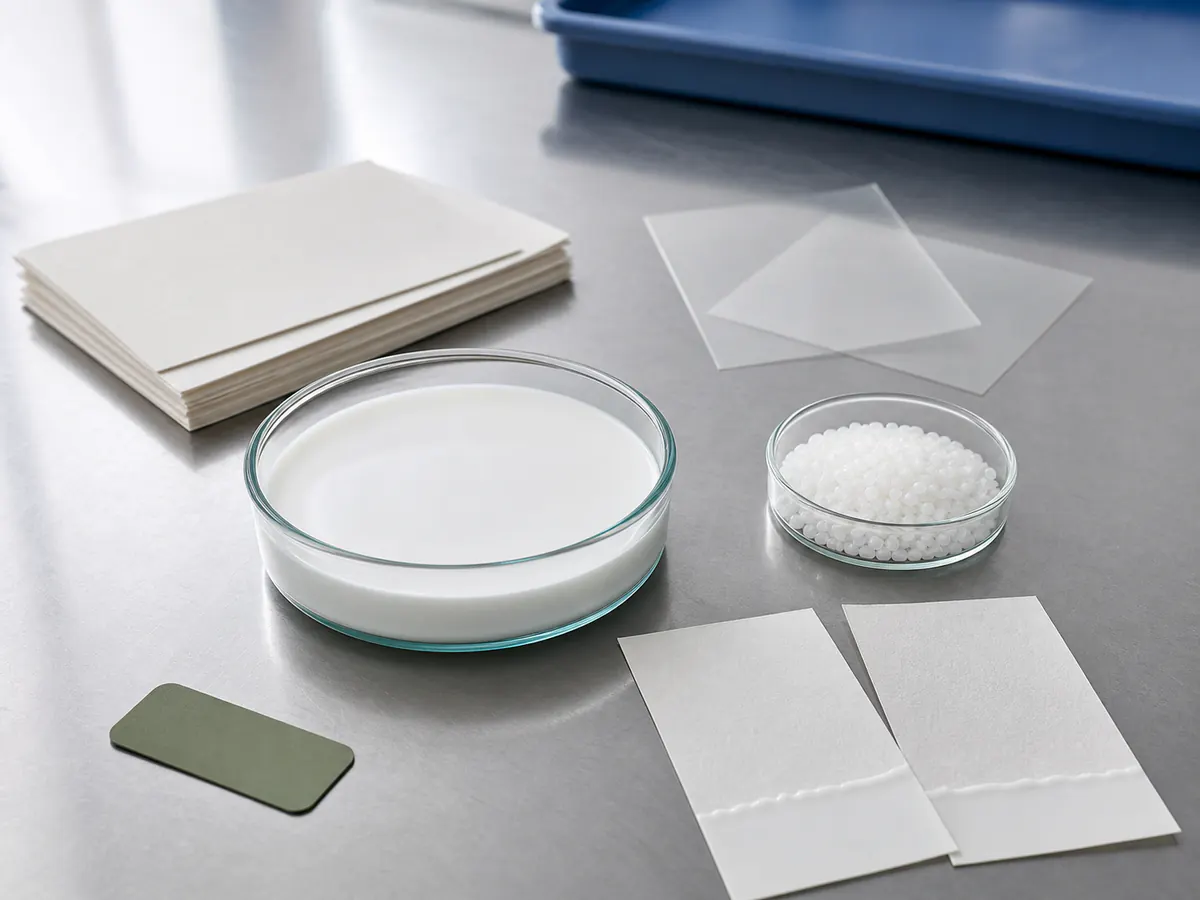











Seed size, surface structure, moisture and dust condition define the starting point for wetting, adhesion and film formation.
BIOTEN | AGRICULTURE
Engineer coating, binding and controlled release for real agricultural conditions.
Built on PHA-based waterborne functional emulsions and formulation capability, BIOTEN connects seed surfaces, coating actives, fertilizer granules, processing windows and field conditions in a continuous route from material fit and formulation design to application validation.
Application ObjectSeed coating · Seed pelleting · Fertilizer coating
Material rolesBinding · Film formation · Carrier · Controlled release
Critical conditionsProcessing · Storage · Sowing · Field
Development routeAgriculture application development
Agricultural Ecology
The value of an agricultural material lies in full-cycle fit, not a single metric.
Start with the seed, fertilizer and active ingredients. Define the formulation object and process boundary before observing material performance through processing, storage and use.
Coating agents, colorants, trace elements and bioactive components must be evaluated within the complete formulation.
Spraying, fluidization, drying, pelleting and mechanical sowing jointly affect dust-off, blocking and integrity.
Soil, moisture, temperature and crop stage define the release profile and the material's operating window.
A material logic that can be observed, decomposed and reviewed.
Place the material role, complete formulation, process conditions and application stage in one system—explain the phenomenon first, then design the experiment.
SeedSurface and moisture
FormulationEmulsion and actives
ProcessingCoating and drying
FieldRelease and growth
Map material state and agricultural stage in one framework.
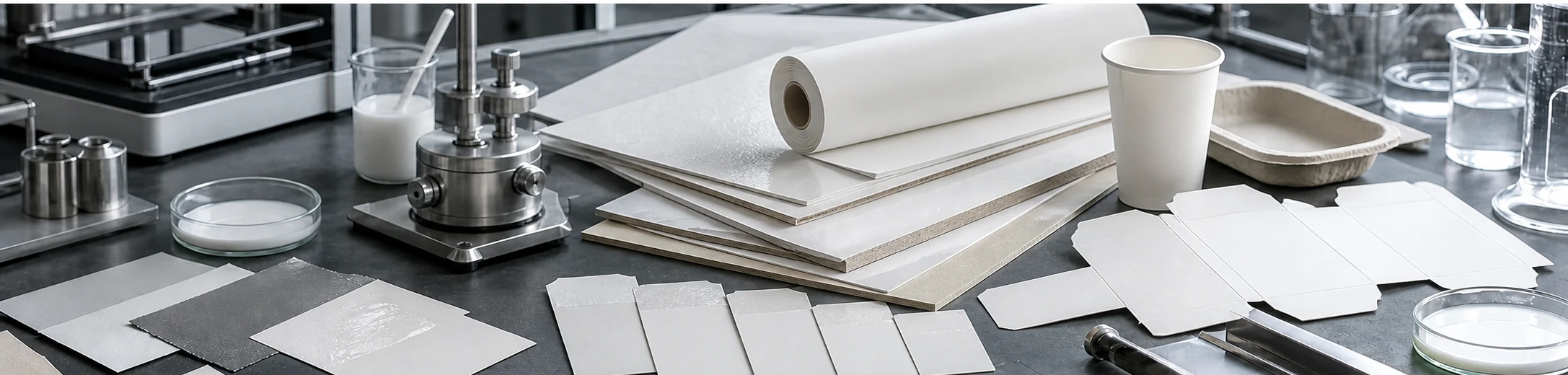
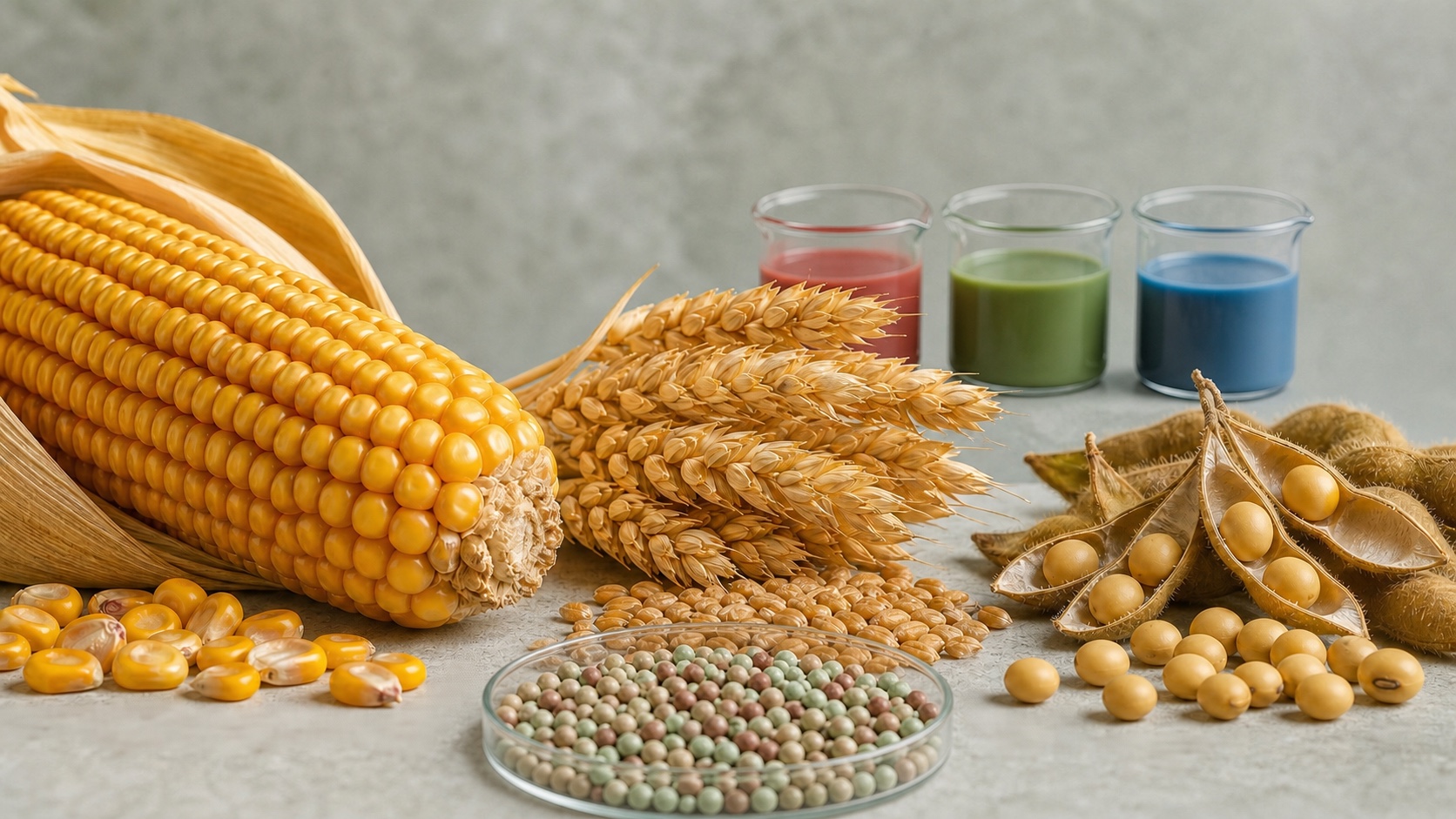
Red, green and blue coating emulsions serve different identification and formulation needs. Color is only the visible layer; the real task is to connect emulsion state, compatibility with actives, drying and film formation, storage stability and field use.
Coating materialWetting, binding, film formation and dust-off control
Controlled-release materialCoating integrity, release profile and granule fit
Process coordinationSpraying, fluidization, drying and pelleting windows
Application evaluationStorage, sowing, field and crop metrics
Turn different application objects into distinct development tasks.
Each scenario has a different material role, formulation boundary and evaluation method. One generalized conclusion cannot cover every application.
Seed coating
Define uniform coverage and drying windows around the seed surface, emulsion, colorants and active ingredients.
- Wetting and adhesion
- Film integrity
- Dust-off control
Seed pelleting
Integrate binding strength, pelleting efficiency, mechanical strength and disintegration route within one formulation.
- Granule formation
- Strength retention
- Release in use
Fertilizer coating
Design the release route around granule surface, coating thickness, environmental medium and nutrient target.
- Coating continuity
- Release profile
- Storage and transport fit
Agrochemical functional carrier
Evaluate compatibility, stability and application conditions for trace elements, biostimulants or other functional components.
- Formulation compatibility
- Storage stability
- Application window
A continuous development pathway from problem brief to application conclusion.
Each step defines its input, test object and next decision so material R&D remains connected to real application conditions.
Crop, seed or fertilizer granule
Emulsion, colorants and active ingredients
Spraying, fluidization, drying and pelleting
Storage, mechanical handling and release
Sowing conditions and crop metrics
SCOPE & EVIDENCE
Agricultural work starts as a material task and does not overstep crop-performance or registration conclusions.
Coating, binding, pelleting and controlled release are material, formulation and process-development directions. Specific effects require staged validation against the seed or fertilizer object, complete formulation, processing and storage conditions, field design and applicable regulatory route.
- Film-formation or binding performance is not presented as proof of higher yield, growth promotion or pesticide/fertilizer registration.
- Biosafety, environmental impact and field-performance claims require a project design and evaluation body with the appropriate capabilities.
Start development with the real formulation, process and problem.
Describe the application object, current system, target function, present failure and project stage. We will use them to define the minimum executable material and formulation task.