
This archival feature was published as scanned magazine pages. The complete original visual article is preserved below, followed by an English text reconstruction of the article.
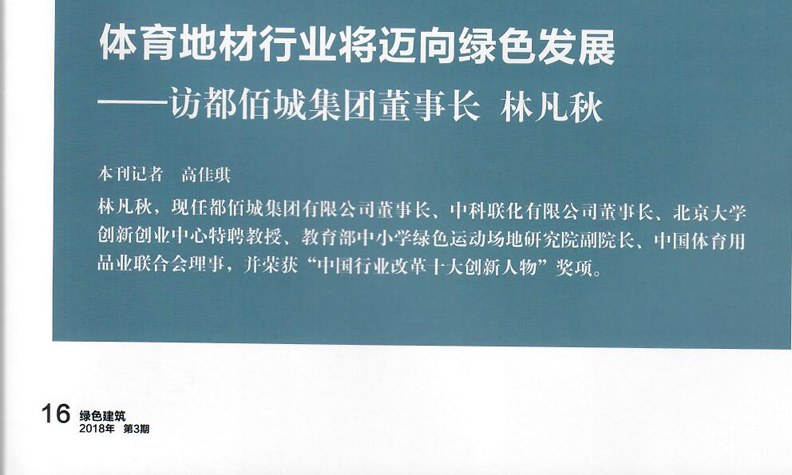
Sports Flooring Industry to Move Toward Green Development
Interview with Lin Fanqiu, Chairman of DBC Group
By Gao Jiaqi, staff reporter, Green Building, Issue 3, 2018.
At the time of publication, Lin Fanqiu served as chairman of DBC Group and CASU, a visiting professor at Peking University's Innovation and Entrepreneurship Center, deputy director of the Ministry of Education's research institute for green sports grounds in primary and secondary schools, and a council member of the China Sporting Goods Federation. He had also received an industry innovation award.
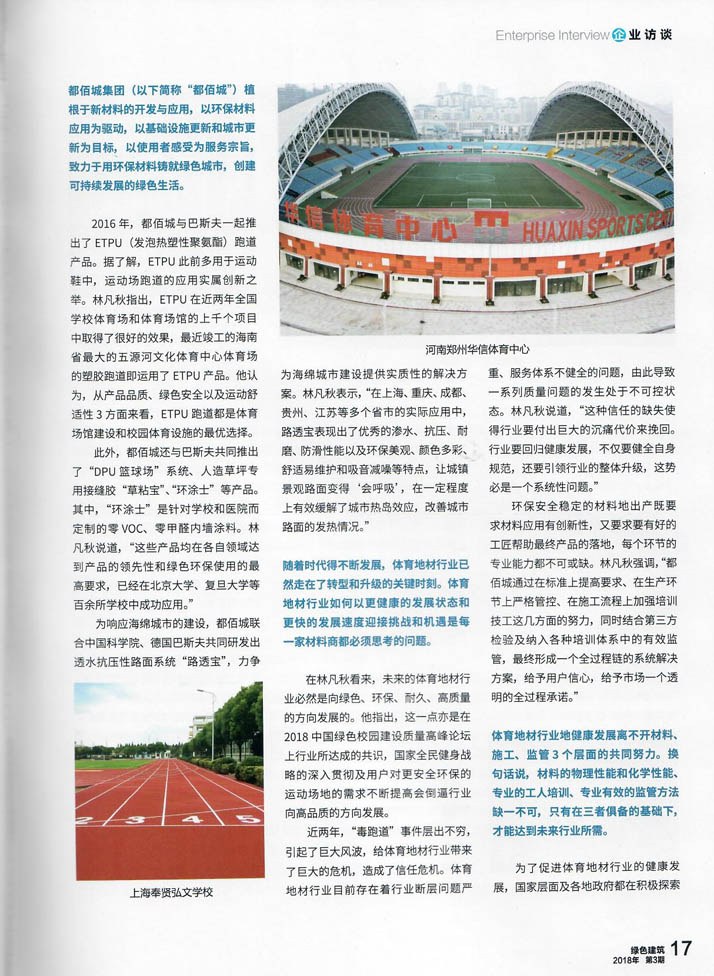
DBC is rooted in the development and application of new materials. Driven by environmentally responsible material applications, the company aims to support infrastructure and urban renewal, improve the user experience, build greener cities and help create a sustainable way of life.
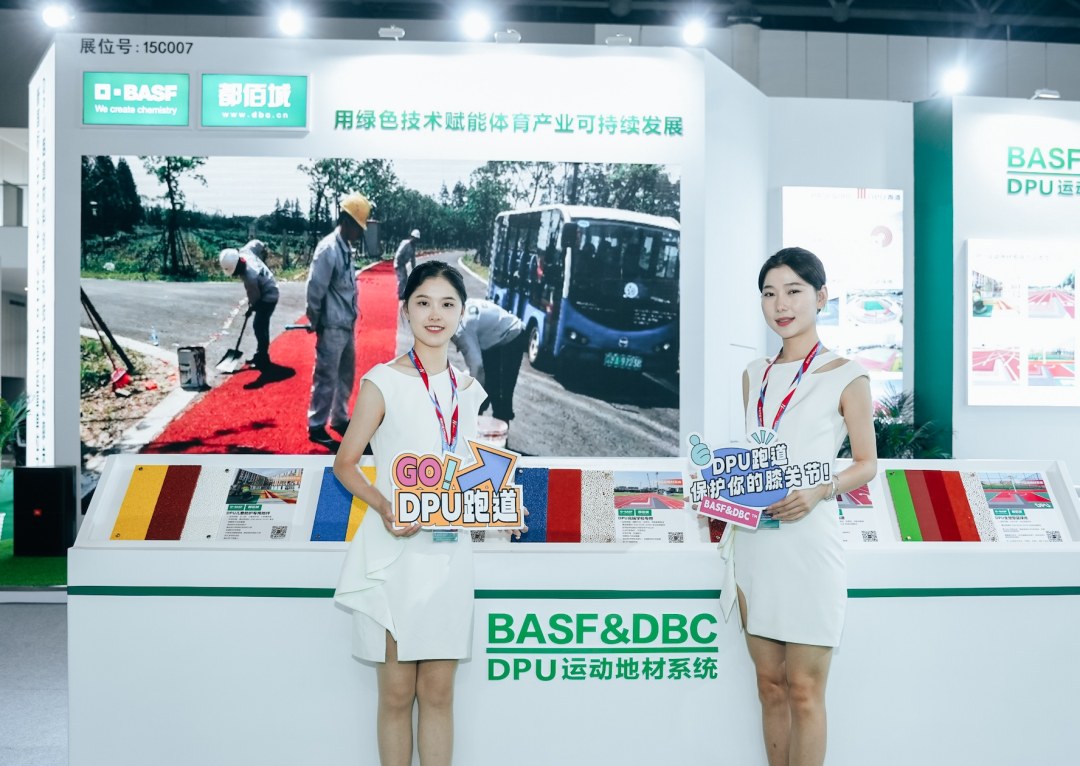
In 2016, DBC and BASF introduced an ETPU expanded thermoplastic polyurethane running-track product. Previously used mainly in athletic footwear, ETPU represented an innovative use in sports tracks. Lin said the material had performed well in more than one thousand school and stadium projects nationwide over the previous two years, including the track at Hainan's Wuyuanhe Cultural and Sports Center. He viewed ETPU tracks as a strong option for stadium and campus facilities because of product quality, environmental and safety considerations, and athletic comfort.
DBC and BASF also introduced the DPU basketball-court system, a dedicated artificial-turf seam adhesive and the ANTUX coating line. The ANTUX interior wall coating described in the article was developed for schools and hospitals with zero-VOC and zero-formaldehyde positioning. The article reported applications at more than one hundred schools, including Peking University and Fudan University.
To support sponge-city construction, DBC worked with the Chinese Academy of Sciences and BASF on a permeable, pressure-resistant pavement system. According to Lin, applications in Shanghai, Chongqing, Chengdu, Guizhou, Jiangsu and other locations showed water permeability, compressive strength, wear resistance and slip resistance, together with visual, maintenance and acoustic benefits. The system was intended to help urban pavements “breathe,” mitigate heat-island effects and reduce pavement heat buildup.
Lin argued that the sports-flooring sector had reached a critical stage of transformation and upgrading. Repeated “toxic track” incidents had damaged public trust, while weaknesses in materials, construction and supervision left quality risks insufficiently controlled. Healthy development therefore required suitable physical and chemical material performance, professional worker training and effective supervision. DBC's proposed response was a full-process system combining higher standards, strict production control, installer training, third-party inspection and ongoing oversight.
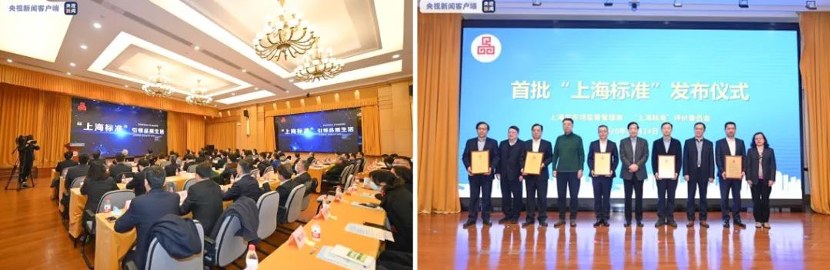
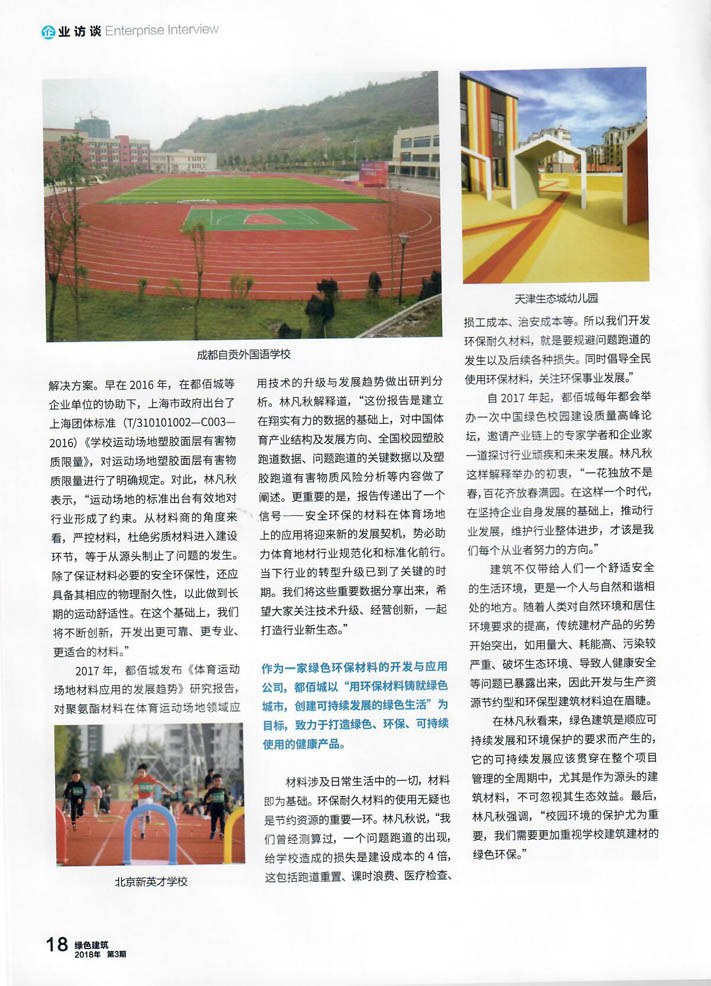
The article noted that, with support from DBC and other organizations, Shanghai issued the 2016 group standard T/310101002-C003-2016 on limits for harmful substances in synthetic surfaces for school sports grounds. Lin said standards could constrain the industry at the source by preventing poor-quality materials from entering construction. Beyond safety and environmental requirements, materials also needed physical durability to provide long-term sporting comfort, and continued innovation should deliver more reliable and suitable products.
In 2017, DBC published a research report on development trends in sports-ground material applications. Based on industry, campus-track and risk data, the report examined polyurethane technology upgrades, the structure and direction of China's sports sector, and harmful-substance risks. Its main message was that safer and more environmentally responsible materials would create new opportunities while supporting standardization. DBC shared the data to encourage technical upgrading, business innovation and a healthier industry ecosystem.
Lin also emphasized the resource value of durable materials. The article cited DBC's estimate that the total loss caused by a defective running track—including replacement, lost teaching time, medical examinations, work disruption and public-security costs—could reach four times the original construction cost. Since 2017, DBC had organized an annual China Green Campus Construction Quality Summit to bring experts, scholars and entrepreneurs together to address chronic industry problems and future development.
The interview concluded that green building should integrate sustainability throughout the full project life cycle, especially in the selection of construction materials at the source. As conventional building materials reveal disadvantages such as high consumption, energy use, pollution and ecological or health impacts, resource-efficient and environmentally responsible alternatives become increasingly urgent. Lin stressed that campus environments in particular require greater attention to the environmental performance of school buildings and materials.