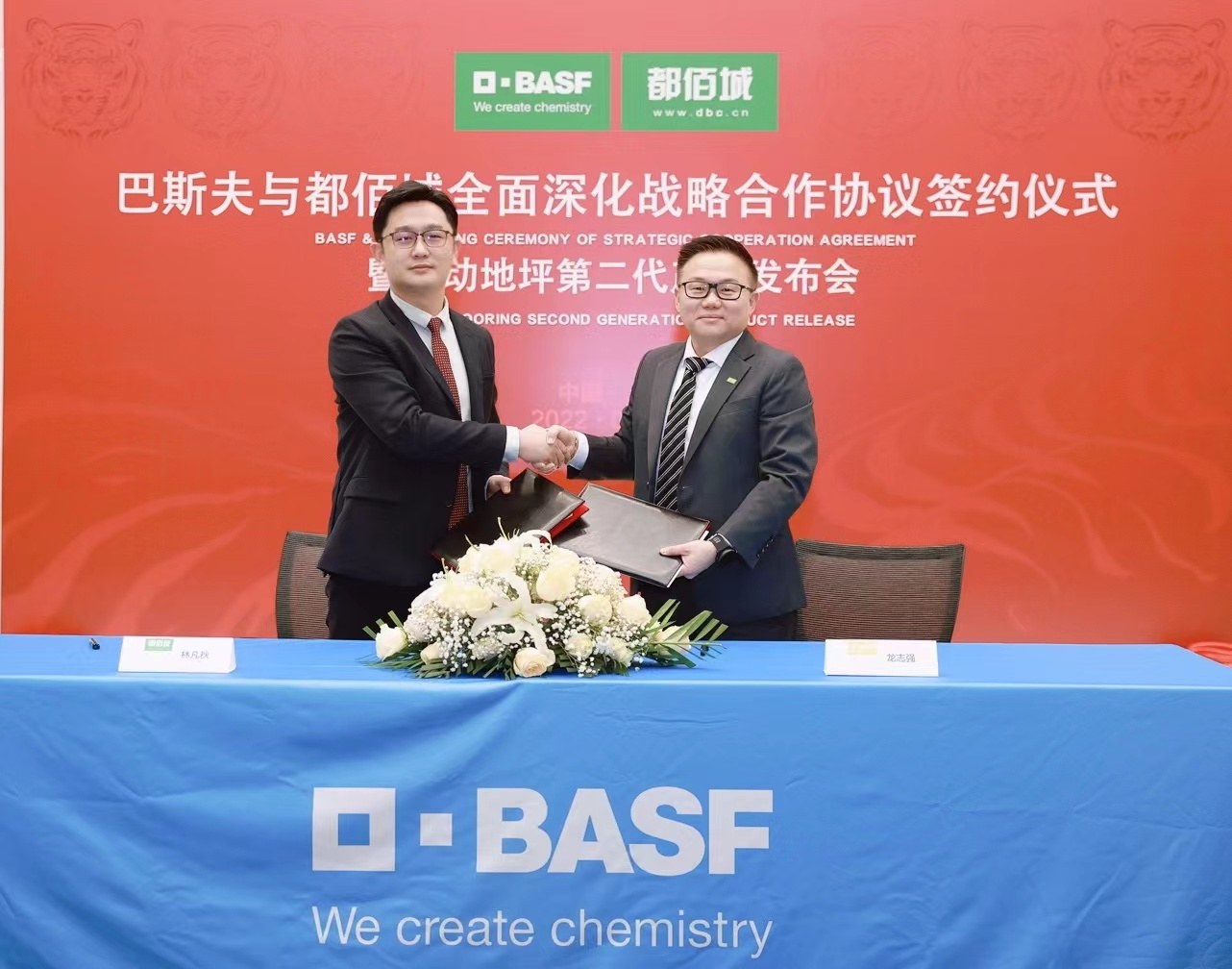

2021年6月16日,都佰城集团有限公司与上海水务建设工程有限公司、德国巴斯夫在上海举行“管道非开挖修复技术战略合作签约仪式暨合作交流会”。 都佰城集团有限公司董事长林凡秋,上海水务建设工程有限公司党委书记、董事长钱志斌,水务建设党委副书记、总经理曹恒钊,巴斯夫全球高级副总裁刘雅蒨,巴斯夫全球副总裁韩玮等公司高管及代表出席了在隧道股份水务建设公司召开的签约仪式。
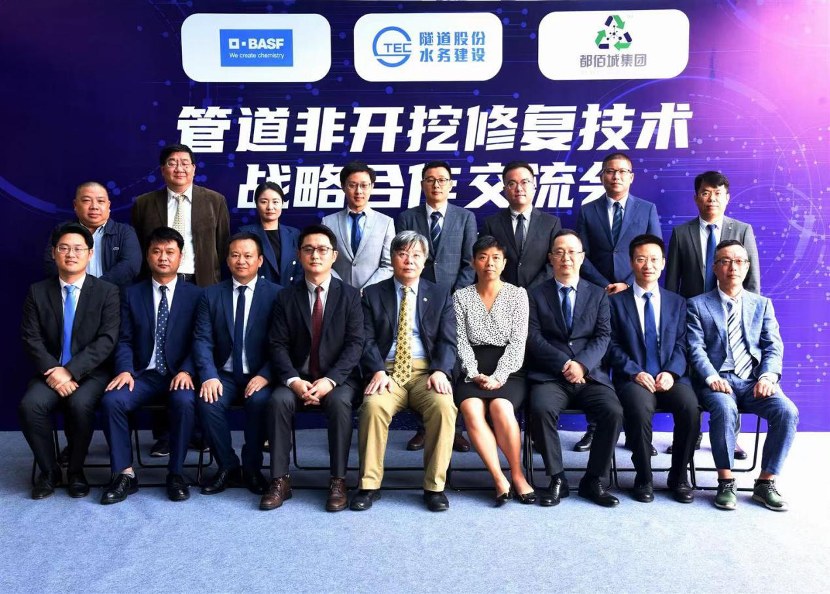
上海水务建设工程有限公司党委书记、董事长钱志斌,党委副书记、总经理曹恒钊,副总经理、总工程师顾卫东,副总经理李任;巴斯夫全球胶状系统开发平台高级副总裁刘雅蒨,巴斯夫上海创新园副总裁韩玮,巴斯夫分散体与树脂部大中华区分散体业务总监刘帅;都佰城集团有限公司董事长林凡秋,上海都佰城环保工程有限公司总经理林志强,都佰城新材料技术(上海)有限公司副总经理窦万强等公司高管出席签约仪式暨合作交流会。
根据合作协议,三方本着“着眼长远、优势互补、市场主导、合作共赢”的原则,建立全面战略合作伙伴关系,共同研发管道非开挖修复技术系统解决方案,推动该创新技术在城市供水管道中的全面实施应用,极大改善管道修复改造过程中造成的路面交通拥堵现象,助力城市供水安全和城市空间的节约及市容美化。
住建部数据显示,2019年我国城市供水管道长度达到920082公里,排水管道长度达到743982公里。而在我国供水网络系统不断完善、城市供水管道长度快速增长的背后,一个不容忽视的问题就是管道老化腐蚀和爆管渗漏现象越来越严重。
安全供水,利国利民。供水安全,是关系到人民健康、社会稳定的大事。如今城市供水管道安全已经是全世界所面临的共同问题,尤其是城市供水管道的改造和修复问题。埋在地下的供水管道已长达数十年之久,管道的老化、腐蚀、渗漏会影响供水安全,而更换、维修城市地下供水管道的资金和工程量都十分巨大,并会造成一定程度的环境破坏和严重的交通拥堵等问题。
由于常用技术方法的限制,以及国外在技术创新上实际应用中还存成本和技术上的难题,使得这些问题长期以来没有得到根本解决,因此,供水管道老化损坏、腐蚀污染等问题迫切需要革命性的创新技术方案来解决。
在城市供水管道修复工程中,长时间的路面交通拥堵和因停水影响居民生活,是常见的两大顽疾,也是掣肘城市高质量发展的关键问题。如何在解决这两大客观存在问题的同时又能实现城市老旧供水管道的全面修复?隧道股份水务工程和上海都佰城为攻克这一难题开展了长期的合作研究和实验论证,最终提出一项最为高效安全的技术创新方案。近期双方联合世界最大化工企业德国巴斯夫共同开发实施供水管道修复技术的系统解决方案。
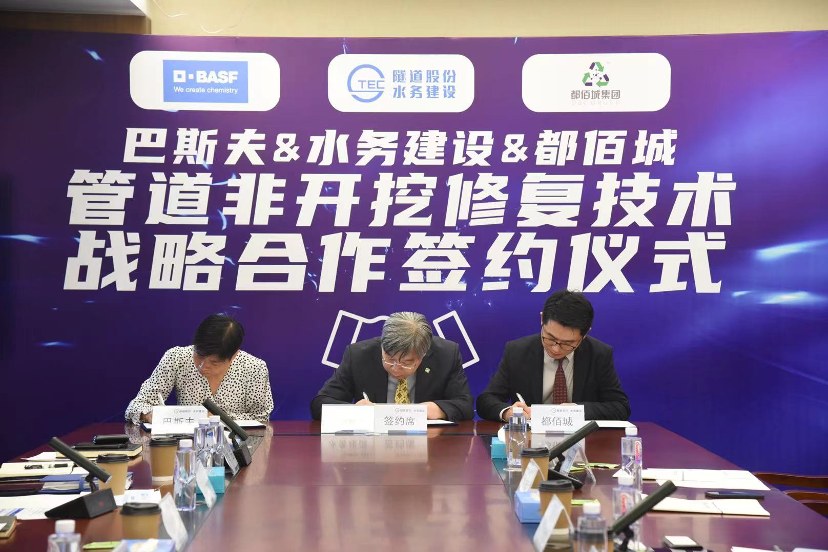
(从左至右)巴斯夫全球胶状系统开发平台高级副总裁刘雅蒨,上海水务建设工程有限公司党委书记、董事长钱志斌,都佰城集团有限公司董事长林凡秋签订管道非开挖修复技术全面战略合作协议。
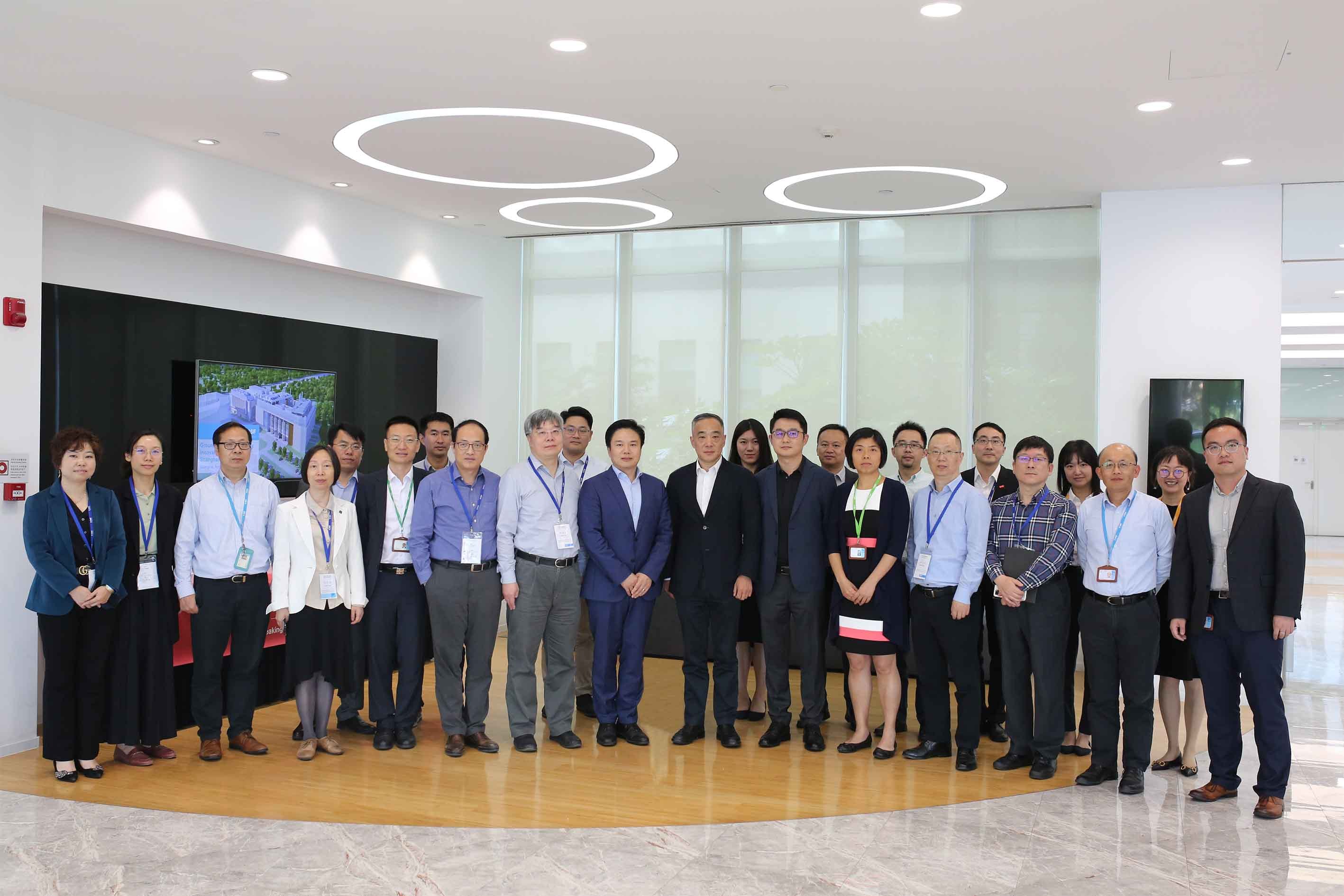
5月24日,由都佰城组织参与的多方高层战略对话中,来自上海城建(集团)有限公司、隧道股份、上海水务建设、都佰城集团、德国巴斯夫等多方高层及核心技术人员对共同创新有机城市更新,展开了全面战略合作技术研讨,并对管道修复技术的创新研究成果进行深度交流并达成深度合作意向。
关于都佰城新材料
都佰城新材料技术(上海)有限公司成立于2016年中国上海,隶属于都佰城集团有限公司全资公司,国家高新技术企业,植根于新材料的开发与应用,以环保材料应用为驱动,以使用者感受为服务宗旨,致力于用环保材料铸就绿色城市。此次合作的成功落地,与都佰城“创新未来应用,为人类生活和环境的安全便捷提供优质解决方案”的发展愿景高度契合,都佰城将继续致力于传统产业的创新发展,与优秀的合作伙伴携手推进城市有机更新的建设,以基础设施的科技创新赋能有机城市。
关于上海水务建设
上海水务建设工程有限公司,隶属于上海城建(集团)有限公司全资公司,是由上海自来水给水设备工程有限公司和上海水环境建设有限公司强强整合而成的一家以城市水务、水利环保和市政工程总承包为主的国有大型企业。在2014年新一轮国资国企改革中,公司整建制划转入上海隧道工程股份有限公司,开启了企业发展的新篇章。
关于巴斯夫化学
巴斯夫全球最大的化工企业,全球拥有约110,000名员工,为几乎所有国家、所有行业的客户成功作出贡献。我们的产品分属六大业务领域:化学品、材料、工业解决方案、表面处理技术、营养与护理、农业解决方案。2020年巴斯夫全球销售额约590亿欧元。
巴斯夫大中华区
巴斯夫与大中华市场的渊源可以追溯到1885年,从那时起巴斯夫就是中国的忠实合作伙伴。作为中国化工领域重要的外商投资企业,巴斯夫主要的生产基地位于上海、南京和重庆,而上海创新园更是全球和亚太地区的研发枢纽。2020年,巴斯夫向大中华区客户的销售额约为85亿欧元,截至年底员工人数为8,948名。
Strategic Collaboration and Technical Direction
On June 16, 2021, DBC Group Co., Ltd. held a strategic partnership agreement signing ceremony and cooperation exchange meeting for pipeline non-digging repair technology with Shanghai Water Conservancy Construction Engineering Co., Ltd. and BASF in Shanghai. Senior executives and representatives from the companies attended the signing ceremony, including Lin Fanqiu, Chairman of DBC Group Co., Ltd.; Qian Zhibin, Party Secretary and Chairman of Shanghai Water Conservancy Construction Engineering Co., Ltd.; Cao Hengzhao, Deputy Party Secretary and General Manager of Shanghai Water Conservancy Construction Engineering Co., Ltd.; Liu Yaqian, Vice President of Global Advanced Solutions at BASF; Han Wei, Vice President of Shanghai Innovation Park at BASF; and Liu Shuai, Director of Dispersed Systems Business in Greater China at BASF.
Qian Zhibin, Party Secretary and Chairman of Shanghai Water Conservancy Construction Engineering Co., Ltd.; Cao Hengzhao, Deputy Party Secretary and General Manager; Gu Weidong, Vice General Manager and Chief Engineer; Li Ren, Vice General Manager; Liu Yaqian, Vice President of Global Advanced Solutions at BASF; Han Wei, Vice President of Shanghai Innovation Park at BASF; and Liu Shuai, Director of Dispersed Systems Business in Greater China at BASF; along with Lin Fanqiu, Chairman of DBC Group Co., Ltd.; Lin Zhiqiang, General Manager of Shanghai DBC Environmental Engineering Co., Ltd.; and Dou Wanqiang, Deputy General Manager of DBC New Materials Technology (Shanghai) Co., Ltd. attended the signing ceremony and cooperation exchange meeting.
According to the agreement, the three parties will establish a comprehensive strategic partnership based on the principles of long-term vision, mutual advantage, market orientation, and win-win cooperation. They will jointly develop pipeline non-digging repair technology systems to promote the full-scale implementation and application of this innovative technology in urban water supply pipelines. This will significantly reduce traffic congestion caused by pipeline repair and renovation, thereby enhancing urban water supply safety and saving urban space while beautifying the city.
Urban Water Supply Pipeline Repair Needs
According to data from the Ministry of Housing and Urban-Rural Development, China's urban water supply pipeline length reached 920,082 kilometers in 2019, while the drainage pipeline length was 743,982 kilometers. Behind the continuous improvement of China's water supply network system and the rapid growth in the length of urban water supply pipelines, a significant issue that cannot be ignored is the increasing severity of pipeline aging, corrosion, and burst leakage.
Safe water supply benefits both the country and its people. Ensuring water safety is crucial for public health and social stability. The safety of urban water supply pipelines has become a common challenge worldwide, especially in the renovation and repair of these pipelines. Underground water supply pipelines have been in use for several decades, and their aging, corrosion, and leakage can affect water safety. Replacing or repairing urban underground water supply pipelines requires substantial financial investment and engineering work, which can cause environmental damage and severe traffic congestion.
Due to the limitations of conventional technical methods and the practical challenges in cost and technology faced by foreign companies in innovation applications, these issues have remained unresolved for a long time. Therefore, revolutionary innovative technological solutions are urgently needed to address problems such as aging and damage to water supply pipelines, corrosion, and pollution.
In urban water supply pipeline repair projects, the persistent issues of prolonged traffic congestion on roads and disruptions in residents' lives due to water shutdowns are common. How can these two major objective problems be resolved while also achieving comprehensive restoration of old water supply pipelines? Tunnel Investment and Shanghai DBC Group have been collaborating for a long time to research and experiment with solutions to this challenge, ultimately proposing the most efficient and safe technological innovation solution. Recently, both parties jointly developed and implemented a systematic solution for water supply pipeline repair technology with BASF, the world's largest chemical company.
From left: Liu Yaqian, Senior Vice President of BASF's global colloidal-systems development platform; Qian Zhibin, Party Secretary and Chairman of Shanghai Water Construction Engineering Co., Ltd.; and Lin Fanqiu, Chairman of DBC Group Co., Ltd., sign a comprehensive strategic cooperation agreement on trenchless pipeline rehabilitation technology.
On May 24, during a multi-party high-level strategic dialogue organized by DBC, representatives from Shanghai Urban Construction (Group) Co., Ltd., Tunnel Investment, Shanghai Water Conservancy Construction, DBC Group, and BASF engaged in comprehensive technical discussions on innovative organic urban renewal. They also conducted in-depth exchanges on the innovative research results of pipeline repair technology and reached a deep cooperation intention.
Partnership Background
About DBC New Materials: DBC New Materials Technology (Shanghai) Co., Ltd., a wholly-owned subsidiary of DBC Group, was established in Shanghai, China in 2016. As a national high-tech enterprise, it focuses on the development and application of new materials, driven by environmental protection material applications and serving users with a commitment to their well-being. This collaboration aligns with DBC's vision of 'innovating future applications to provide high-quality solutions for the safety and convenience of human life and the environment.' DBC will continue to focus on the innovative development of traditional industries and work with outstanding partners to advance the construction of organic cities through infrastructure technological innovation.
About Shanghai Water Conservancy Construction: Shanghai Water Conservancy Construction Engineering Co., Ltd. is a state-owned large enterprise primarily engaged in urban water supply, water environment construction, and municipal engineering general contracting. It was formed by the strong integration of Shanghai Water Supply Equipment Engineering Co., Ltd. and Shanghai Water Environment Construction Co., Ltd. In 2014, during the new round of state-owned enterprise reform, the company was fully transferred to Shanghai Tunnel Engineering Co., Ltd., marking a new chapter in its development.
About BASF Chemicals: BASF is the world's largest chemical company, with approximately 110,000 employees globally and contributions to success for almost all industries. Its products are categorized into six business segments: chemicals, materials, industrial solutions, surface technologies, nutrition & care, and agricultural solutions. In 2020, BASF's global sales amounted to approximately €59 billion.
BASF in Greater China - The partnership between BASF and the Chinese market dates back to 1885. Since then, BASF has been a reliable partner in China. As one of the key foreign-invested enterprises in the Chinese chemical industry, BASF's main production sites are located in Shanghai, Nanjing, and Chongqing, with the Shanghai Innovation Center serving as a global and regional R&D hub. In 2020, BASF's sales to customers in the Greater China region amounted to approximately €8.5 billion, with a workforce of 8,948 employees by year-end.