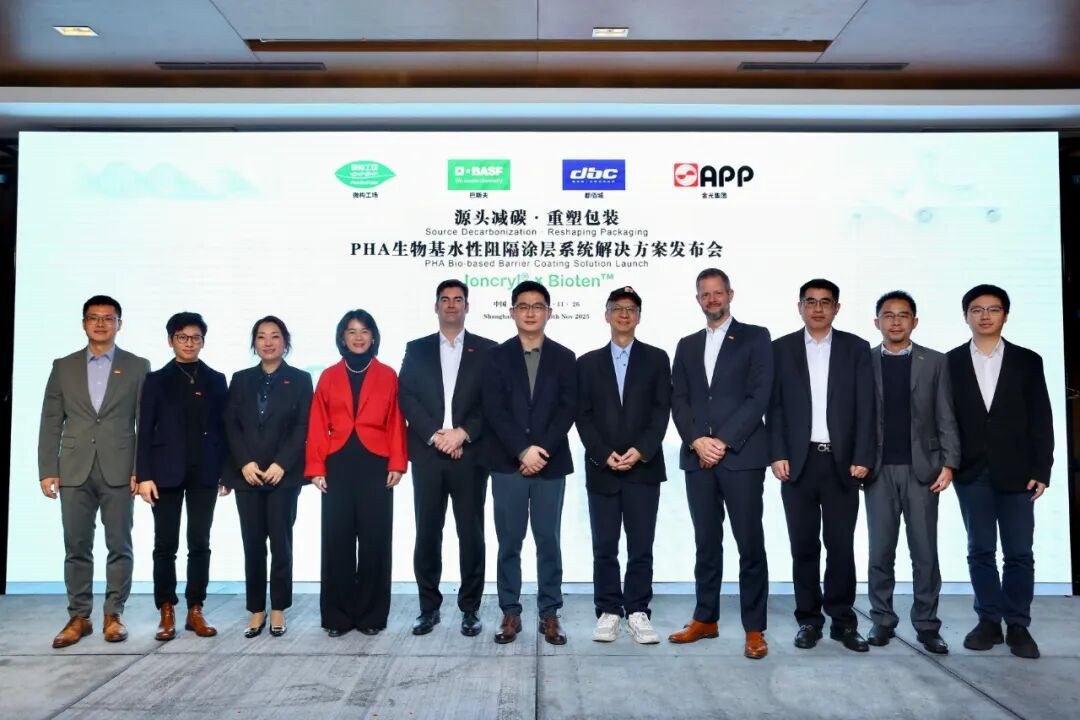
在“减塑降碳”逐步成为全球共识并加速付诸实践的背景下,纸基食品包装行业正面临结构性技术挑战。以“源头减碳·重塑包装”为主题的PHA生物基水性阻隔涂层系统解决方案发布会于2025年11月26日上海国际涂料展及包装世界博览会期间举行,被业内视为探索和引领纸基食品包装国际新趋势的重要一步。都佰城与巴斯夫携手上下游合作伙伴,生物制造先进企业微构工场、食品卡纸全球领导者APP金光集团四方同台,宣布开创“PHA(聚羟基脂肪酸酯)生物基水性阻隔纸基食品包装”新赛道,为纸基食品包装产业提供一套源头材料可溯源、产品系列可选择的可持续解决方案,并通过前瞻性的产品碳足迹管理与碳关税响应技术布局,帮助客户在绿色低碳发展赛道上赢得先机。
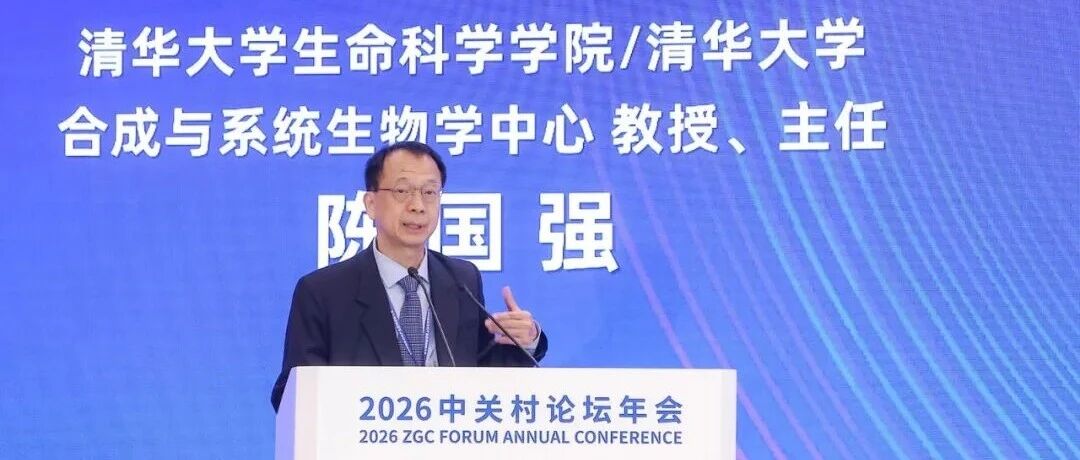
聚羟基脂肪酸酯(PHA)领域知名科学家、清华大学合成与系统生物学中心主任陈国强教授表示:长期以来,纸杯、纸碗、外卖餐盒等纸基食品包装普遍采用PE塑料淋膜阻隔结构。这类结构虽能提供基本的防水、防油能力,但在全球限塑、禁塑法规日益趋严的背景下面临一定的合规压力,同时在微塑料风险、回收再浆难度以及末端焚烧与填埋压力等方面,正暴露出越来越多问题。在这种背景下,市场上也出现了不少标称“可堆肥、可降解”的替代制品,但其材料来源往往模糊、缺乏可溯源性;在多数城市尚未形成完善分类与堆肥体系的前提下,这类制品的实际流向仍以焚烧为主,“末端难题”和企业ESG压力并未因此真正缓解。
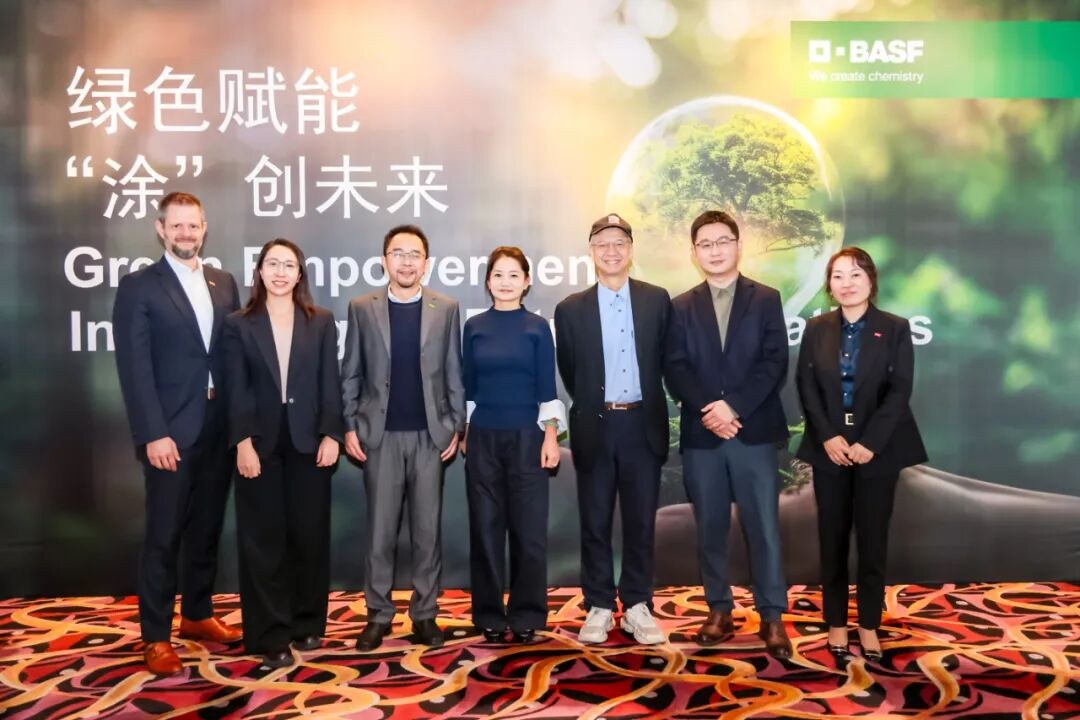
绿色赋能“涂”创未来 技术论坛
围绕上述现实挑战,都佰城与巴斯夫技术团队对纸基包装的可持续路径进行了系统梳理,提出“减塑降碳 → 易回收高再浆 → 易堆肥可降解”的技术推进顺序:先以减塑降碳为基础能力,再通过易回收、高再浆率真正融入纸张循环体系,在此之上逐步导入易堆肥、可降解方案。这既回应了行业当前的客观挑战,也是中国纸基包装产业链向“新质生产力”升级、参与引领全球标准的一次重要实践。
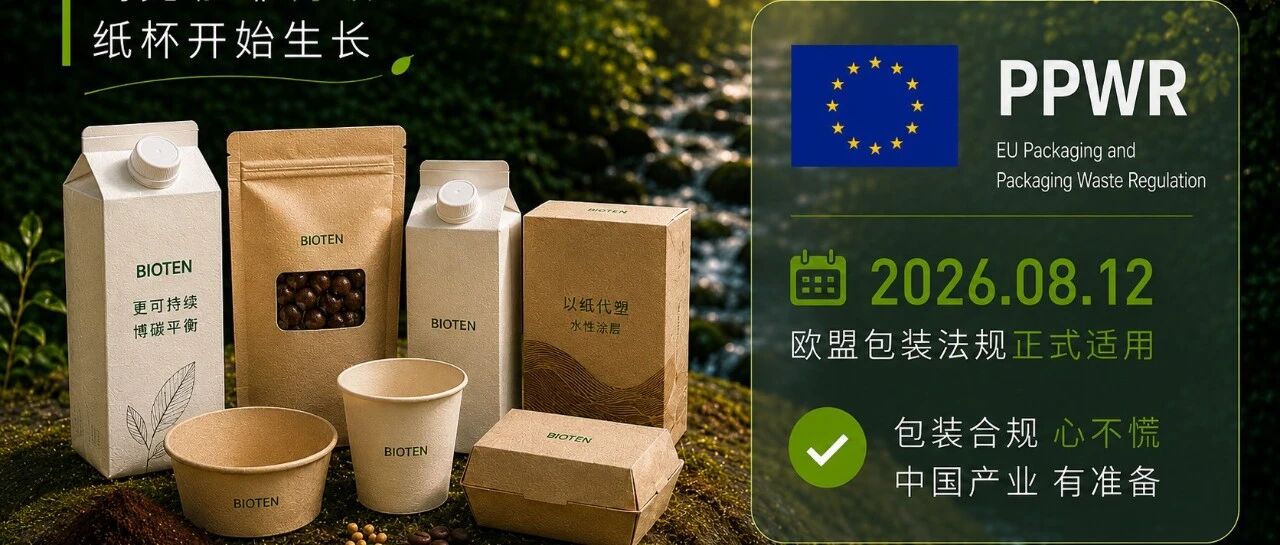
本次发布的方案基于巴斯夫与都佰城的Bioten™️博碳产品联合创新平台,在满足食品接触安全法规的前提下,以不同档位的生物基碳含量为驱动力,形成 Bioten™ Plus(博碳平衡型)、Bioten™ Pro(博碳定制型)、Bioten™ Ultra(博碳高阻型)三套系统:
Bioten™ Plus(博碳平衡型):面向主流纸杯、纸碗及纸基食品包装,主打源头减塑降碳,同时显著提升阻水性能、阻油性能及热封加工效率;
Bioten™ Pro(博碳定制型):面向高效率生产加工场景,在满足高性能阻水、阻油和较宽热封窗口的基础上,可根据需求开发包含阻湿、阻氧在内的多功能阻隔解决方案,并可定制更高生物基含量,在保证性能的前提下进一步提升产能;
Bioten™ Ultra(博碳高阻型):指向通过DIN CERTCO、BPI、ABA等易堆肥、可降解认证,配合原料可溯源与产品足迹透明,专为知名品牌及高端市场定制开发,为高ESG诉求品牌提供易堆肥、可降解选项。
以 Bioten™ Pro(博碳定制型)为代表的“博碳”系列经多条产线验证,在纸杯、纸碗、外卖餐盒等应用中,既能满足热饮、冷饮、汤品及含油食品等典型使用场景的性能需求,又可在现有设备条件下实现高效运行,为纸基食品包装从“纸代塑”迈向“源头减碳 + 高性能阻隔”提供了现实可行的路径支撑。
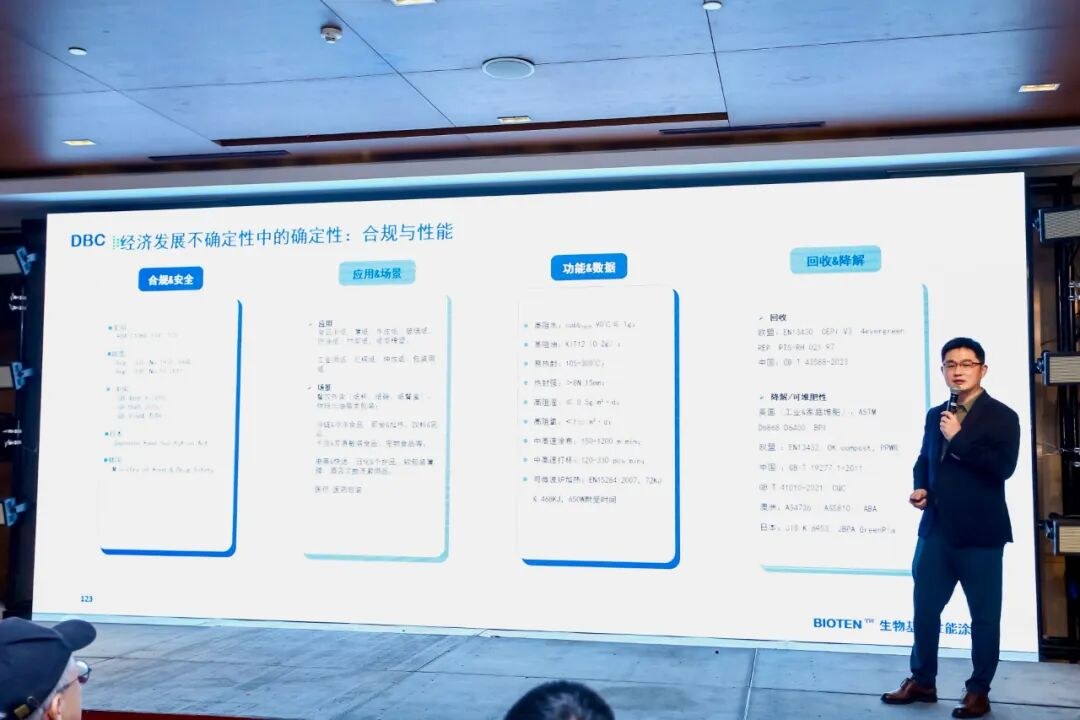
都佰城创始人林凡秋先生表示:“真正的可持续,不是材料在实验室里能不能降解,而是城市在现实中能不能处理。我们是从中国食品包装供应链高质量发展与国际化竞争的专业视角出发,系统思考材料原理与产品逻辑,并以第一性原理的方法,重新审视行业发展及相关国际规则的创新方向。减塑,可选用博碳平衡型替代PE塑料淋膜;降碳,从生物基材料及其可溯源体系做起。”
他强调,在纸基食品包装领域,“材料接触安全、不含微塑料、易回收、易堆肥、可降解、生物基源头减碳”有望成为全球行业共识。纸代塑包装行业的成功,取决于能否以真正可落地的材料体系和工艺路径来支撑这些原则;样品检测认证与工业级产品的一致性必须做到透明、可溯源,行业才能持续发展,中国纸基制品制造也才能形成更强的国际竞争力。
巴斯夫全球高级副总贺凯腾——绿色赋能涂创未来技术论坛
由都佰城与巴斯夫联合上下游伙伴打造的PHA生物基水性阻隔纸基包装新赛道,本质上是一套“材料体系 + 工艺窗口 + 回收路径”一体化方案:一端通过生物基与水性体系实现源头减碳与减塑,优化产品碳足迹;另一端通过易回收、高再浆率和可验证的堆肥性能缓解末端处理压力,为餐饮连锁、咖啡品牌和食品企业在ESG管理和包装绿色升级方面,提供一条更清晰、可落地、可追溯的绿色低碳技术路径。
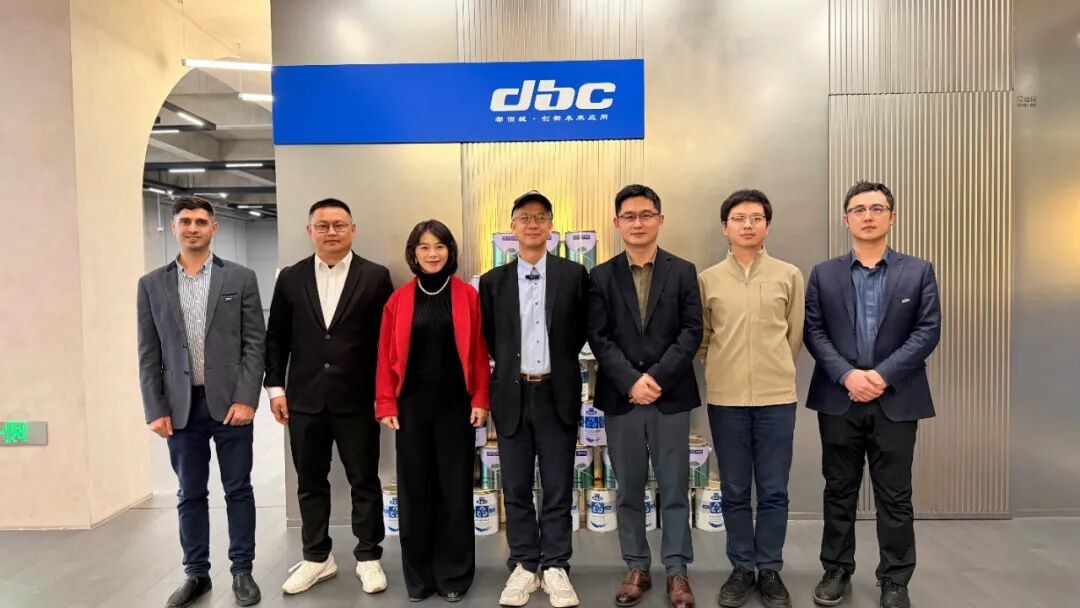
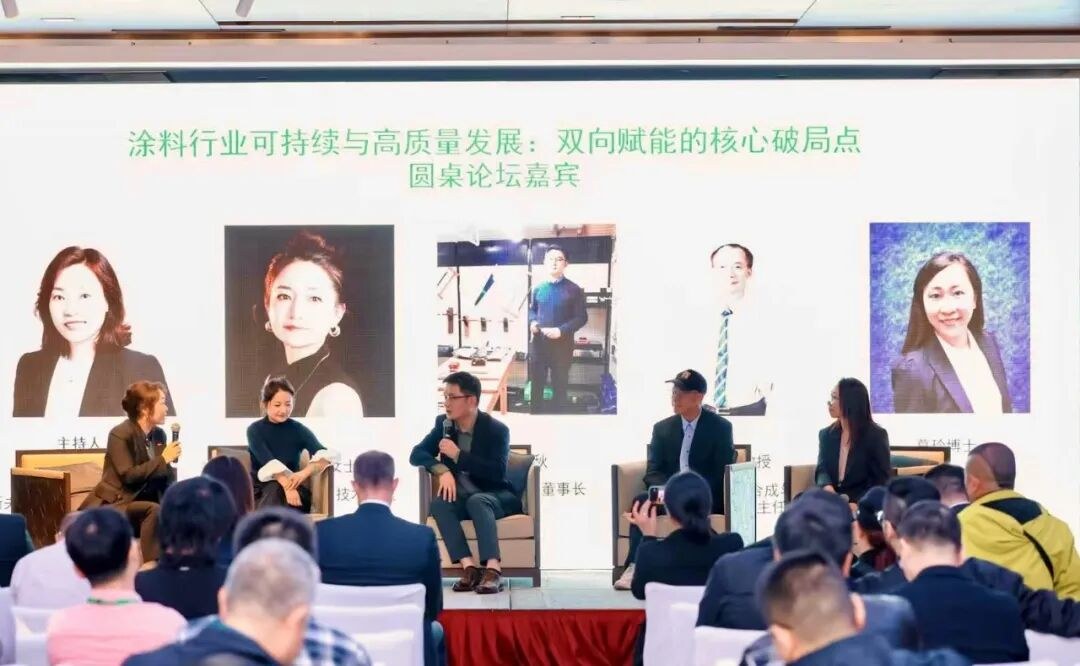
清华大学合成与系统生物学中心主任陈国强教授、微构工场董事长徐绚明女士及团队做客都佰城,就PHA生物基材料多领域应用开发与水性阻隔食品包装技术展开深入研讨与访谈,期待在生物基材料领域取得更多技术突破。
As "plastic reduction and carbon reduction" gradually become a global consensus and is accelerated into practice, the paper-based food packaging industry is facing structural technical challenges. The PHA bio-based water-based barrier coating system solution conference with the theme of "Reducing Carbon at Source and Reshaping Packaging" was held on November 26, 2025 during the Shanghai International Coatings Exhibition and Packaging World Expo. It is regarded by the industry as an important step in exploring and leading new international trends in paper-based food packaging. DBC and BASF join hands with upstream and downstream partners, including the advanced biomanufacturing enterprise Bluepha and the global leader in food cardboard APP Sinar Light Group, to announce the creation of a new track of "PHA (polyhydroxyalkanoate) bio-based water-based barrier paper-based food packaging", providing the paper-based food packaging industry with a set of sustainable solutions with traceable source materials and selectable product series. Through forward-looking product carbon footprint management and carbon tariff response technology layout, it helps customers win on the green and low-carbon development track.
Professor Chen Guoqiang, a well-known scientist in the field of polyhydroxyalkanoate (PHA) and director of the Center for Synthetic and Systems Biology at Tsinghua University, said: For a long time, paper-based food packaging such as paper cups, paper bowls, and take-out lunch boxes have generally used PE plastic-coated barrier structures. Although this type of structure can provide basic waterproof and oil-proof capabilities, it faces certain compliance pressures in the context of increasingly stringent global plastic restriction and ban regulations. At the same time, more and more problems are being exposed in terms of microplastic risks, difficulty in recycling and repulping, and pressure on end-of-life incineration and landfilling. Against this background, many alternative products claiming to be "compostable and degradable" have appeared on the market, but the sources of their materials are often vague and lack traceability. On the premise that most cities have not yet formed a complete classification and composting system, the actual flow of such products is still mainly incineration, and the "end-of-pipe problem" and corporate ESG pressure have not been truly alleviated.
Green Empowerment "Tu" Creates the Future Technology Forum
Focusing on the above-mentioned practical challenges, the technical teams of DBC and BASF systematically sorted out the sustainable path of paper-based packaging, and proposed a technology promotion sequence of "plastic reduction and carbon reduction → easy recycling and high repulping → easy composting and degradability": first, plastic reduction and carbon reduction will be the basic capabilities, and then it will be truly integrated into the paper recycling system through easy recycling and high repulping rate. On top of this, easy composting and degradable solutions will be gradually introduced. This not only responds to the current objective challenges of the industry, but also is an important practice for China's paper-based packaging industry chain to upgrade to "new quality productivity" and participate in leading global standards.
The solution released this time is based on the Bioten™️ carbon product joint innovation platform of BASF and DBC. On the premise of meeting food contact safety regulations, and using different levels of bio-based carbon content as the driving force, three systems are formed: Bioten™ Plus (balanced type), Bioten™ Pro (customized type), and Bioten™ Ultra (high resistance type):
Bioten™ Plus (carbon balance type): Targeted at mainstream paper cups, paper bowls and paper-based food packaging, it focuses on reducing plastic and carbon at the source, while significantly improving water-blocking performance, oil-blocking performance and heat sealing processing efficiency;
Bioten™ Pro (customized version of Bioten™): For high-efficiency production and processing scenarios, on the basis of meeting high-performance water and oil barrier and wide heat sealing window, multi-functional barrier solutions including moisture barrier and oxygen barrier can be developed according to needs, and can be customized with higher bio-based content to further increase production capacity while ensuring performance;
Bioten™ Ultra (BIOTEN high-resistance type): It has passed DIN CERTCO, BPI, ABA and other easily compostable and degradable certifications. It is combined with raw material traceability and product footprint transparency. It is specially developed for well-known brands and high-end markets, and provides easy composting and degradable options for brands with high ESG appeals.
The "Biotan" series represented by Bioten™ Pro (customized version of Bioten) has been verified by multiple production lines. In applications such as paper cups, paper bowls, and take-out lunch boxes, it can not only meet the performance requirements of typical usage scenarios such as hot drinks, cold drinks, soups, and oily foods, but also achieve efficient operation under existing equipment conditions. It provides a realistic and feasible path support for paper-based food packaging to move from "paper-based plastic" to "source carbon reduction + high-performance barrier".
Mr. Lin Fanqiu, founder of DBC, said: "True sustainability is not about whether materials can be degraded in the laboratory, but whether cities can handle them in reality. We start from the professional perspective of high-quality development and international competition in China's food packaging supply chain, systematically think about material principles and product logic, and use a first-principles approach to re-examine the innovation direction of industry development and relevant international rules. To reduce plastics, you can use BIOTEN Balance to replace PE plastic coating; to reduce carbon, start with bio-based materials and their traceability systems."
He emphasized that in the field of paper-based food packaging, "materials that are safe for contact, do not contain microplastics, are easily recyclable, easily compostable, biodegradable, and bio-based source carbon reduction" are expected to become a global industry consensus. The success of the paper-based plastic packaging industry depends on whether these principles can be supported by a truly implementable material system and process path; the consistency of sample testing and certification with industrial-grade products must be transparent and traceable, so that the industry can continue to develop and China's paper-based product manufacturing can also develop stronger international competitiveness.
He Kaiteng, Global Senior Vice President of BASF - Green Empowerment Future Technology Forum
The new PHA bio-based water-based barrier paper-based packaging track created by DBC and BASF together with upstream and downstream partners is essentially a set of "material system + process window + "Recycling Path" integrated solution: On one end, it achieves source carbon and plastic reduction through bio-based and water-based systems, optimizing product carbon footprint; on the other end, it eases terminal processing pressure through easy recycling, high repulping rate and verifiable composting performance, providing restaurant chains, coffee brands and food companies with a clearer, implementable and traceable green low-carbon technology path in terms of ESG management and packaging green upgrades.
Professor Chen Guoqiang, director of the Center for Synthetic and Systems Biology at Tsinghua University, and Ms. Xu Xuanming, chairman of the Bluepha, and their team visited DBC to conduct in-depth discussions and interviews on the multi-field application development of PHA bio-based materials and water-based barrier food packaging technology. They look forward to achieving more technological breakthroughs in the field of bio-based materials.