2026年1月16日,围绕国家“双碳”战略与固体废物综合治理要求,面向“十五五”绿色低碳循环发展方向,《民航服务场景纸基餐饮具低碳水性阻隔与回收利用技术规范(草案)》研讨会在上海举行。会议旨在以标准化为抓手,推动民航服务场景纸基餐饮具实现“源头降碳—末端循环—可验证落地”的闭环应用,为行业固体废物治理向精细化、高值化转型形成可复制、可推广的行业实践路径。
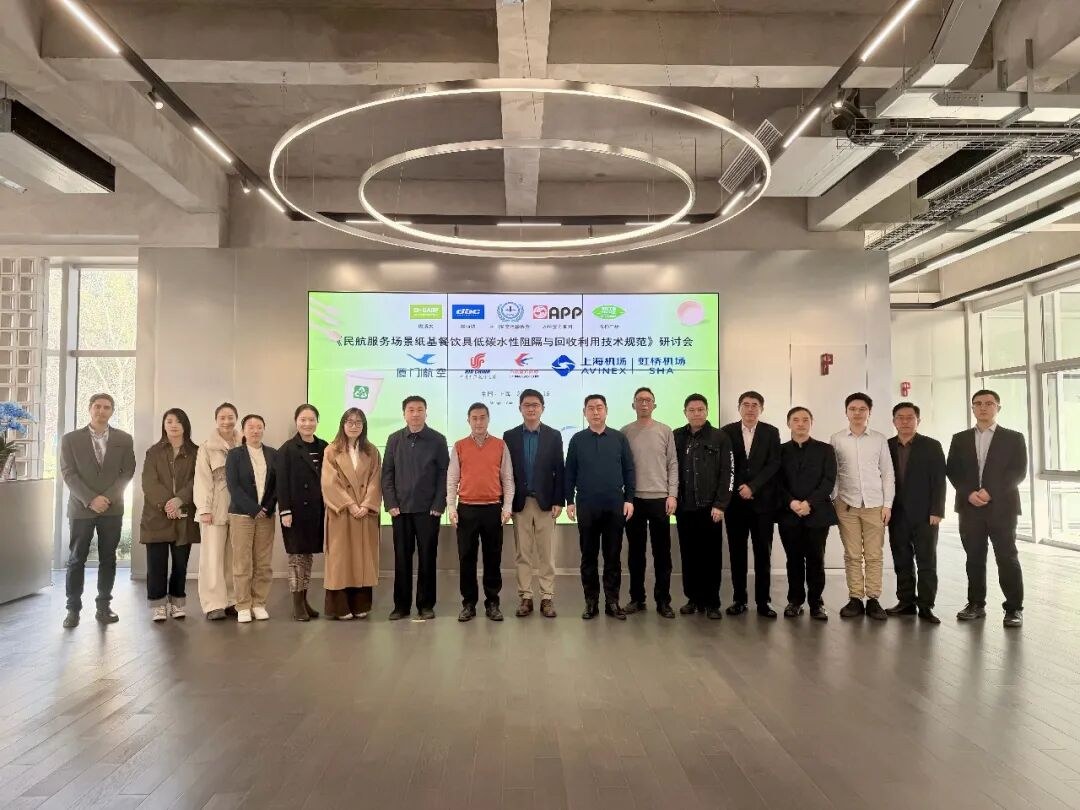
本次会议由中国航空运输协会联合都佰城、APP金光集团、巴斯夫、微构工场共同发起。来自中国东方航空、中国国际航空、厦门航空、上海机场集团及虹桥机场等单位代表,以及航食配供、材料与制品、回收利用链条等产业链专家参会。会议聚焦民航服务场景纸基餐饮具的绿色低碳转型,旨在以标准化路径推动固体废物高价值回收与利用。
会议认为,民航服务场景具有“高频使用、强运营约束、链路节点清晰、闭环管理可控”等特点,是推动绿色转型、形成可复制行业范式的重要落脚点。随着固体废物资源化利用与闭环治理要求持续提升,纸杯、杯垫、餐盒、清洁袋等高频用品亟需在不降低安全与体验、不增加运行负担的前提下,打通“材料—制品—使用—回收—资源化—数据核验”的全链条路径。通过推动生物基低碳材料应用并建立可回收闭环机制,有助于航司与机场提升供应链碳管理能力,并增强范围3、ESG信息披露的可量化、可核验水平。
会议围绕“源头降碳—末端循环—可验证落地”开展研讨,重点讨论以水性阻隔技术替代传统塑料淋膜等影响再浆回收的复合结构方案。在满足食品接触安全、感官气味控制、热饮耐受、热封与阻隔性能等关键要求的同时,实现与主流纸纤维再浆回收体系的更好兼容;并适配机场与机供节点的分类收集、污染控制、转运协同与去向管理,确保回收过程可操作、可追溯、可核验。
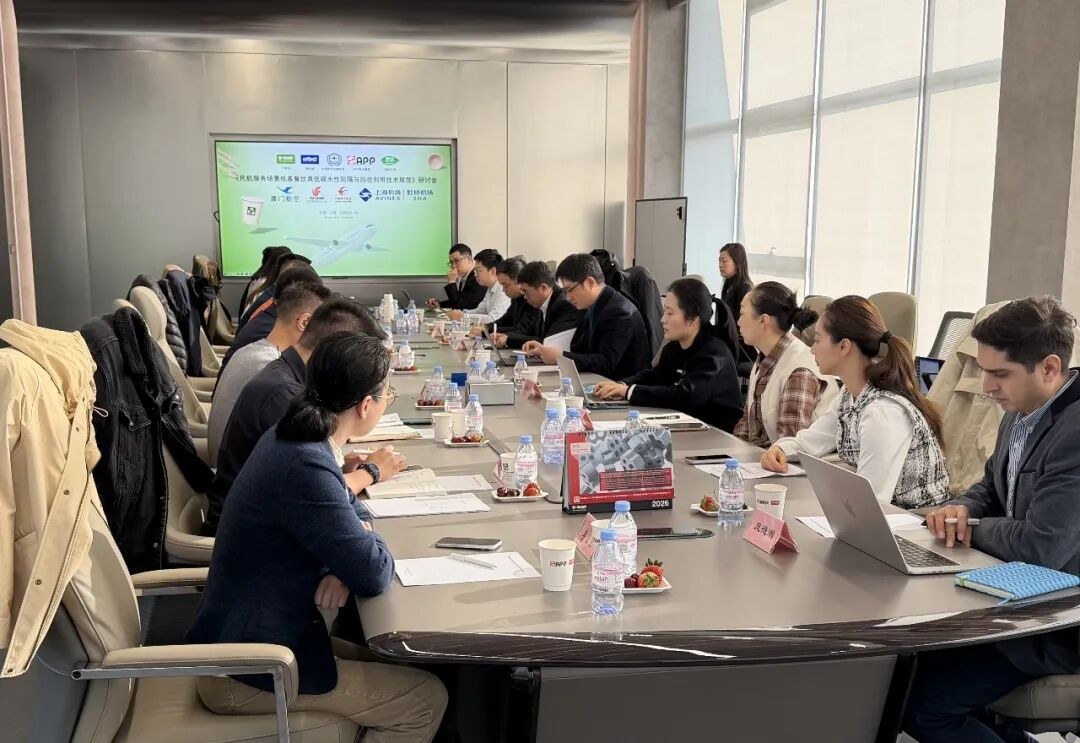
本次会议定位为工作型研讨,以“统一认知—对齐边界—形成可落地框架”为目标。与会代表围绕技术规范草案的适用范围与术语边界、关键性能指标与测试方法建议、回收链路与数据追溯口径等进行了深入讨论,并形成阶段性共识:
1、明确以纸杯及配套件为优先切入口,并可延展至清洁袋、餐盒等高频品类;
2、推动形成“关键指标清单+测试方法建议”,确认草案的适用范围、术语定义与场景边界(机场/机舱/配供/回收链条)为采购导入与验收提供统一依据;
3、形成“航司差异化需求对标表”和共性验收要点,降低导入成本与沟通摩擦;
4、明确回收与资源化路径建议及数据口径,在不增加空勤与地面保障负担的前提下实现“可回收、可追溯、可核验”;
5、制定试点验证计划(场景、批次、数据口径、KPI与责任分工),以运行数据验证减碳与循环成效;同时关注国际并轨趋势,提前对标国际规则与技术路线,降低合规与运营风险,提升绿色飞行国际竞争力。
下一步,各方将基于本次研讨成果,推动技术规范(草案)修订并组织征求意见,尽快启动试点验证。在不增加运行保障负担、不降低安全与服务体验的前提下,以标准化为牵引、以闭环数据为抓手,推动民航服务场景纸基餐饮具从“材料替代”走向“可计算、可核验的低碳循环体系升级”,为绿色机场与低碳飞行打造可复制、可推广、可核验的高价值回收再利用行业样板。
On January 16, 2026, aligning with the national 'Dual Carbon' strategy and solid waste comprehensive governance requirements, and looking toward the '15th Five-Year Plan' green, low-carbon, and circular development direction, the seminar on the 'Draft Technical Specifications for Low-Carbon Waterborne Barrier and Recycling of Paper-Based Tableware in Civil Aviation Service Scenarios' was held in Shanghai. The meeting aims to use standardization as a lever to promote the closed-loop application of paper-based tableware in civil aviation service scenarios, achieving 'source carbon reduction - end-of-life recycling - verifiable implementation', and to form a replicable and scalable industry practice path for the transformation of industry solid waste governance towards refinement and high-value utilization.
This meeting was jointly initiated by the Air Transport Association of China, DBC, APP Group, BASF, and Bluepha. Representatives from China Eastern Airlines, Air China, Xiamen Airlines, Shanghai Airport Group, and Hongqiao Airport, as well as industry chain experts from aviation catering supply, materials and products, and recycling chains, attended. The meeting focused on the green and low-carbon transformation of paper-based tableware in civil aviation service scenarios, aiming to promote high-value recycling and utilization of solid waste through standardized pathways.
The meeting noted that civil aviation service scenarios are characterized by high-frequency use, strong operational constraints, clear process nodes and controllable closed-loop management, making them an important starting point for green transformation and replicable industry practice. As requirements for resource recovery from solid waste and closed-loop governance continue to rise, frequently used items such as paper cups, coasters, meal boxes and cleaning bags need an end-to-end pathway covering materials, products, use, recovery, resource utilization and data verification, without compromising safety and user experience or adding operational burden. Advancing the application of bio-based, low-carbon materials and establishing recyclable closed-loop mechanisms may help airlines and airports strengthen supply-chain carbon management and improve the quantifiability and verifiability of Scope 3 and ESG disclosures.
The seminar focused on 'source carbon reduction - end-of-life recycling - verifiable implementation', with key discussions on replacing traditional plastic laminates and other composite structures that affect repulping recycling with waterborne barrier technologies. While meeting key requirements such as food contact safety, sensory odor control, hot drink tolerance, heat sealing, and barrier performance, it achieves better compatibility with mainstream paper fiber repulping recycling systems; and adapts to the classification collection, pollution control, transfer coordination, and destination management at airport and aircraft supply nodes, ensuring the recycling process is operable, traceable, and verifiable.
This meeting is positioned as a working seminar, with the goal of 'unifying understanding - aligning boundaries - forming an implementable framework'. Attendees engaged in in-depth discussions on the scope of application and terminology boundaries of the technical specification draft, suggestions for key performance indicators and testing methods, recycling links and data traceability standards, and reached preliminary consensus:
1. Clearly identify paper cups and accessories as the priority entry point, which can be extended to high-frequency categories such as cleaning bags and meal boxes;
2. Promote the formation of a 'key indicator checklist + testing method suggestions', confirming the draft's scope of application, terminology definitions, and scenario boundaries (airport/cabin/supply/recycling chain) to provide a unified basis for procurement introduction and acceptance;
3. Form an 'airline differentiated requirement benchmarking table' and common acceptance points to reduce introduction costs and communication friction;
4. Clarify recycling and resource utilization path suggestions and data standards, achieving 'recyclable, traceable, and verifiable' without increasing the burden on flight crew and ground support;
5. Develop a pilot verification plan (scenarios, batches, data standards, KPIs, and responsibility division) to verify carbon reduction and circularity effectiveness with operational data; meanwhile, pay attention to international convergence trends, benchmark against international rules and technical routes in advance, reduce compliance and operational risks, and enhance international competitiveness in green flight.
Next, all parties will promote the revision of the technical specification (draft) and organize solicitation of opinions based on the seminar results, and start pilot verification as soon as possible. Without increasing operational support burden or reducing safety and service experience, driven by standardization and leveraging closed-loop data, promote the upgrade of paper-based tableware in civil aviation service scenarios from 'material substitution' to a 'calculable and verifiable low-carbon circular system', creating a replicable, scalable, and verifiable high-value recycling and reuse industry model for green airports and low-carbon flight.