



Reliable barrier
For different risks such as liquids, grease, water vapor, oxygen, odor and mineral oil, select the corresponding barrier system and confirm the actual application performance through matching test methods.

FOOD PACKAGING SOLUTION
Bioten™ has established a verification path for the real use conditions of paper-based food packaging, taking into account the content type, contact temperature, contact time, heat sealing molding method, target market regulatory requirements and end-of-life disposal path. The page starts from specific application scenarios, matches blocking indicators, product systems, and project import actions to help customers advance material solutions to a verifiable, amplifiable, and deliverable application stage.
SOLUTION LOGIC
The upgrade of paper-based food packaging cannot only evaluate the performance of a single material, but also needs to verify barrier performance, sealing stability, food contact compliance and end-of-life disposal paths under real application conditions. Only when the boundaries of materials, processes, testing, and declarations form a closed loop can the solution have the basis for customer verification and mass production introduction.
For different risks such as liquids, grease, water vapor, oxygen, odor and mineral oil, select the corresponding barrier system and confirm the actual application performance through matching test methods.
Incorporate coating, drying, rewinding, die-cutting, heat sealing, crimping, cup making or molding efficiency into the same verification window to confirm the compatibility of materials with existing production lines.
Organize necessary raw materials, samples, testing and compliance information around the GB 4806 series, FDA-related food contact requirements and target market regulations.
Combined with terminal paths such as paper-based recycling, repulping performance, and industrial composting, the applicable conditions and boundaries of environmental statements under different product structures are clarified.
APPLICATION SCENARIOS
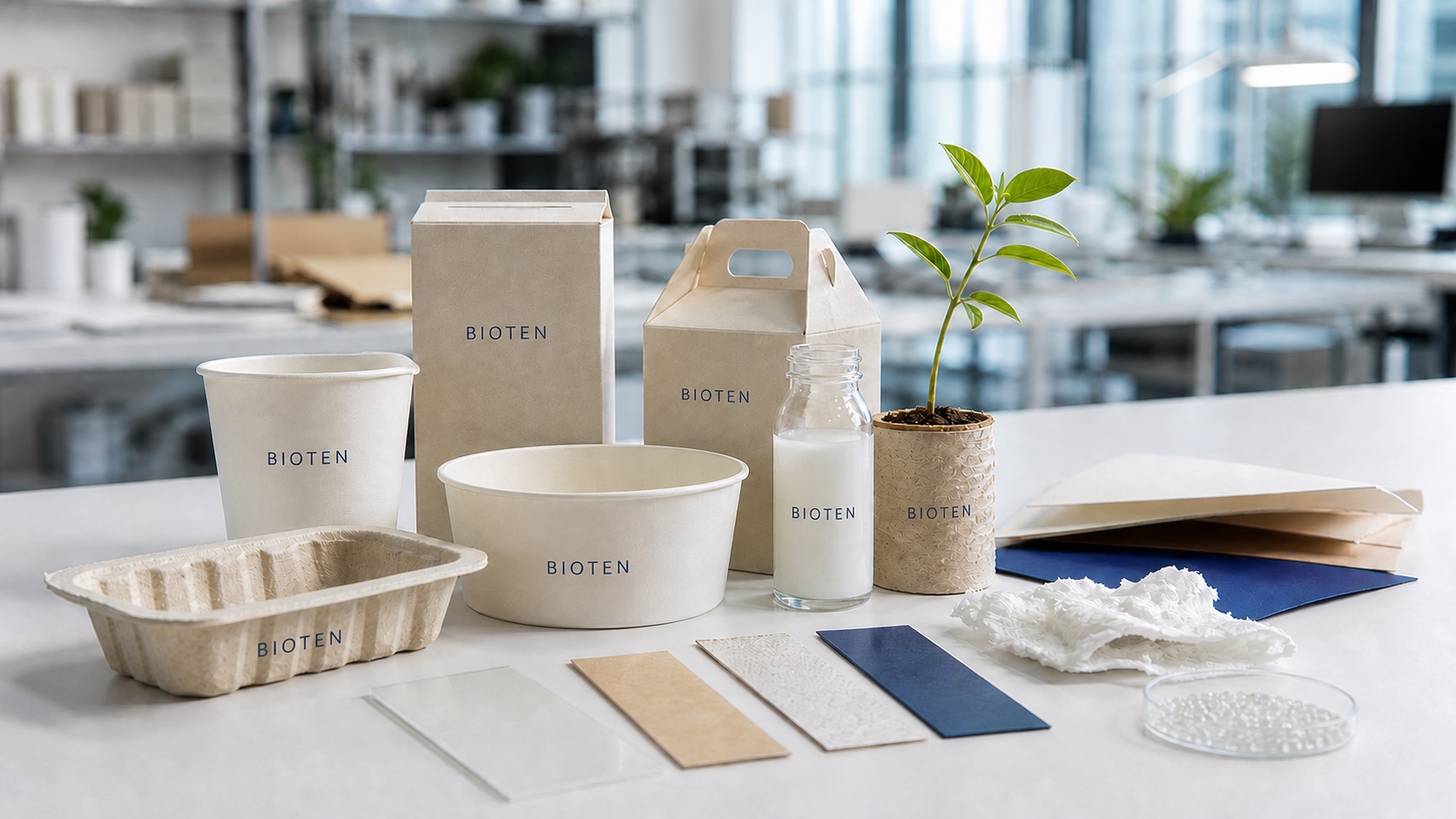
The same paper-based packaging faces different risks of failure in scenarios such as hot drinks, grease, freezing, baking, molded tableware and dry food. Bioten™ Carbon recommends establishing a targeted material verification plan starting from the content, contact temperature, contact time, packaging structure and processing technology.
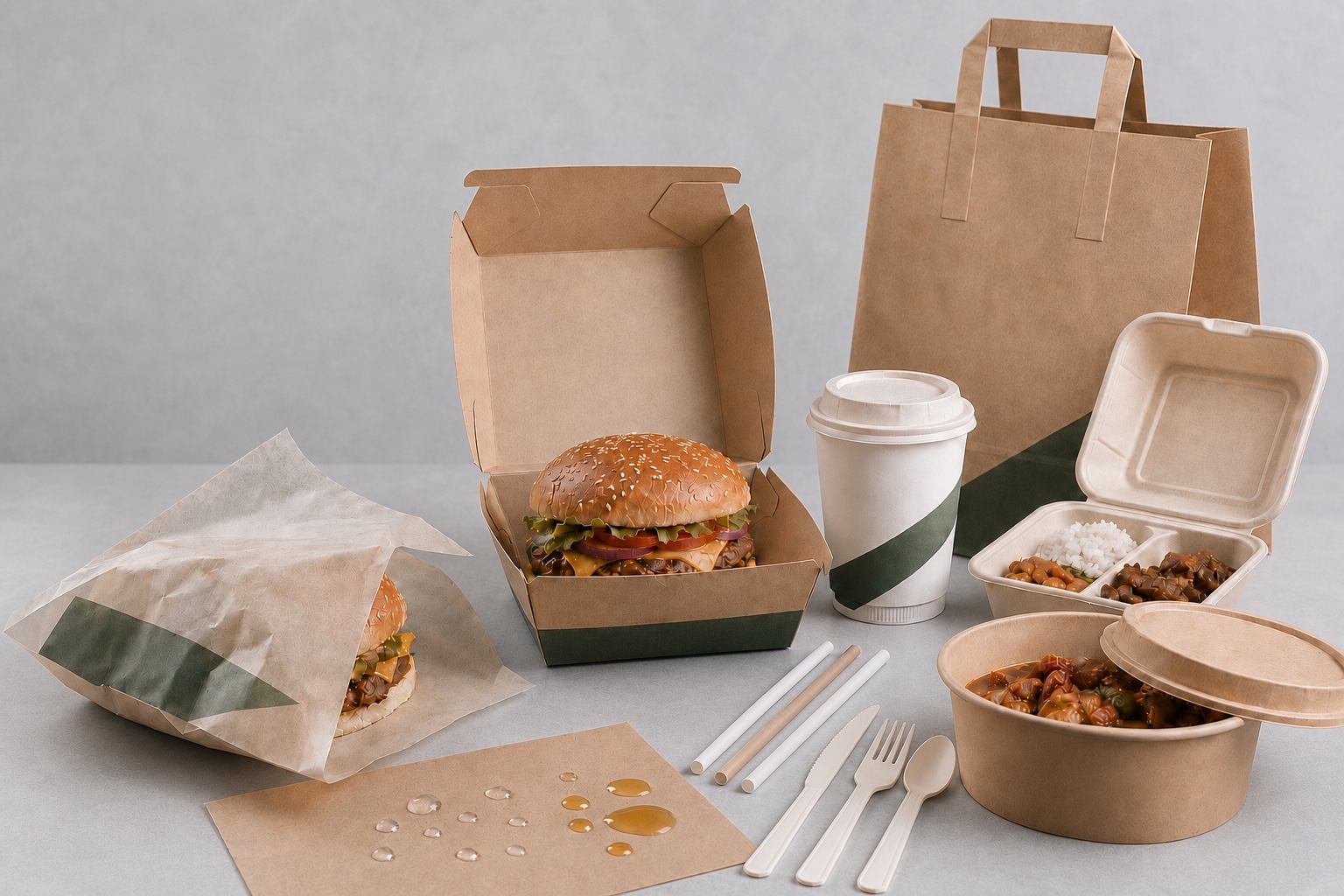
It is suitable for cup packaging scenarios such as coffee, tea, cold drinks, etc. It can focus on verifying water absorption performance, hot water contact, cup body heat sealing, cup bottom sealing, curling stiffness and cup making suitability.
It is suitable for soups, sauces, light takeout and hot food serving scenarios. It can focus on verifying water resistance, oil resistance, pressure line folding, stacking stability and structural retention ability after high temperature contact.
It is suitable for contact packaging of fried foods, burgers, sandwiches and sauces, and can focus on verifying KIT oil resistance grade, oil penetration resistance, hand feel, folding adaptability and packaging efficiency.
It is suitable for baking, fried food, snacks and take-out packaging, and can take into account moisture-proof, oil-proof, adhesive or heat-sealing adaptability, as well as subsequent printing and conversion processing performance.
It is suitable for molded dinner plates, lunch boxes, bowls and other molded products. It can focus on verifying the coating continuity, liquid barrier, grease barrier, drying window and packaging stability after molding.
It is suitable for baking, candy and high-fat small packaging scenarios, and can match oil-proof, anti-stick, low-odor and food contact material requirements according to temperature, contact time and content type.
It is suitable for cold chain storage and transportation and frozen food outer packaging scenarios, and can focus on verifying freezing moisture regain, moisture effects, folding resistance, paper stiffness and structural failure risks during transportation.
It is suitable for short-term preservation, light moisture-proof, breathable or dry protection packaging scenarios, and can establish a lighter paper-based packaging barrier solution to avoid over-design.
VALIDATION PACKAGE
The following indicators can be used as reference directions for project evaluation and sample verification. The specific performance needs to be comprehensively confirmed based on the base paper type, coating method, coating amount, drying conditions, molding structure, food contact conditions and testing methods.
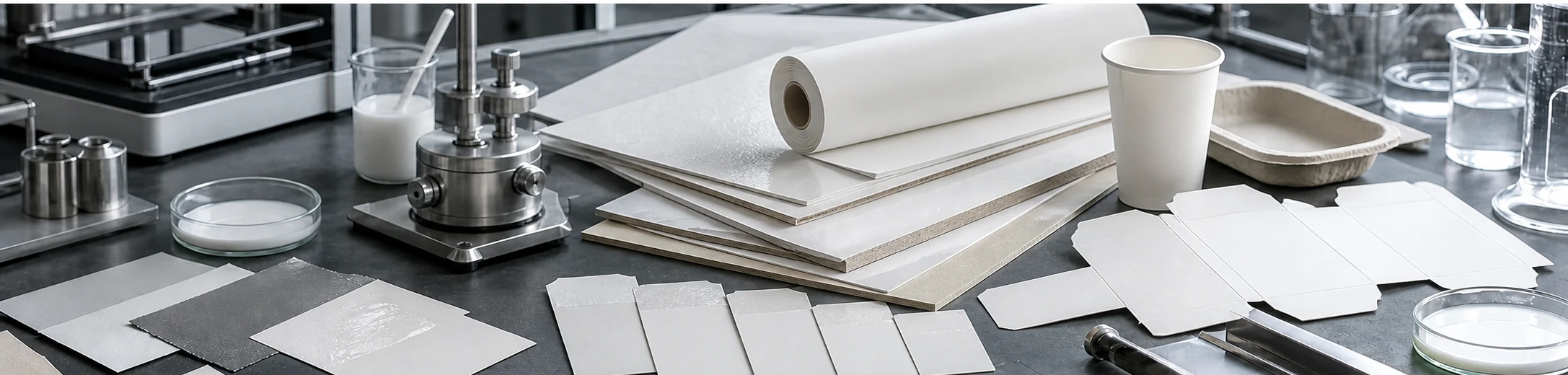
Cobb, KIT, heat seal, food contact and end-of-life disposal pathways should be evaluated together in the same project package.
What customers really need is verifiable certainty: whether the sample can be used stably, whether the existing production line can be imported, whether the compliance data meets the requirements of the target market, and whether the terminal declaration has clear boundaries.
It can be verified based on indicators such as Cobb's water absorption, hot water contact, and leakage performance. It is suitable for liquid contact scenarios such as paper cups, paper bowls, and lunch boxes.
It can be verified around KIT level, oil penetration resistance, sauce contact and packaging feel, and is suitable for hamburger paper, greaseproof paper, food bags and other scenarios.
According to the requirements of the target market, food contact compliance information can be organized around the GB 4806 series, FDA-related requirements, etc., and the applicable boundaries can be confirmed based on the specific packaging structure and usage conditions.
It can be evaluated in combination with terminal paths such as paper-based recycling, repulping performance, and industrial composting to help customers establish a clearer and more prudent basis for environmental claims.
RECOMMENDED SYSTEM
Bioten™ carbon is not a single formula product, but a toolbox of paper-based food packaging barrier solutions layered around Plus, Pro, and Ultra. Different systems can be matched according to water resistance, oil resistance, moisture resistance, oxygen resistance, heat sealing, molding and terminal disposal objectives.
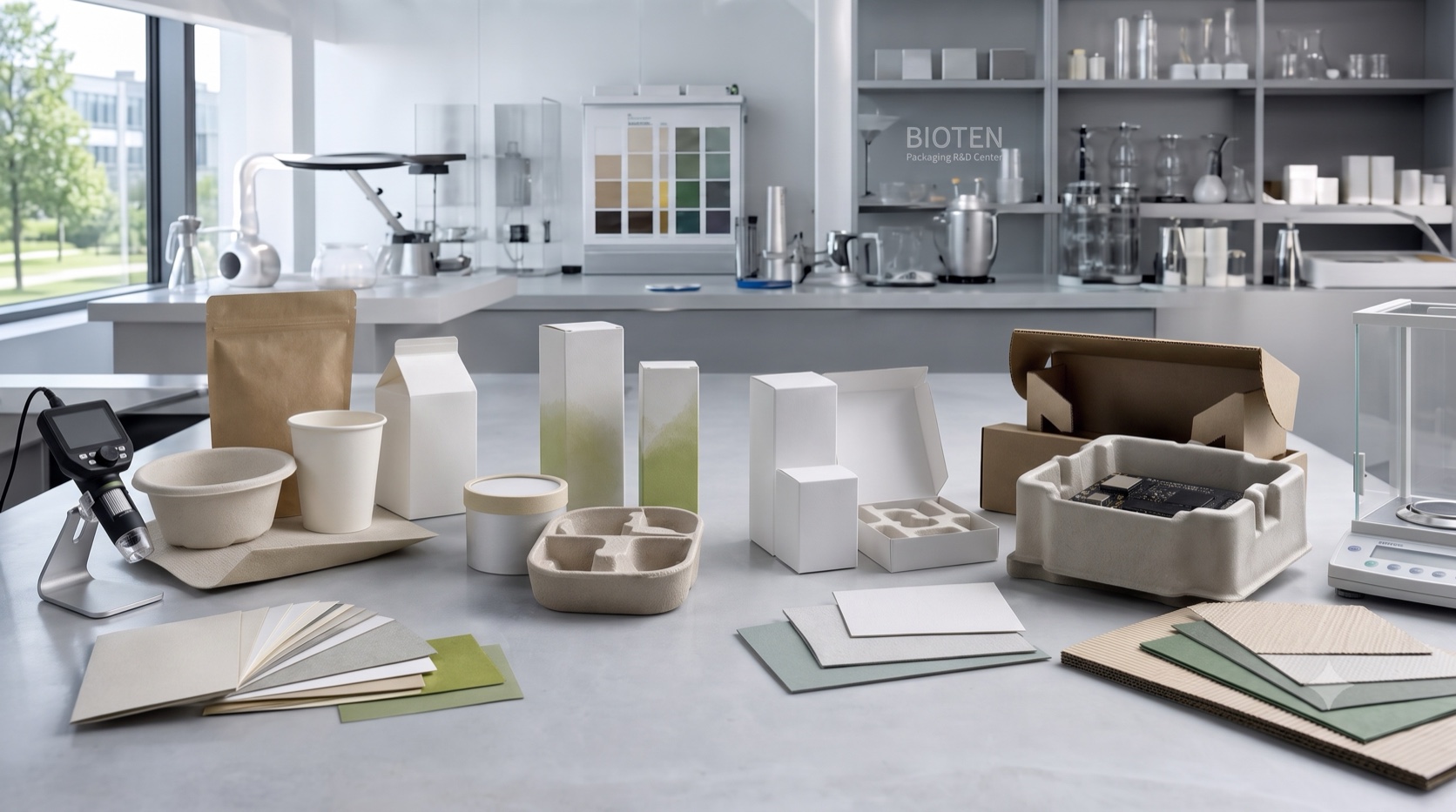
Facing the needs of paper-based disposable tableware and conventional food packaging, it focuses on water resistance, oil resistance, low odor, heat sealing molding and production line adaptation. For project verification and production line introduction scenarios such as paper cups, paper bowls, lunch boxes, food bags, etc., the applicability can be judged through real paper patterns and product results.
For food packaging projects with higher requirements, it focuses on covering moisture-proof, oxygen-blocking, odor-blocking and other composite barrier requirements. The program can be customized based on the target market, content type, packaging structure and terminal disposal path, and is suitable for customer review, sample verification and high-demand application import scenarios.
For difficult liquid packaging, paper bottles and high-barrier paper-based structures, focusing on oxygen barrier, anti-leakage and structural stability. Special verification can be carried out based on the paper base structure, coating amount, content type and storage and transportation conditions.
PROJECT PATH
The project progress starts from the confirmation of paper base conditions and gradually completes the matching of barrier system, line process verification, product molding confirmation, third-party testing, compliance data organization and version traceability management, forming a complete closed loop from experimental samples to mass production introduction.
Confirm content type, contact temperature, contact time, target market, existing threads, packaging structure and end-of-life disposal path.
Clarify the structure and key paper parameters of base materials such as white cardboard, kraft paper, bamboo pulp paper, tissue paper, pulp molding or specialty paper.
Select the corresponding product system and process combination according to the water, oil, moisture, oxygen or mineral oil barrier objectives.
Verify key process windows such as coating volume, drying conditions, rewinding, die-cutting, heat sealing, cup making or post-molding processing.
Organize testing projects and data support around water blocking, oil blocking, heat sealing, food contact, recycling or composting pathways.
Manage sample batches, process versions, test results, engineering changes and pre-mass production problem lists to reduce the risk of scale-up introduction.
START SAMPLE VALIDATION
The Bioten™ carbon team can assist customers in organizing sample verification, process window confirmation, testing evidence, compliance information and project introduction paths based on food packaging application scenarios.