








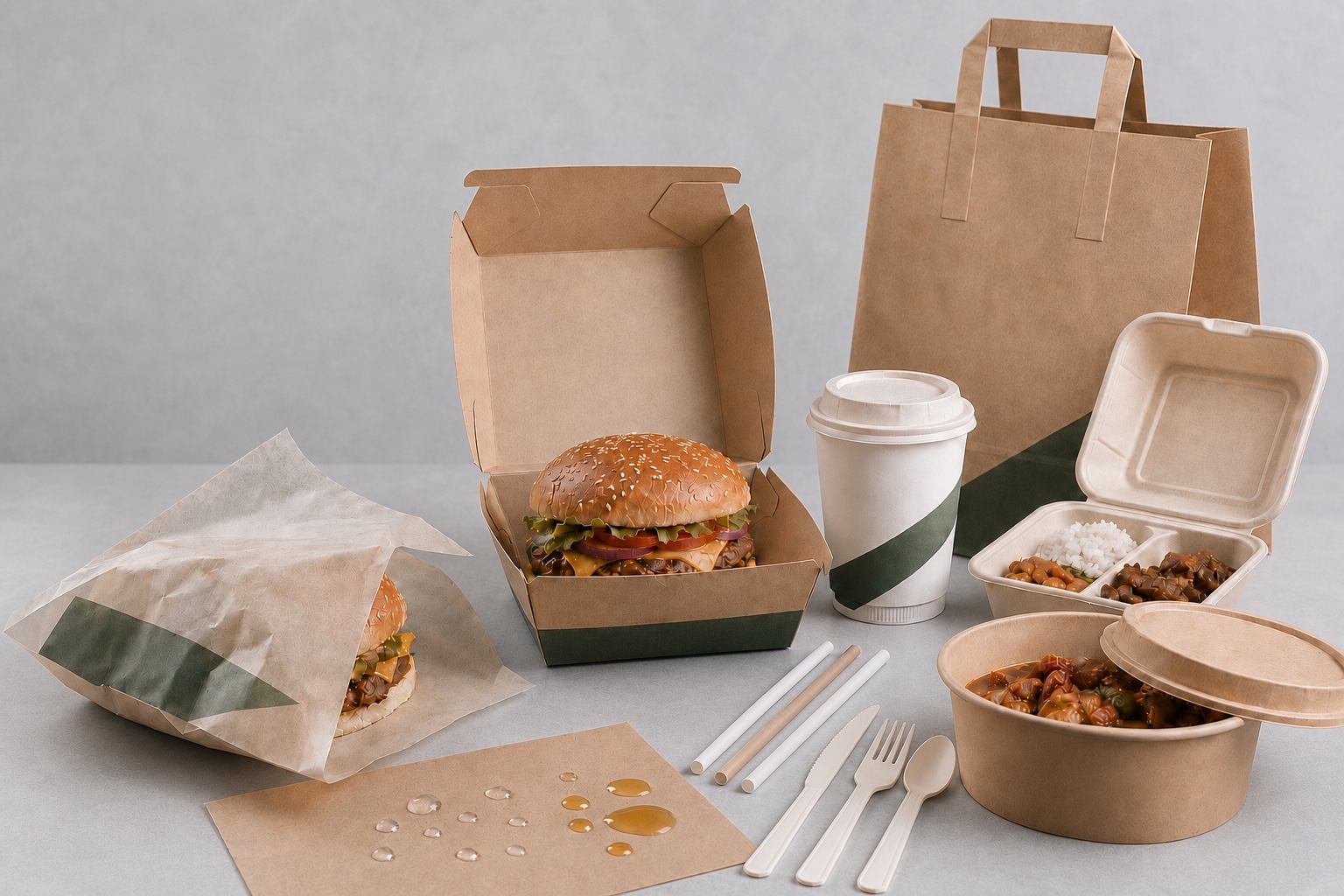




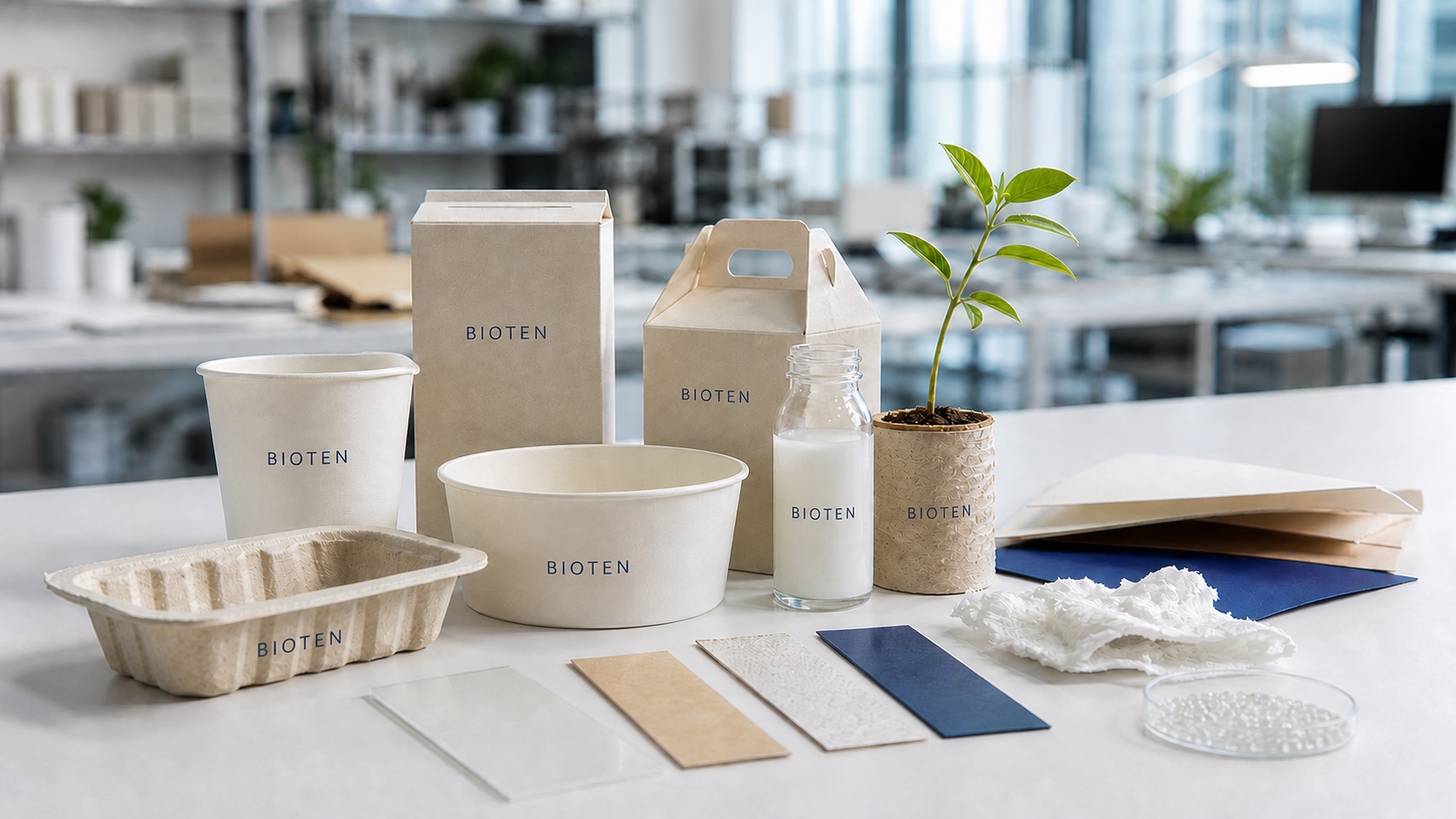

Confirm product form
Clarify product forms such as paper cups, paper bowls, lunch boxes, paper bags, coated paper, paper-based soft packages, pulp molding or labeling auxiliary materials, and determine sample boundaries and usage scenarios.


BIOTEN™ KNOWLEDGE CENTER
Organize the key judgments of paper-based barrier projects based on material objects, test methods, target markets and evidence scope.
Paper-based packaging projects need to simultaneously define product form, material structure, usage conditions, target market and external statements. Different combinations correspond to different standard methods, sample forms, test items and documentation requirements.
Clarify product forms such as paper cups, paper bowls, lunch boxes, paper bags, coated paper, paper-based soft packages, pulp molding or labeling auxiliary materials, and determine sample boundaries and usage scenarios.
Identify the base paper, functional coating, lamination, ink, adhesive, heat sealing layer and external accessories, and clarify the contact surface, functional layer and material composition information.
Record food contact attributes, time and temperature, greasy or acidic foods, freezing or heating conditions, heat seal molding and actual use requirements after printing.
Determine applicable regulatory paths, testing items, document languages and data communication methods according to China, EU, United States, Australia, New Zealand and brand customer standards.
Select items such as water-blocking, oil-proof, moisture-blocking, oxygen-blocking, heat-sealing, fold-resistant, repulpable, compostable, food contact, and PFAS concern by use and claim boundaries.
Integrate TDS, SDS, test reports, certificates, DoC, supplier statements, version information and usage conditions to form a project data system that facilitates communication.
The catalog is divided into eight topics according to the project decision-making process: material structure, performance testing, food contact, source traceability, recycling disposal, compost degradation, and EU policy and declaration boundaries. Each topic can be further expanded into independent knowledge pages.
Explain the structural relationship between base paper, coating, lamination, PHA water-based barrier, heat sealing layer, printing ink and adhesive.
View PHA waterborne barrier coating entryCovers indicators such as Cobb, Kit, WVTR, OTR, heat sealing, folding resistance, cup body/cup bottom molding and mass production stability.
entry barrier standardsEstablish a basis for communication around contact surfaces, material composition, food simulants, time and temperature conditions, migration testing, DoC and supplier documentation.
View food contact material compliance entriesSort out the information boundaries of FSC/PEFC, EUDR, mass balance, LCA, carbon footprint and brand-side low-carbon claims.
View related entriesDistinguish between technical repulpability, local recycling systems, mill sorting acceptance, contamination control and external recycling markings.
Enter recycling and disposalDistinguish between industrial composting, household composting, soil/marine degradation, material testing and finished product certification, and the scope of application of the control statement.
View the paper-based packaging compost statement entryUnderstand the applicable requirements in the European market from the perspectives of packaging regulations, single-use plastics, producer responsibility, chemical management and brand requirements.
Enter the compliance mapTransform environmental statements into communicable expressions and clarify test calibers, applicable markets, disposal conditions and explanation boundaries.
View related entriesEntries are organized around term definitions, applicable scenarios, key indicators and data directions to help users systematically understand the core concepts, application boundaries and communication points in paper-based barrier packaging projects.
The direction of the functional coating applied to the surface of paper-based materials can be matched with materials and processes based on goals such as water-blocking, oil-proof, heat-sealing, repulpability or compostability.
An indicator to evaluate the amount of water absorbed by paper or cardboard under specified time and area conditions. It is a basic item in communicating the water-blocking performance of paper cups, paper bowls, lunch boxes, etc.
It evaluates the resistance of paper or cardboard surfaces to oil penetration and is often used in the preliminary evaluation of food paper bags, hamburger paper, lunch box lining paper and oil-proof packaging.
Evaluate the material's ability to block water vapor migration, suitable for paper-based packaging that needs to control moisture absorption, moisture return, caking or shelf life.
Evaluate the rate of oxygen passing through packaging materials. It is often used for oxygen-sensitive foods, powders, greases, or paper-based composite structures that require shelf life management.
Evaluate the ability of a coating or composite structure to form a seal after hot pressing, relevant to paper cup bottoms, paper bowl side seams, lunch box seals and liquid leakage concerns.
All materials and products that may come into direct or indirect contact with food need to establish suitability judgments around safety, inertness, migration, labeling and document delivery.
Evaluating the migration of substances in packaging materials to food through food simulants, contact time and temperature conditions is an important reference for food contact suitability assessment.
PFAS-related requirements are an important concern in paper-based oil-proof, waterproof and food-contact packaging, which usually require a comprehensive assessment based on material declarations, third-party testing and target market requirements.
When facing the EU market, wood pulp, paper and paperboard-related supply chains need to pay attention to source legality, non-deforestation requirements, traceability information and due diligence documents.
EU packaging regulation involves packaging reduction, recyclability, reuse, labelling, producer responsibility and parallel assessment with other EU requirements.
Involving the EU single-use plastic product border. Paper-based products containing plastic coatings, plastic parts or plastic-free/low-plastic statements need to be further confirmed in conjunction with the rules of the target market.
Evaluating the fiber recovery performance of paper-based materials during pulping, screening and reforming into paper usually focuses on fiber yield, screening residue, stickiness and finished paper appearance.
Compostability claims should distinguish between industrial composting, household composting and natural environmental degradation, and confirm whether the assessment is made of a single material, semi-finished product or final product.
Plastic-free, low-plastic, bio-based and water-based belong to different expression dimensions and need to correspond to material definitions, certification standards, regulatory application instructions and target market requirements respectively.
DoC is used to convey to downstream statements that products comply with regulatory or standard requirements. It usually requires the support of material information, test results, conditions of use and version management.
Focus on low-carbon, plastic-free, recyclable, compostable and PFAS-related expressions to help confirm the testing, certification and data support required for external claims.
Focus on manufacturing conditions such as coating amount, drying, heat sealing, cup machine speed, printing adaptation, cup bottom glue, winding and batch stability.
Focus on TDS, SDS, material declaration, food contact information, test reports, version updates and certificate validity.
Convert application requirements into verifiable indicators to avoid replacing the verification of finished product structure, processing technology and usage conditions with a single value.
Paper-based packaging projects usually require a comprehensive assessment combining information such as material source, food contact, performance testing, applicable regulations, recycling disposal and statement expression. The following eight types of information can be used as a basic reference for project communication and program judgment.
Describe base paper, wood pulp, fiber and key raw material sources, supplementing CoC, procurement records, forest sources and due diligence documents where necessary.
Describe contact surfaces, conditions of use, material composition, migration testing, DoC and limitations to support judgments of suitability for food contact.
Water resistance, oil resistance, moisture resistance, oxygen resistance, heat sealing, folding resistance and molding tests should correspond to the target product, processing technology and actual use conditions.
When exporting to Europe, packaging regulations, single-use plastics, producer responsibility, chemical management and branding requirements often need to be understood in parallel.
Repulpability reporting, fiber yield, rejects, stickies and mill acceptance conditions all influence the scope of applicability of the recyclability expression.
Compostability claims should differentiate between industrial composting, home composting and natural environmental degradation and confirm whether the finished structure is suitable for use.
Expressions such as plastic-free, low-plastic, low-carbon, degradable and recyclable need to clarify the test caliber, applicable market, use restrictions and disposal conditions.
Summarize TDS, SDS, test reports, certificates, DoC, supplier statements and version information to form the direction of project data preparation.
Cobb, Kit, WVTR, OTR, heat sealing, folding resistance and migration tests need to correspond to the product structure, sample status, processing technology and target usage scenarios.
entry barrier standardsPaper-based packaging projects should simultaneously evaluate raw material origin, food contact, product performance, EU policies, recyclability, compostability and declaration boundaries.
Enter the compliance mapTechnical repulpability, local recyclability, industrial composting, household composting and natural environmental degradation are different disposal paths, and corresponding information should be prepared separately.
Enter recycling and disposalThey cannot be simply equated. Water-based describes the processing system or dispersion medium. Whether it is a plastic needs to be comprehensively judged based on polymer properties, regulatory definitions, certification standards and target market requirements.
Cannot be directly equated. Biobased describes the source of raw materials, and degradable or compostable describes end-of-life disposal performance. Both types of claims usually require comprehensive judgment based on test methods and disposal conditions.
Cannot be directly equated. Respulpability is a technical test result, and local recyclability also depends on the collection system, sorting capabilities, paper mill acceptance conditions and pollution control.
It usually requires further confirmation based on the product structure and usage conditions. Food contact testing is used for safety and migration evaluation, but also requires attention to barrier properties, heat sealing mass production, recycling disposal, source traceability and statement expression.
Need to be evaluated based on product differences. Report coverage should be reviewed when there are changes to the base paper, coating, coating volume, printing, adhesive, molding process, and usage conditions.
It is recommended to use verifiable and conditional statements, such as clarifying test conditions, applicable uses, target markets and disposal conditions, to avoid absolutes, generalizations or cross-market application.
The following are common standards, regulations and data preparation directions for paper-based packaging projects. Specific projects should be based on the current regulations of the target market, customer requirements, certification agencies and third-party testing agencies’ final conclusions.
Please provide product form, base paper specifications, coating structure, target market and intended use external statement to facilitate further sorting out sample verification, inspection submission direction and project data preparation direction.
Share the substrate, contents, process, target market and document needs so the right product, test and project path can be defined.