







PRODUCT CONCEPT · RESEARCH BRIEF · PA-001
Hotel amenity paper pouches:
a validation framework for functional surfaces
Define the package, paper structure, functional surface and applicable method first, then connect surface evaluation, seal strength, moisture exposure, linting, migration and the hotel-use scenario in a complete article-level validation.
01 · RESEARCH QUESTION
Define the package before defining the function.
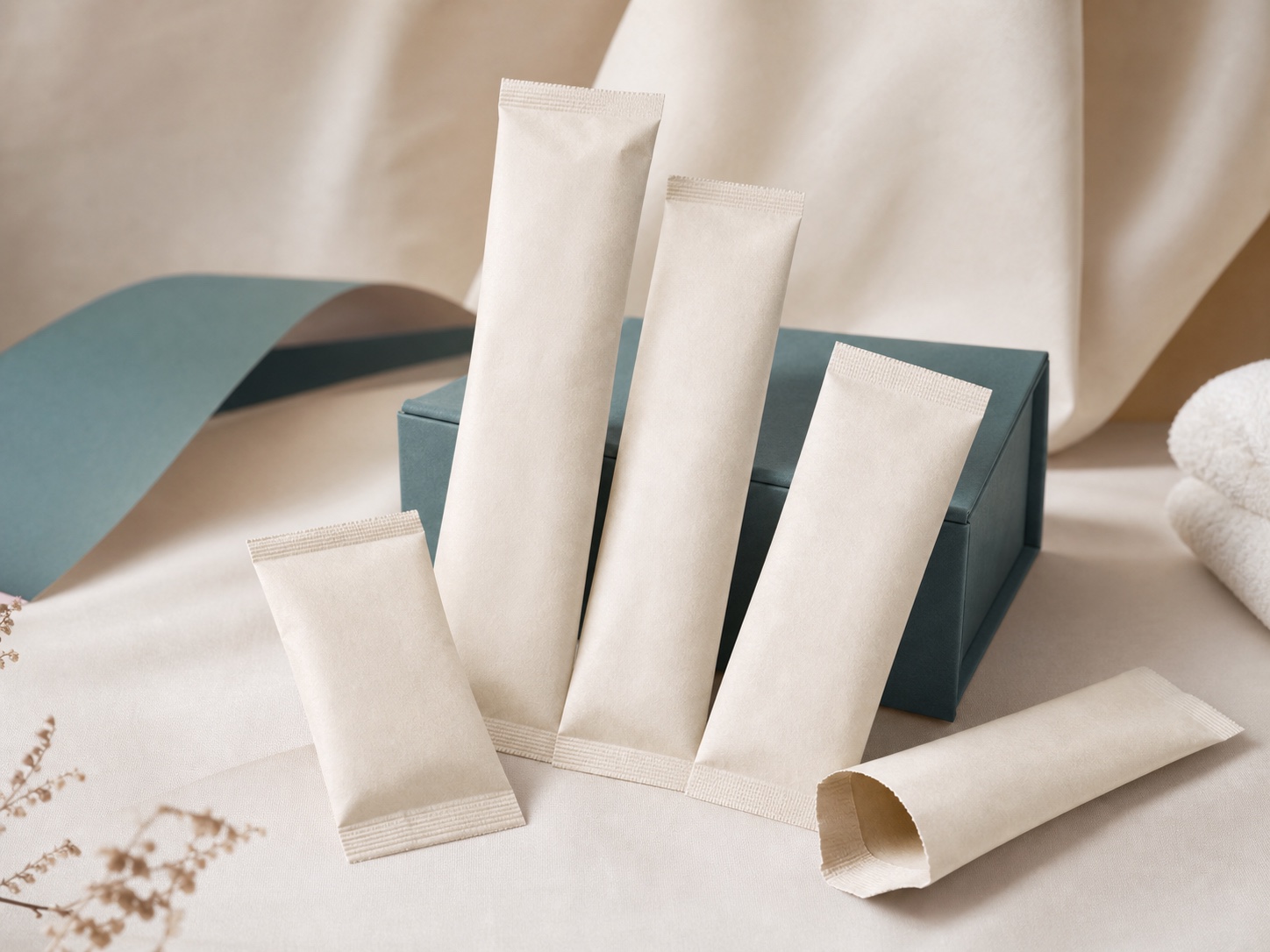
Hotel amenities span toothbrushes, toothpaste, combs, shaving items and other personal-care products. Defining contact object, humidity, transport abrasion, sealing method and opening action turns a functional paper pouch into an executable scenario validation.
Research question: how can a candidate functional surface, fiber-package integrity and hotel-use scenario be validated in one traceable version?
Project initiation defines contents and contact mode, pouch and seal, storage period, target environment, surface exposure, functional objective and target market, then builds corresponding evidence chains for function, safety, recycling and environmental value.
02 · CANDIDATE STRUCTURE
Engineer the functional layer with paper, sealing and use conditions.
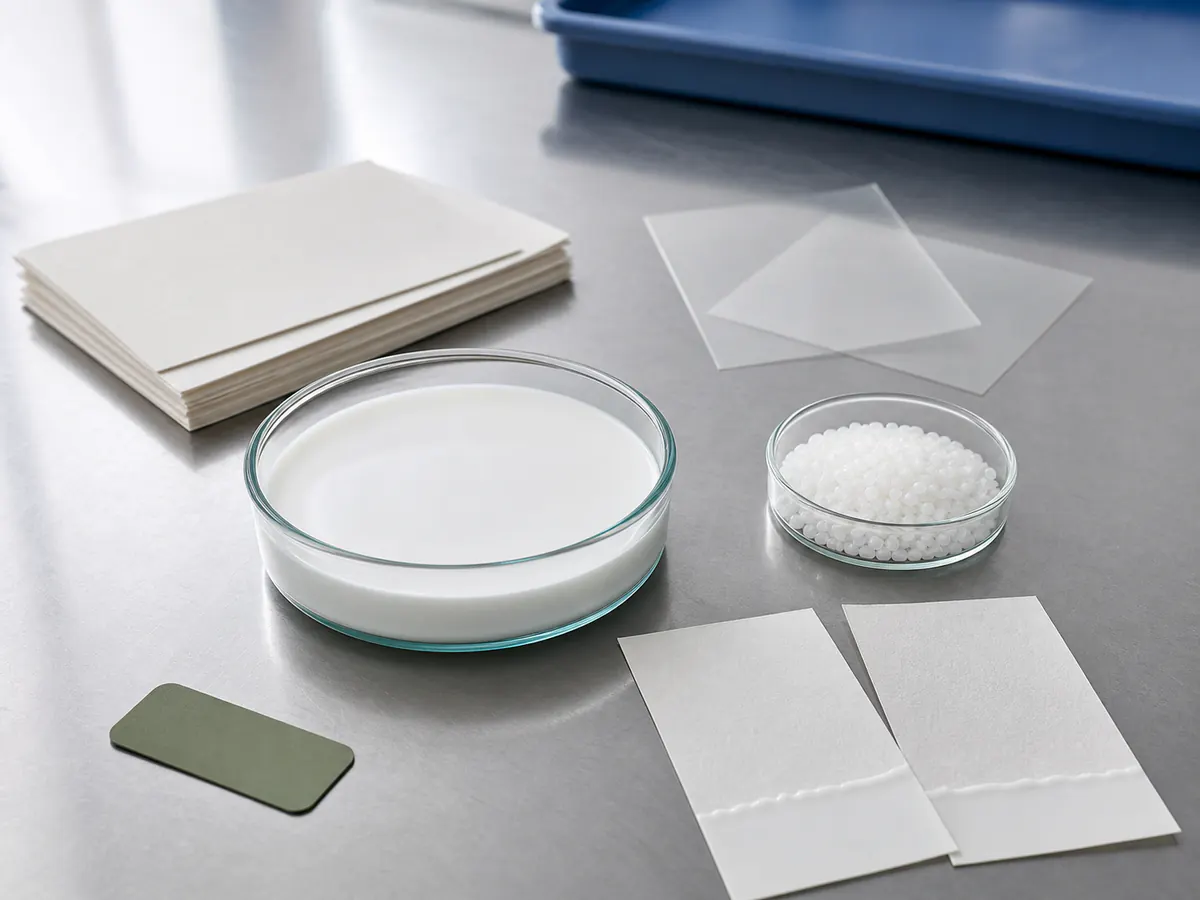
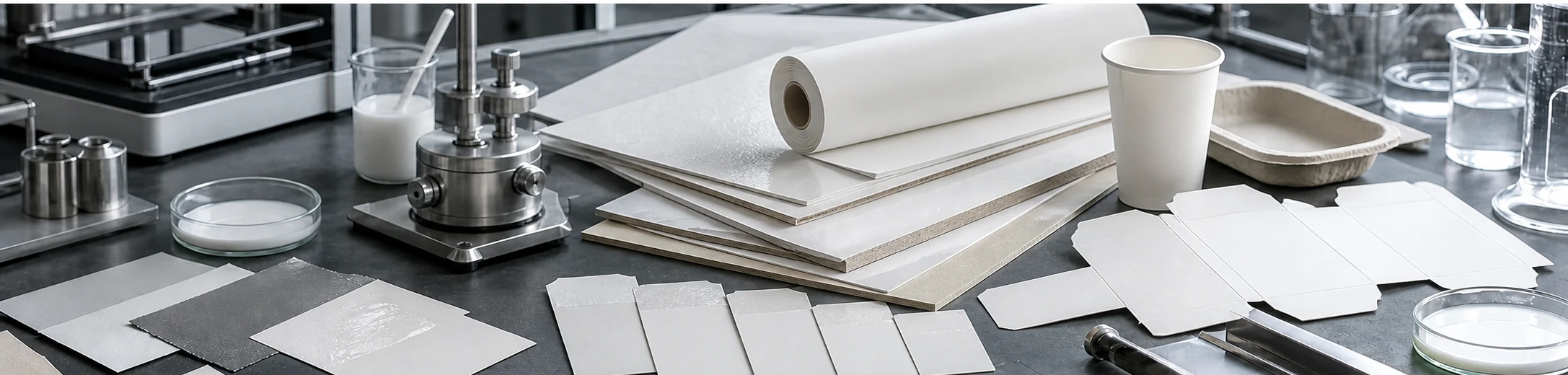
The candidate route combines printable and foldable paper, moisture- or stain-resistance coatings, sealing layers and localized functional surfaces into a complete structure. PHA bio-based waterborne emulsion serves as a candidate film-forming material, engineered around paper porosity, coating and drying windows, sealing mode, contents and target market.
- Paper: basis weight, thickness, porosity, roughness, sizing, directionality, and linting.
- Functional coating: wetting, coverage, continuous film formation, moisture and stain resistance, post-fold retention, and odor.
- Sealing and pouch making: heat-seal or adhesive window, seal-contamination tolerance, edge wicking, opening experience, and transport integrity.
- End-of-life: evaluate repulpability, rejects and the corresponding end-of-use route for the complete structure in the target recovery system.
03 · FUNCTIONAL EVALUATION
Use methods matched to surface characteristics to generate interpretable functional data.
ISO 22196:2011 and ISO 21702:2019 address plastics and other non-porous surfaces. When a candidate coating forms an identifiable, uniform non-porous functional surface and laboratory method applicability is confirmed, the standards can inform antibacterial and antiviral activity evaluation frameworks. Porous paper, rough surfaces, absorbent or penetrated structures use laboratory methods adapted to their surface characteristics.
A competent laboratory records method deviations, recovery, detection limit, contact time, temperature and humidity, inoculum medium and controls for alternative or modified methods. Surface data then proceeds into finished-package validation under real use, storage and transport conditions.
Official method pages: ISO 22196:2011 · ISO 21702:2019.
04 · VALIDATION MATRIX
Validate the functional surface and finished pouch in one version.
| Layer | Key variables | Planned checks | Release boundary |
|---|---|---|---|
| Material & surface | Paper, coating, coat weight, surface porosity, and roughness | Film continuity, adhesion, moisture and stain resistance, post-fold integrity | Bind paper, formulation, process, and sample version |
| Functional surface | Target organism, contact time, temperature and humidity, medium, and controls | Method applicability, recovery, detection limit, activity assessment, and post-aging retest | Interpret only within the applicable surface, method, and disclosed conditions |
| Pouch & seal | Pouch geometry, folding, sealing, contamination, and edges | Seal strength, leakage, edge wicking, opening, and distribution handling | Release using representative finished packages, not flat-sheet results |
| Safety & end-of-life | Contents, contact mode, target market, and recovery route | Migration or compatibility, odor, linting, repulping, and rejects | Build separate evidence for safety, recycling, and environmental claims |
05 · RELEASE EVIDENCE CHAIN
From research brief to engineering release, every conclusion has a version.
- The research scope focuses on method applicability and repeatable testing for the functional surface.
- Surface function, seal strength, distribution integrity, use safety and regulatory assessment form one versioned validation matrix.
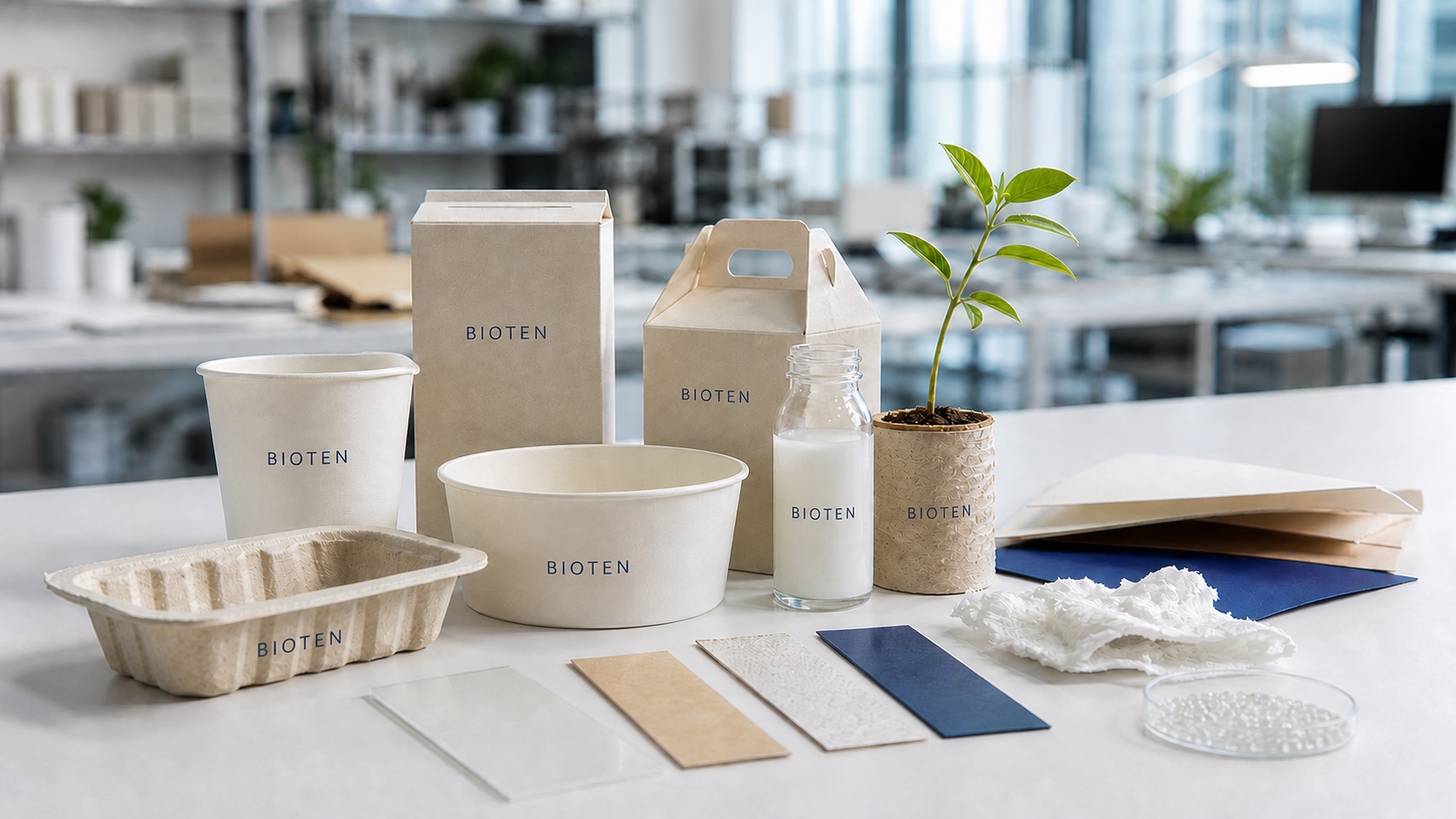
- Technical concept visuals communicate structure and engineering routes, while samples and test data are published by project version.
- Recycling, composting and environmental value map to the complete structure, target system, comparison boundary and corresponding evidence.