





CHINA PAPER LEADERS · NO.05
Why Is Bohui Paper Strong?
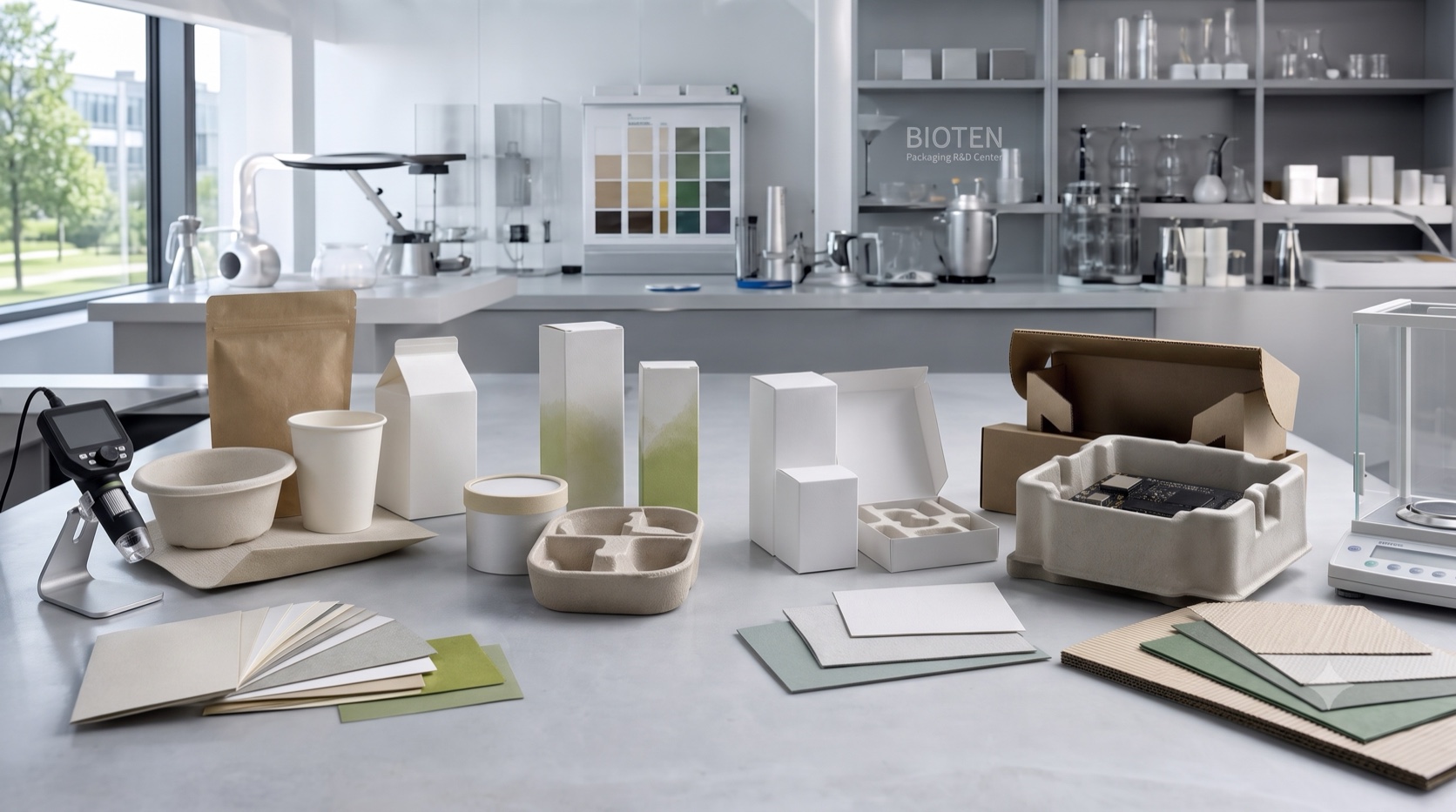
It Has Turned Large Paper Machines into a Product Platform
What is truly difficult to replicate is not 4.8777 million tonnes of output, but Bohui Paper's ability to integrate furnish preparation, coating, grade changes, customer qualification and global distribution into a product system capable of continuous iteration.
A large paper machine is merely an expensive physical asset. It becomes a true "product platform" only when a company can repeatedly reconfigure fibre furnish, wet-end chemistry, coating structure, surface properties, specification mix and customer qualifications for different applications while keeping grade-change losses within acceptable limits.
When Bohui Paper is discussed, the industry usually thinks first of its white paperboard capacity. In 2025, the Company produced 4.8777 million tonnes and sold 4.7922 million tonnes of machine-made paper, including 3.1158 million tonnes of white paperboard output and 3.0790 million tonnes of sales. Scale is Bohui's entry ticket to top-tier competition. The more valuable capability to study is how it continually moves this asset-heavy system into new applications.
Large paper machines are designed for long, stable, high-speed runs and are not inherently flexible. Every grade change may affect the furnish, fillers and additives, sizing, coating formulation, machine speed, basis weight, moisture, calendering, rewinding and quality release. The transition also incurs costs from off-spec transition paper, cleaning, reduced speed and restabilisation. Bohui's real capability is to organise distinct value pools—including tobacco packaging board, food-grade paperboard, liquid packaging board, blister-pack board, playing-card board, cupstock, white kraft paper and digital printing paper—into a product portfolio that can be manufactured consistently at scale despite these rigid constraints.
In 2025, the Shandong base developed and commercialised 21 new products, while the Jiangsu base launched 28 R&D projects. The gross margin of white paperboard reached 11.33%, up 1.96 percentage points year on year. Overseas revenue from principal operations increased by 36.14%, with a gross margin of 17.25%. R&D expenditure reached RMB 676 million, while comprehensive energy consumption per unit of product at the Shandong base fell from 0.24 tonnes of standard coal equivalent per tonne of pulp and paper in 2023 to 0.22 in 2025. Together, the product, market and efficiency evidence shows that Bohui is upgrading from scale manufacturing to platform manufacturing.
The year 2025 was also a stress test of the platform's ability to convert capability into returns. Revenue rose 1.20% to RMB 19.158 billion, while net profit attributable to shareholders fell 11.56% to RMB 155 million. Yet profitability in white paperboard and overseas operations improved in parallel, the debt-to-asset ratio declined from 69.74% to 65.48%, and net operating cash flow increased to RMB 2.065 billion. This is not simply a case of "growth failure". It shows a transition in which the stronger businesses are gaining ground while pricing and the product mix still require further optimisation.
This article therefore does not offer a general company profile, nor does it book new products, technical upgrades or certifications as profit in advance. The real questions are: How has Bohui transformed a fleet of large paper machines into a product platform? What do the APP system, its two production bases, pulping capability and global channels each contribute? Which operating results already demonstrate progress, and which indicators will determine whether the platform can deliver higher returns?
FOUR NUMBERS
4.8777 million tonnes Machine-made paper output in 2025 | 21 products Developed and commercialised |
11.33% White paperboard gross margin in 2025 | RMB 4.027 billion Overseas revenue from principal operations in 2025 |
Basis of presentation: All figures above are from Bohui Paper's 2025 Annual Report. The number of new products refers specifically to the Shandong base. Overseas revenue and gross margin are reported by geographic segment for principal operations and cannot be equated directly with an export-price advantage for any single product.
CONCLUSION FIRST
Bohui's greatest strength is not the length of its product list, but its ability to use the same large-scale manufacturing system to enter new value pools continuously.
It has built a complete chain spanning equipment stability, product development, paper-machine scale-up, customer qualification and global sales. The improvement in white paperboard gross margin shows that the product mix is beginning to create value. Growth in overseas operations shows that its market reach is expanding. Better energy, water and quality indicators show that the platform is not running on output growth alone.
POSITIVE EVIDENCE CHAIN · FIVE SETS OF POSITIVE EVIDENCE
Evidence boundary: Financial data are from the audited annual report. Energy, water, customer and quality indicators come from the Company's ESG report and are company-reported operating data, not conclusions from an independent financial audit.
EVIDENCE MAP · HOW THIS ARTICLE ESTABLISHES CREDIBILITY
Financial results:Production, sales, revenue, profit, and product- and region-level gross margins for 2025 are taken from the audited annual report.
Operating evidence:R&D, energy and water use, quality and certifications are drawn from the Company's annual and ESG reports, with their company-reported nature clearly stated.
External validation:Green-factory status and project progress are based primarily on public information from the Ministry of Industry and Information Technology and environmental authorities.
Research judgements:Average prices, platform mechanisms and industry opportunities are identified as calculations or analysis. Price-increase notices, media reports and environmental-assessment progress are not treated in advance as realised revenue or profit.
CORE JUDGMENT
A product platform is not about "how many grades can be made";
it is about "whether grades can be changed reliably, compliantly and profitably."
Treating a product platform as merely a product catalogue overstates the significance of new-product counts and understates the difficulty of industrialisation. Meeting specifications in a laboratory sample is only the start of R&D. A genuine commercial loop also requires stable paper-machine operation, batch consistency, printing and converting validation, food-contact or customer-standard verification, volume delivery and repeat orders.
A formula closer to the operating reality
Product-platform value = depth of qualified grades and certifications × stable volume-production capability × quality of effective orders − grade-change losses − inventory tied up − energy and financing costs
Bohui's strength is that it has already built an integrated framework spanning large-scale equipment, two production bases, furnish and coating R&D, customer trials and global sales. What it must still prove is whether this framework can continue to raise gross profit per unit and free cash flow.
01 · EQUIPMENT BASE
Capability One:
Large-scale equipment is not the destination; it is the foundation for stable manufacturing.
Bohui operates two major production bases in Zibo, Shandong and Yancheng, Jiangsu. Its principal equipment comes from suppliers including Valmet, Voith, ANDRITZ and Siemens, supported by DCS, QCS, MES and WAS control and management systems. For white paperboard and premium packaging board, the value of these systems extends beyond automation: they continuously control basis weight, moisture, cross-web profile, coat weight, surface properties and paper defects so that variation on high-speed machines remains within customers' acceptable limits.
The Shandong base sits within a mature papermaking cluster, facilitating collaboration among equipment suppliers, chemical providers, converters and technical talent. The Jiangsu base is close to Dafeng Port, providing better access for imported pulp and wood chips and for seaborne shipment of finished products. The two-base structure is not merely additive capacity; it provides complementary raw-material routes, customer radii, port logistics and product roles.
In 2025, several core production lines at both bases set new records for single-machine output, operating efficiency and speed, while machine-made paper output increased by 7.70%. More importantly, the release of scale was accompanied by efficiency gains: comprehensive energy consumption per unit at the Shandong base fell from 0.24 tonnes of standard coal equivalent per tonne of pulp and paper in 2023 to 0.22 in 2025, while water consumption per unit declined from 0.91 tonnes per tonne of pulp and paper in 2024 to 0.89.
Quality indicators provide additional operating evidence. According to the Company's ESG report, customer satisfaction at the Shandong and Jiangsu bases reached 92.0% and 91.0%, respectively, in 2025. Average complaint-resolution time fell from 5.02 days to 4.03 days, and there were zero product recalls. These are company-reported indicators rather than independently audited financial data, but they show that Bohui is pursuing not only machine speed, but also reliable delivery, customer responsiveness and a closed quality loop.
Bohui's equipment advantage can therefore be described more precisely: it is bringing together the economies of scale, process stability and product adaptability of large paper machines, laying the foundation for continuous volume production and reliable delivery across multiple demanding grades.
02 · PLATFORM ARCHITECTURE
Capability Two:
Deconstructing a sheet of paper into four reconfigurable engineering layers
From a process perspective, Bohui is not simply adding SKUs. It is reconfiguring four sets of capabilities across a fleet of large paper machines. Each layer can create differentiation, but all four must work together before a product can enter a higher-value application.
This architecture means that white paperboard is no longer governed by a single value proposition of standard commercial board. Blister-pack board prioritises bulk, stiffness and flatness after thermoforming. Playing-card board requires opacity, ply structure, folding endurance and printability. Cupstock must support extrusion or functional coating, die-cutting and ultrasonic side sealing. Digital-printing white paperboard places greater emphasis on surface smoothness, ink or toner compatibility, and defect control.
For the same reason, a "grade change" is not completed instantly at the push of a button. It requires the coordinated management of order scheduling, formulation windows, transition losses, quality release and customer qualification. Making these changes predictable is the true industrial meaning of a product platform.
03 · PRODUCT ENGINE
Capability Three:
White paperboard is the core platform; new products extend it into new applications.
In 2025, white paperboard generated RMB 11.802 billion in revenue from principal operations, accounting for approximately 63% of Bohui's papermaking revenue. Its gross margin was 11.33%, up 1.96 percentage points year on year. It is both Bohui's largest revenue segment and its clearest current profit anchor. Its significance lies not only in scale, but also in its ability to extend into tobacco, food, personal care, pharmaceutical, maternal and infant, cultural and creative, digital-printing and consumer-goods packaging applications.
In 2025, the Shandong base developed and commercialised 21 functional paper products, including food-grade coated kraft board, unbleached liquid packaging board, premium coated board for playing cards, uncoated woodfree paper and business digital-printing paper. It also developed high-basis-weight cupstock, upgraded coated cupstock, and created blue-core playing-card board and ultra-high-bulk digital-printing white paperboard for overseas markets. Its high-bulk blister-pack board was also recognised as a Shandong Manufacturing Single Champion Product and a "Premium Shandong" product.
The Jiangsu base launched 28 R&D projects, introduced acrylamide-free paper products and high-smoothness, low-picking printing paper, and developed acrylamide-free, one-side-coated white paperboard for infant and children's paper products. According to the annual report, this product was certified under the Basic Safety Technical Specification for Paper Products for Infants and Children. The application of in-house seed latex also reduced dependence on imported styrene-butadiene latex and certain imported kaolin clay.
R&D expenditure totalled RMB 676 million in 2025, equivalent to 3.53% of revenue. By year-end, the Company had obtained 201 patents, including 63 invention patents, 127 utility-model patents and 11 acquired invention patents, with another 54 applications pending. The numbers themselves are not a moat. What matters is that Bohui has established a cross-functional innovation mechanism involving technology, production, procurement and marketing, enabling R&D to progress from formulations and paper samples to paper machines, supply chains, customer validation and orders.
Industry judgement
The core evidence of Bohui's strength is not the number of products launched at one time, but the closed loop it has formed: application demand, formulation design, paper-machine scale-up, converting validation, customer qualification and feedback-driven iteration. New products ultimately prove the platform's value only when they achieve stable repeat orders and improve the product mix.
04 · APP SYNERGY
Capability Four:
APP synergies broaden the resource interface; transparent governance makes them more sustainable.
Following the change in ultimate control in 2020, Bohui became part of the Sinar Mas Paper and APP China system. The direction of industrial synergy is clear: upstream, it can access a broader base of wood-pulp and wood-fibre resources; midstream, it can draw on equipment, process, certification and technical expertise; and downstream, it can reach overseas customers through a more comprehensive trading and sales network. Bohui's directors and executives also include people with experience in APP and Sinar Mas Paper businesses, supporting alignment in management systems, product roadmaps and global markets.
Transaction data for 2025 further show that these connections are not merely conceptual. The five largest suppliers accounted for 60.81% of annual procurement, with related-party purchases representing 48.28% of total annual procurement. Related-party sales to customers among the five largest customers accounted for 5.94% of annual sales. Intra-group procurement and channels can improve resource coordination, while also requiring transparency in related-party pricing, continuity of supply and independent decision-making by the listed company.
On 28 July 2026, shareholders approved a proposal allowing the indirect controlling shareholder a six-year extension to fulfil its undertaking to avoid horizontal competition. According to the announcement, 1,002 shareholders and proxies attended; 65.9938% voted in favour and 33.9335% voted against. Both the approval and the significant dissent should be presented. Operating synergies already exist, but resolving deeper horizontal-competition issues and clarifying asset boundaries remain long-term tasks. Industry readers should assess "operating synergy" separately from "asset integration" and should not assume that the former automatically implies the latter.
The most professional and constructive description of APP synergy is therefore this: Bohui has access to a broader interface for raw materials, technology, certification and market coordination. The quality of that synergy must be demonstrated through market-based pricing, diversified sourcing, independent governance and sustained improvement in the listed company's performance.
High-quality group synergy converts large-scale resources into lower sourcing costs, faster product validation and broader customer reach, while preserving independent operating capabilities that remain comparable, auditable and sustainable.
05 · MARKET ACCESS
Capability Five:
Certifications and exports turn "manufacturable" into "marketable."
Bohui has established 36 sales offices in China and maintains sales offices or marketing personnel in key regions worldwide. In 2025, domestic revenue from principal operations declined 6.20% to RMB 14.587 billion, with a gross margin of 7.50%. Overseas revenue from principal operations rose 36.14% to RMB 4.027 billion, with a gross margin of 17.25%, up 5.16 percentage points. Overseas markets are no longer a supplementary channel; they are an important outlet for value created by the upgrading product mix.
This gross-margin gap cannot simply be interpreted as proof that overseas selling prices are necessarily higher. Product mix, geography, trade terms, freight treatment, exchange rates and customer mix all affect regional gross margins. At a minimum, however, it shows that overseas operations carried higher unit value within Bohui's 2025 business mix and provided an important channel for mitigating homogeneous competition in the domestic market.
Certifications such as FSC chain of custody, ISEGA, ISO 9001 and FSSC food-safety management provide a foundation for raw-material traceability, food packaging and overseas customer audits. More importantly, demanding customers generally also conduct printing, converting, filling, migration, odour, batch-stability and factory audits. Orders for products such as liquid packaging board may undergo several rounds of testing. Certification is the threshold for market access, not the end of the order-conversion process.
In July 2026, public information from the Huantai County Converged Media Centre stated that Bohui's food-grade packaging paper, aseptic liquid packaging board and other products had been sold to more than 90 countries and regions and had entered the supply chains of certain global food and personal-care companies. This is a local-media disclosure and cannot replace customer or order announcements, but it is consistent with the audited high growth in overseas revenue in 2025 and indicates that overseas coverage is not an isolated signal.
Global capability must also include responses to trade remedies. Mexico's anti-dumping final determination issued on 8 July 2026 applied duties of US$0.2837 per kilogram and US$0.3909 per kilogram to relevant paperboard from Jiangsu Bohui and Shandong Bohui, respectively. This does not negate Bohui's overall export capability, but it clearly demonstrates the practical value of diversification across "more than 90 markets": the faster overseas business grows, the more it requires a balanced country mix, evidence of origin and cost, cost-sharing mechanisms with customers, and higher-value products to strengthen resilience.
Large paper machines answer whether a product can be manufactured consistently. Certifications and customer trials determine whether it can enter a supply chain. Multi-market coverage and repeat orders determine whether the platform can withstand demand and trade volatility in any single country.
PLATFORM PRESSURE TEST
The stronger businesses have begun to improve;
the next step is to transmit those gains into overall returns.
01 | Growth in output and sales shows that the core business is still expanding.
In 2025, machine-made paper output increased by 7.70%, sales volume by 5.04%, and revenue by 1.20%. A rough calculation based on product-level revenue and sales growth indicates that the average realised price of white paperboard fell by approximately 3.9%, while that of printing and writing paper declined by approximately 5.6%. These are calculations based on segment data, not average prices directly disclosed by the Company. They show that Bohui sustained production and sales growth despite pricing pressure. The next source of improvement is clear: differentiated products and a better market mix must offset pressure on revenue per tonne.
02 | White paperboard improved first, demonstrating that product-mix adjustments are working.
The gross margin of white paperboard increased by 1.96 percentage points to 11.33%, while linerboard rose by 0.59 percentage points to 3.11%. The gross margin of printing and writing paper declined by 4.31 percentage points to 8.21%, and gypsum liner paper fell by 3.21 percentage points to 2.47%. This divergence does not disprove the platform's capabilities; it establishes an operating priority: resources should continue to move towards white paperboard, higher-value functional paper and overseas orders that have already demonstrated gross-margin improvement.
03 | Higher inventory percentages must be assessed alongside absolute volumes.
Year-end inventories of white paperboard, printing and writing paper, gypsum liner paper and linerboard increased by 40.84%, 148.72%, 50.00% and 58.03%, respectively. Yet total inventory across the four grades was 223,400 tonnes, equal to approximately 4.7% of annual sales volume on a simple basis. Percentage changes are affected by the prior-year base and cannot be equated directly with weak demand. The Company should nevertheless continue to improve order forecasting, the timing of goods in transit for export and grade-change scheduling, upgrading from "being able to change grades" to "optimising grade changes around orders."
04 | The cost moat begins with fibre and energy engineering.
Of disclosed papermaking costs in 2025, raw materials accounted for 66.27% and energy for 16.97%, or 83.24% combined. The product platform therefore cannot be discussed separately from pulp prices, wood chips, steam, electricity and the share of internally produced pulp. Bohui's chemical-pulp projects, chemi-mechanical-pulp upgrades, waste-heat recovery and spent-liquor resource recovery are fundamentally intended to create a cost foundation for product innovation, rather than simply expand upstream capacity.
05 | Cash flow and the capital structure improved materially.
Net operating cash flow reached RMB 2.065 billion in 2025, up 197.06% year on year. Cash paid to acquire and construct long-term assets was RMB 483 million during the same period. The debt-to-asset ratio fell from 69.74% to 65.48%, and administrative expenses declined by 24.49%. The annual report also states that operating cash-flow growth came mainly from lower procurement payments. Finance costs rose 18.96%, but the breakdown shows that interest expense declined; the increase was driven mainly by the swing in exchange gains and losses from a gain in the prior year to a loss in the current year. The Company is therefore actively repairing cash management, cost control and its capital structure. The next task is to convert these improvements into profit and free cash flow.
06 | Net profit attributable to shareholders returned to growth in the first quarter of 2026.
First-quarter revenue was RMB 4.460 billion, down 2.27% year on year, while net profit attributable to shareholders rose 3.75% to RMB 55.37 million. Net profit excluding non-recurring items declined by 1.85%, and operating cash flow fell by 28.62%. Based on the financial statements, the overall gross margin was approximately 9.22%, slightly below approximately 9.60% a year earlier. The period-end debt-to-asset ratio was approximately 69.53%, while both cash and short-term borrowings increased materially. The positive signal is that attributable net profit has returned to growth. The next tests are whether recurring earnings, gross margin and working capital can improve in tandem.
Overall assessment: 2025 was not a failure of Bohui's platform capabilities, but a stress test that exposed strengths and weaknesses at the same time. White paperboard, overseas operations, cash flow and the capital structure improved first. Platform returns will be released more fully when higher-value products continue to grow faster than standard products, sales volume continues to grow faster than inventory, and gross-margin gains continue to outpace financing costs.
2026 CHANGE SIGNALS
Seven recent developments are strengthening the product platform.
March 2026 | Shandong Bohui was included in the national Green Factory list.
Shandong Bohui Paper Industry Co., Ltd. appears as item 1,147 on the 2025 Green Factory list published by the Ministry of Industry and Information Technology. Green Factory status does not directly prove a product premium, but it places the Company within the national tiered development programme for low-carbon energy, resource efficiency, cleaner production, greener products and intensive land use, supporting brand-customer audits and green-supply-chain requirements.
February–May 2026 | The chemi-mechanical pulp upgrade received environmental-assessment approval in principle.
Public environmental-assessment information indicates total investment of approximately RMB 219 million. The project proposes increasing two chemi-mechanical pulp lines from 200,000 tonnes each to 300,000 tonnes each, raising total capacity from 400,000 to 600,000 tonnes, and adding twin-roll pulp presses, screw presses and two waste-heat recovery systems. Its strategic value lies in raising self-sufficiency in high-yield pulp and improving energy recovery. Approval in principle under the environmental assessment does not mean that the project has been built, reached design capacity or already reduced costs.
2025–2026 | Chemical wood-pulp capacity is being expanded from 95,000 tonnes to 320,000 tonnes.
Public information from the Zibo Municipal Ecology and Environment Bureau indicates that the project plans a new 320,000-tonne continuous cooking, screening and washing, oxygen-delignification and bleaching system, supported by alkali recovery and back-pressure power generation. The annual report includes "accelerating the commissioning and effectiveness of chemical-pulp and chemi-mechanical-pulp self-sufficiency upgrade projects" in the 2026 operating plan. The project could narrow the purchased-pulp gap, but its ultimate effect will depend on wood-chip costs, start-up efficiency, yield, energy balance and capital employed.
February–May 2026 | Existing paper machines are being upgraded and reassigned to different product categories.
Public acceptance information for the "1.5-million-tonne premium packaging board technical-upgrade project" shows that the project requires no additional land and proposes upgrading 16 sets of equipment. Specifically, the existing 500,000-tonne linerboard line would be expanded to 800,000 tonnes, while the existing 500,000-tonne corrugating-medium line would be converted into a 500,000-tonne printing and writing paper line. The "1.5 million tonnes" in the project name should not be read directly as the combined post-upgrade output of these two lines; the two publicly disclosed lines total 1.3 million tonnes. The real signal is that Bohui is using upgrades to existing assets to reshape its product mix.
2025 into 2026 | Water-based barrier food-grade paperboard is moving onto an in-line paper-machine production route.
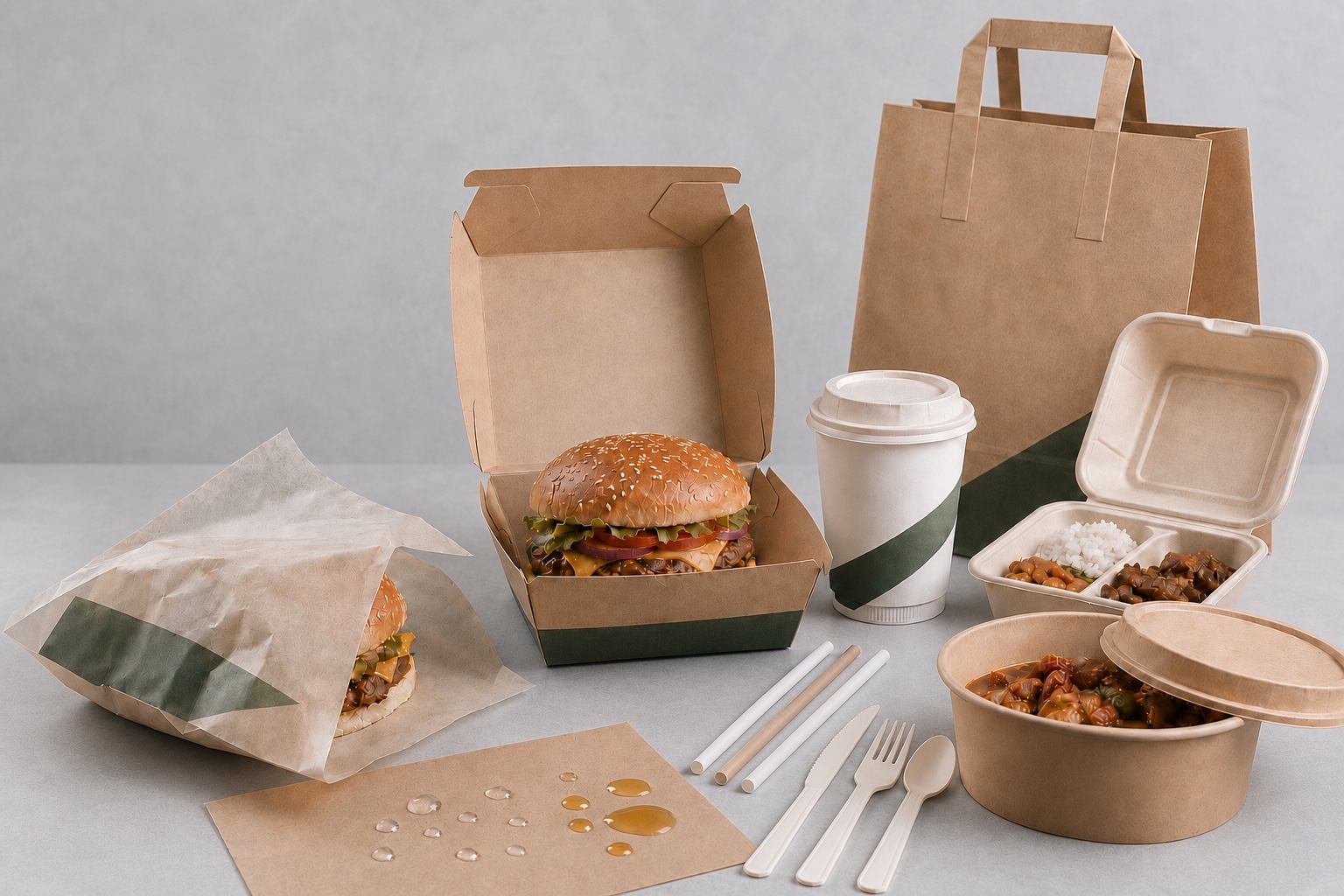
The Company has initially established a paper-machine line for in-line coating of water-based barrier food-grade paperboard, together with an in-line recovery system for dry and wet broke. Its ESG report states that a specific EPP product is directly coated and formed in one pass on the paper machine, and discloses related food-contact, recyclability and compostability certifications. This marks an extension of white paperboard from a structural material into "base paper plus a functional layer". Specific performance and compliance conclusions, however, apply only to the corresponding formulation, use and certification scope.
July 2026 | Overseas application coverage continued to expand.
Local converged-media reports stated that food-grade packaging paper, aseptic liquid packaging board and other products had been sold to more than 90 countries and regions. Together with the 36.14% increase in overseas revenue from principal operations in 2025, this shows that exports are shifting from "absorbing capacity" to serving as an important market for differentiated products. The next step is to continue testing the quality of overseas revenue, customer concentration, payment terms, exchange-rate exposure and after-sales technical-service capability.
July 2026 | Price notices for relevant paper products signalled an attempt to restore value.
Public reports on price-increase notices stated that Bohui proposed raising prices for certain paper products by RMB 200 per tonne from 1 July; different public reproductions were not fully consistent about the exact grades covered. At a minimum, this shows that the Company and the industry are attempting to restore product value and pass through costs. A price-increase notice expresses quoted-price intent; it does not mean that transaction prices, implementation rates or profits have already improved. Real validation requires subsequent average selling prices, volumes, gross margins and receivables to improve together.
BIOTEN PACKAGING VIEW
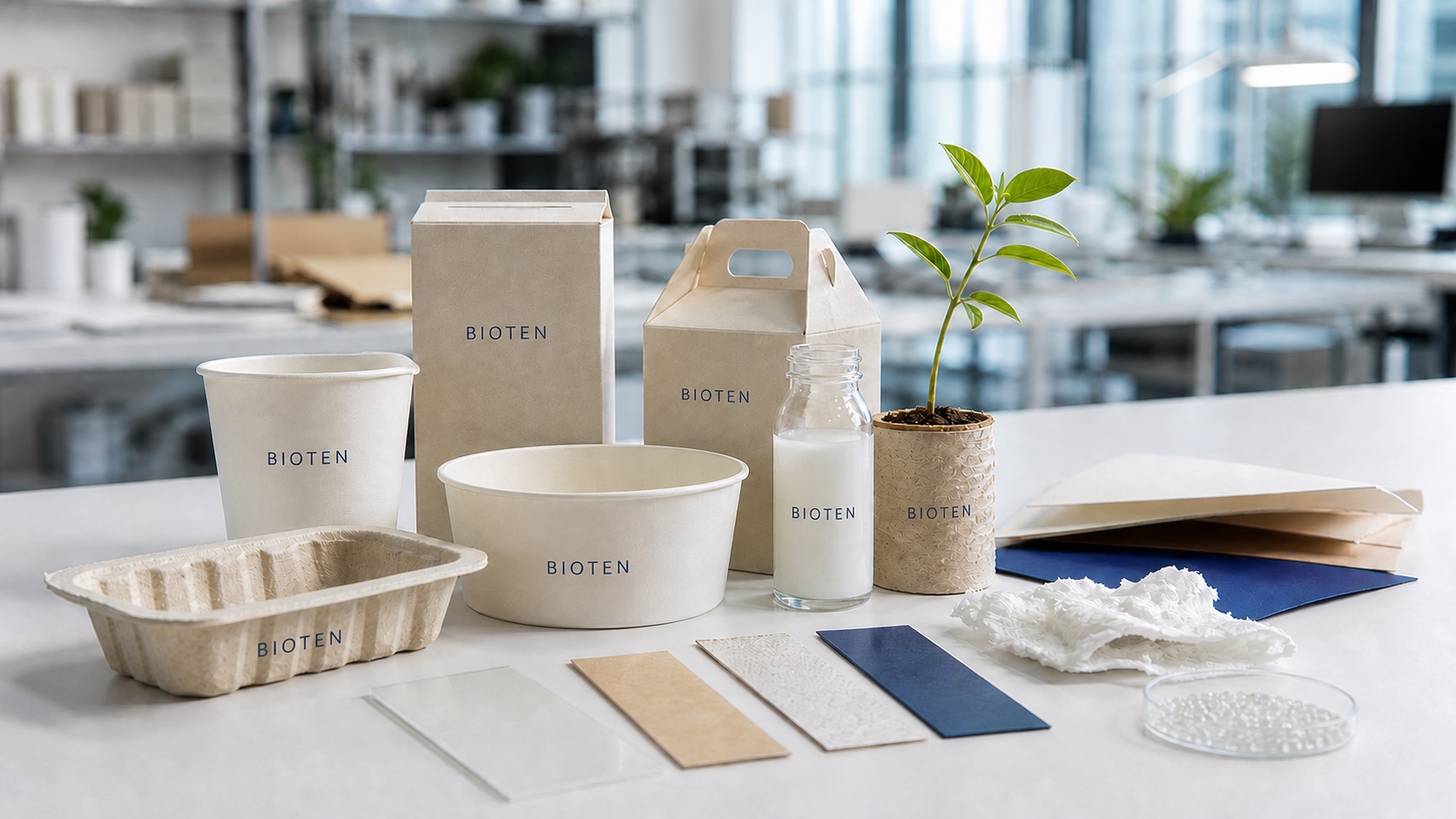
BIOTEN Packaging perspective:
The paper-machine platform is evolving into a "base paper plus barrier engineering" platform.
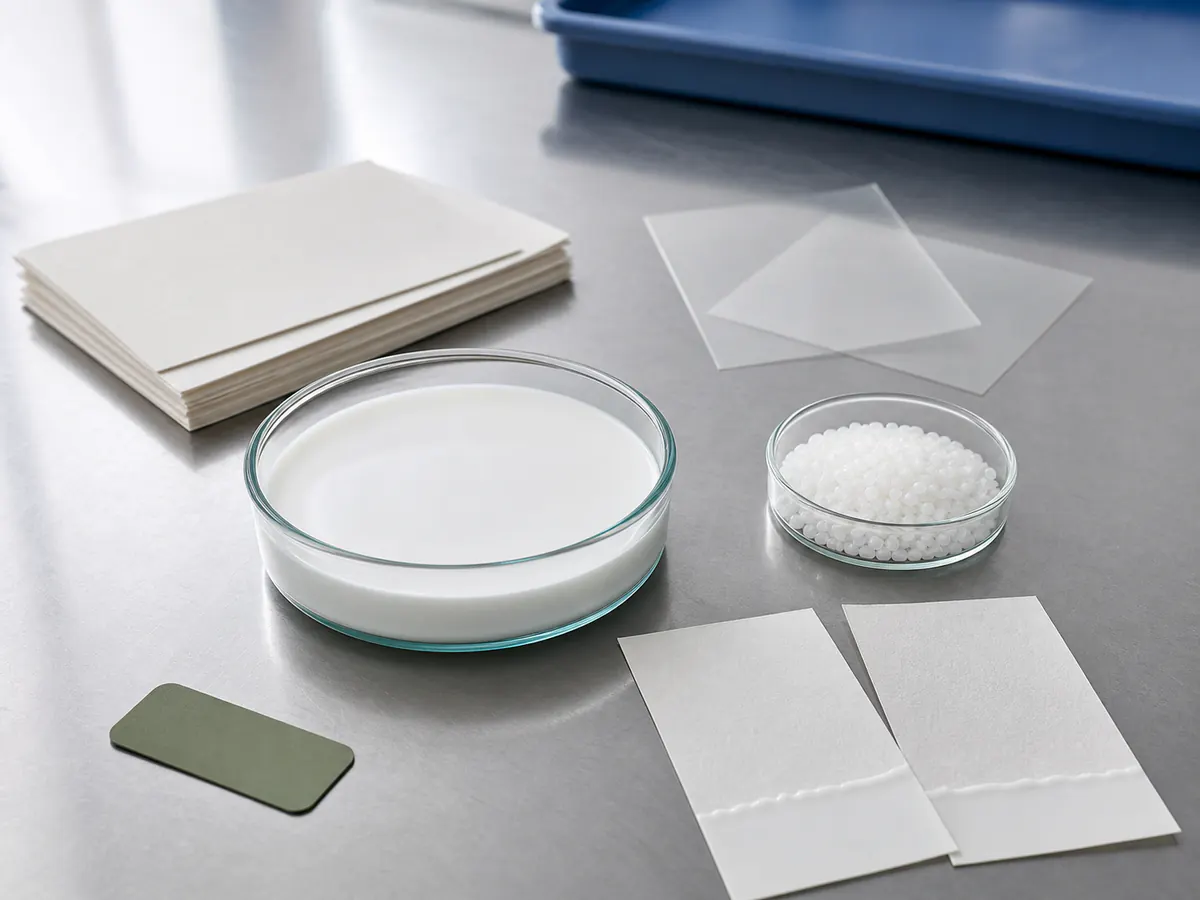
Bohui's route for water-based barrier food-grade paperboard reveals a new interface for collaboration between paper manufacturers and functional-material companies. Rather than relying entirely on downstream extrusion coating or lamination, the approach seeks to integrate the functional layer directly into base-paper production on the paper machine or an in-line coater. This could eliminate one transfer and converting step, improve broke recovery, and enable base paper, coating and application performance to be designed together.
However, "water-based" describes a dispersion medium or process route. It does not automatically mean plastic-free, fluorine-free, recyclable, compostable or compliant with every food-contact requirement. The silicone-free, wax-free and fluorine-free claims and related certifications disclosed in Bohui's ESG report refer to a specific EPP product and certification scope. They cannot be extrapolated to all water-based barrier coatings, nor can they replace migration testing under the food types, contact temperatures and exposure times required in different jurisdictions.
From an industrialisation perspective, Bohui combines large paper machines, in-line coating, an established base in food-grade paperboard and cupstock, dry- and wet-broke recovery systems, and customer interfaces in food and liquid packaging. This gives it an application advantage for validating material formulations within a continuous manufacturing system. The value lies not in leading on any one metric, but in repeatedly calibrating the system-wide balance among coat weight, machine speed, drying, yield, converting and recycling on the same platform.
A genuinely scalable paper-based barrier system must pass at least six categories of validation:
Base-paper interface: surface energy, porosity, liquid absorption, smoothness, fibre lifting and batch stability;
Barrier targets: Cobb water absorptiveness, grease resistance, water-vapour transmission rate (WVTR), oxygen transmission rate (OTR), and resistance to heat and moisture;
Paper-machine operating window: coating rheology, foaming, drying load, machine speed, coat weight, roll sticking and web-break risk;
Converting performance: printing, die-cutting, creasing, carton gluing, heat sealing, ultrasonic side sealing and three-dimensional forming;
Safety and compliance: overall migration, specific migration, odour, non-intentionally added substances and target-market regulations;
Recycling compatibility: repulpability, screening rejects, stickies, fibre yield, wastewater load and the stability of broke reuse.
For BIOTEN Packaging's functional-material systems and barrier-engineering innovation, the opportunity is not to offer paper mills an isolated coating. It is to define the cost per unit of function jointly with base-paper manufacturers, converters and brand owners: achieving stable performance on high-speed paper machines with the lowest practicable coat weight and energy use, while delivering evidence for printing and converting, food contact, and the recycling pathway together.
The industry-chain analysis above is based on publicly available information about Bohui Paper. It does not indicate that Bohui Paper has adopted any specific BIOTEN Packaging material, nor does it imply any testing, supply or cooperation relationship between the parties.
CONCLUSION
Paper machines are assets;
the product platform is the capability.
Bohui Paper's real strength is not merely its large white paperboard and packaging-board equipment. It lies in the Company's work to organise its fleet of large paper machines, furnish architecture, coating technologies, two production bases, APP industrial synergies, customer qualifications and global sales network into a continuously extensible product platform.
The platform has been validated at three levels. On the product side, white paperboard gross margin improved and 21 new products were commercialised. On the market side, overseas revenue from principal operations increased by 36.14%. On the manufacturing side, comprehensive energy consumption per unit at the Shandong base fell from 0.24 tonnes of standard coal equivalent per tonne of pulp and paper in 2023 to 0.22 in 2025, while customer satisfaction reached 92.0%. This shows that Bohui's product expansion rests not only on capacity, but is also beginning to generate reinforcing evidence in innovation, efficiency and quality.
Profit, inventory and pricing data for 2025 constituted a stress test for the platform. They did not disprove its capabilities, but clarified the next stage of value realisation. A broader grade portfolio demands stronger order forecasting, grade-change decisions, inventory management, customer qualification and capital discipline. Deeper pulping upgrades must demonstrate genuine unit-cost advantages across wood chips, energy, yield and depreciation.
Six indicators should be tracked to determine whether Bohui's platform ultimately converts capability into value:
Can the gross margin of white paperboard continue to improve, and can higher-value new products make identifiable contributions to revenue and gross profit?
Can growth in output, sales volume and revenue reconverge, and can inventory growth return to a reasonable range?
Can the chemical-pulp and chemi-mechanical-pulp projects reach design capacity on schedule and genuinely reduce fibre and energy costs per tonne of paper?
Can the high gross margin of overseas operations be sustained while controlling customer payment terms, exchange-rate exposure, certification and trade-compliance risks?
Can functional papers such as water-based barrier grades move from certification and trial orders to stable repeat business and yields at scale?
Can operating cash flow improve in step with net profit and translate into a lower debt ratio and more stable free cash flow?
Bohui has proved that it can use large paper machines to manufacture a wider range of products. The more important task in the next stage is to show that every grade change moves closer to an order, a higher gross margin and sustainable cash returns.
NEXT ISSUE · SERIES PREVIEW
Next: Why Is Asia Symbol Strong? It Has Made Fibre Quality a Manufacturing Standard.
The China Paper Industry Leaders case-study series does not provide basic company profiles. It continues to examine the resources, costs, products, management and value-chain capabilities of leading Chinese paper companies.
BIOTEN Packaging · Industry Insights · Research Notes
Bohui Paper 2025 Annual Report: mirror of the original announcement
Bohui Paper 2026 First Quarterly Report: mirror of the original announcement
Bohui Paper 2025 Environmental, Social and Governance Report: mirror of the original announcement
MIIT 2025 Green Factory List: official notice and list
Bohui's 1.5-million-tonne premium packaging board technical-upgrade project: acceptance notice from the Zibo Municipal Ecology and Environment Bureau
Bohui's chemical wood-pulp expansion project: proposed-approval notice from the Zibo Municipal Ecology and Environment Bureau
Bohui's chemi-mechanical pulp upgrade project: public environmental-assessment summary and approval-in-principle information
Latest public information on Bohui's overseas markets: reproduction of information from the Huantai County Converged Media Centre
Bohui 2026 Second Extraordinary General Meeting resolution: mirror of the company announcement
July 2026 public information on paper-product price increases: compilation of reproduced price-increase notices
Mexico's final anti-dumping determination on paperboard from China: translated compilation by the Trade Remedy and Investigation Bureau of China's Ministry of Commerce based on Mexico's official gazette
Verification guide: See pages 14–20 of the annual report for operations, products, production and sales, and segment gross margins; page 153 for the composition of finance costs; pages 31–34 of the ESG report for innovation projects; pages 59–60 for energy and water consumption; pages 87–88 for quality performance; and page 31, item 1,147 of the MIIT Green Factory list for the company name.
This article provides industry research and general information only and does not constitute investment, business or legal advice. Its analysis of corporate strategy, competitiveness, product pathways and industry opportunities contains professional judgements based on public information. It does not represent official company statements and does not imply any cooperation or product-adoption relationship. Financial data for 2025 are from the audited annual report; the first-quarter 2026 report is unaudited. Average realised prices, overall gross margins, debt-to-asset ratios and other indicators identified as "rough calculations" or "calculated from the financial statements" are estimates derived from disclosed data. Company rankings, product certifications, media reports, project names, environmental-assessment acceptance or approval in principle do not constitute authoritative industry rankings, applicability to every product and use, secured orders, completed construction, attainment of design capacity or commercial returns. Price-increase notices express quoted-price intentions rather than actual transaction prices or implementation rates. Shareholder resolutions reflect governance arrangements rather than asset integration. The scope and rates of trade remedies should be assessed under the Mexican rules and product classifications in effect at the time of import. A water-based barrier does not automatically mean plastic-free, fluorine-free, recyclable or compostable. Specific conclusions must be verified against the formulation, base paper, intended use, contact conditions, target-market regulations, certification scope and recycling tests. Information verified through 9 August 2026.