














PAPER LEADERS · 06
What Makes Chenming Paper Strong?
Understanding the System Restart of a Pulp-and-Paper Giant
BIOTEN Packaging · Industry Review of Leading Paper Companies
Bringing five production bases back online is only a relaunch. A true restart means reconnecting pulp, paper, energy, products, channels and capital—and consistently generating positive gross profit, operating cash flow and sustainable deleveraging capacity.
Restarting a paper machine requires raw materials, energy, people and orders to be in place at the same time.
Restarting a capital-intensive company such as Chenming Paper is far more difficult. It must coordinate five production bases, chemical-pulp lines, multiple paper grades, a sales system serving domestic and overseas markets, and a vast financing structure. If any one link falls behind, a wide gap can remain between getting the machines running and making money.
That is why the most important question when assessing Chenming in 2026 is not, “Has capacity returned?” but:Has system efficiency returned?
RMB 8.296 billion
2025 net loss attributable to shareholders
RMB 2.981 billion
Revenue in the first quarter of 2026
RMB 700–800 million
Estimated net loss attributable to shareholders for H1 2026 | Unaudited
01 · SYSTEM UNDER PRESSURE
The RMB 8.296 Billion Loss Was the Result of an Entire System Losing Momentum
The paper industry had a difficult 2025. According to China’s National Bureau of Statistics, total profit in the paper and paper-products industry fell 13.6% year on year to RMB 44.30 billion. Yet industry pressure alone does not explain the full extent of Chenming’s loss.
According to the company’s 2025 annual report, revenue fell 72.78% year on year to RMB 6.187 billion, while net loss attributable to shareholders reached RMB 8.296 billion. Sales of machine-made paper declined from 4.47 million tonnes in 2024 to 1.00 million tonnes. The segment recorded revenue of RMB 4.209 billion against costs of RMB 6.476 billion, resulting in a gross margin of –53.85%; shutdown losses accounted for approximately RMB 2.058 billion of those costs.
Layer 1 | Production Disruptions
The Shouguang, Jiangxi and Jilin bases were largely shut down during the first three quarters of 2025, while the Zhanjiang base remained offline throughout the year. When sales volumes collapsed, the fixed costs of depreciation, maintenance, staffing and energy could not disappear at the same pace.
Layer 2 | Financing Costs
Finance costs still reached RMB 1.636 billion in 2025. Restarting operations requires working capital, while high leverage continues to consume cash—the two constraints reinforce each other.
Layer 3 | Risks Becoming Visible
Credit-impairment losses, asset impairments and investment losses further enlarged the reported loss. The debt-to-assets ratio reached 94.44% at year-end, with certain borrowings and supplier payables overdue. The auditor issued an unmodified opinion with an emphasis-of-matter paragraph.
Data boundary: shutdown losses were already included in the cost of machine-made paper and therefore cannot be mechanically added to the gross loss. Together, the figures show simultaneous pressure on production, funding and asset quality.
02 · THE INDUSTRIAL SYSTEM
The Real Foundation Is Not One Paper Machine, but an Industrial System
Chenming’s core strength begins with the completeness of its system. The company operates production bases in Shandong, Guangdong, Hubei, Jiangxi and Jilin, with supporting chemical-pulp lines at sites including Shouguang, Zhanjiang and Huanggang.
Pulp | 4.3 million tonnes of wood-pulp capacity · 87% self-sufficiency
Based on disclosures at the company’s 2025 annual results briefing
Bases | Five provincial production bases
A foundation for capacity coordination, regional delivery and operational collaboration
Paper | Seven product series · More than 200 grades
Flexibility across printing and writing paper, coated ivory board, industrial paper and specialty grades
Network | Procurement, logistics, and domestic and international sales
Connecting manufacturing capacity with orders, delivery and cash collection
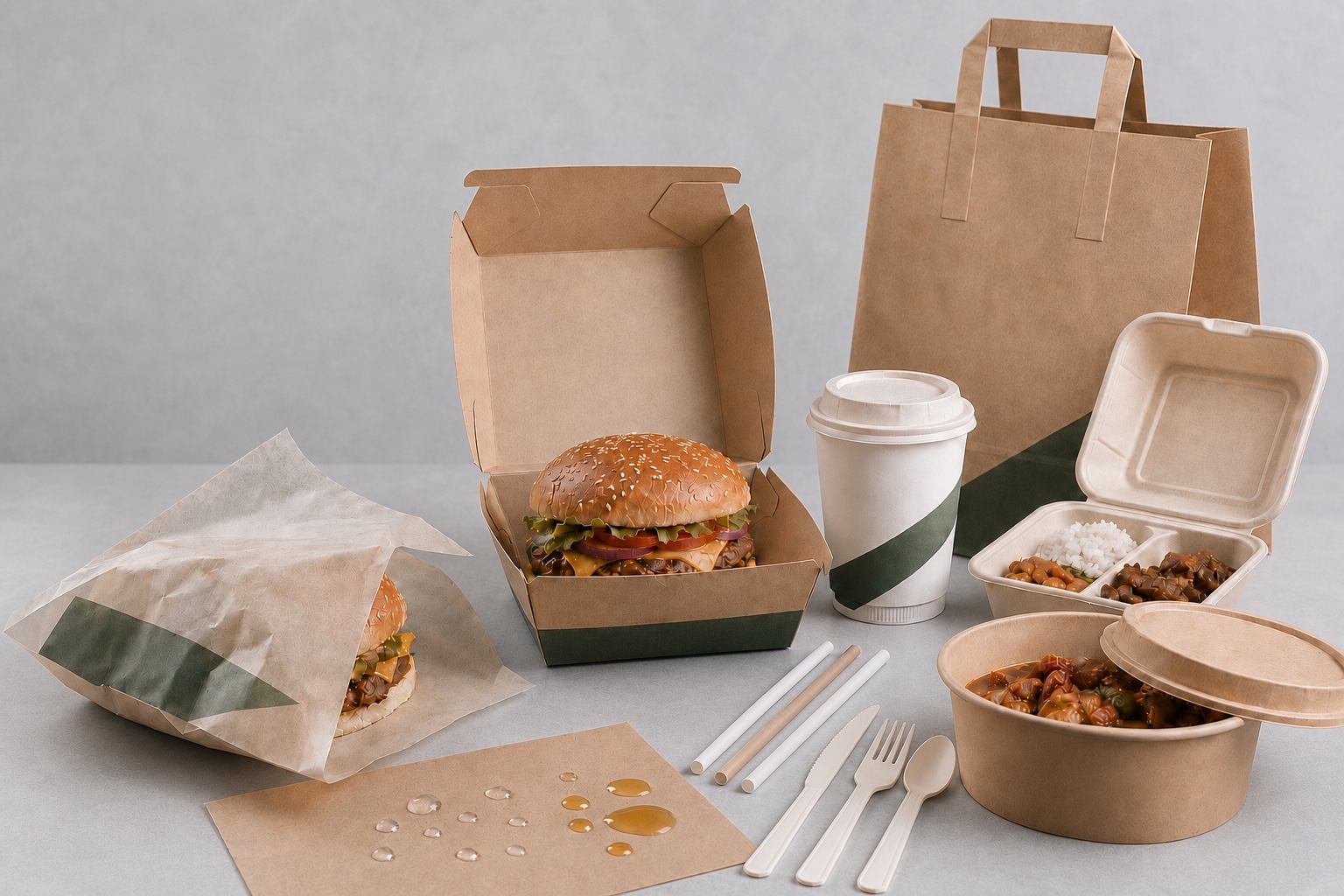
This industrial platform can serve a wide range of markets, including publishing, gift boxes and cigarette packaging, food-grade board, paper cups and bowls, release base paper, glassine paper and labelstock.
The real value lies not in nominal capacity itself, but in whether pulp supply, paper machines, energy, grade switching, quality control, customer mix and delivery radius can once again work as an integrated system.
03 · EARLY RESTART
Positive Signals Have Emerged, but the Restart Is Still in Its First Stage
The company disclosed that all five bases had fully resumed operations by March 13, 2026. Its subsequent first-quarter report showed revenue of RMB 2.981 billion, up 273.97% year on year, and a net loss attributable to shareholders of RMB 512 million, compared with a loss of RMB 1.452 billion a year earlier.
This is a clear improvement: production and sales volumes recovered, shutdown losses decreased, and the loss narrowed materially. However, first-quarter operating costs of RMB 3.238 billion still exceeded revenue, while net cash generated from operating activities was only about RMB 26 million.
The half-year results forecast estimates a net loss attributable to shareholders of RMB 700–800 million, sharply narrower than RMB 3.858 billion in the same period a year earlier. The direction is encouraging, but the forecast is unaudited and the company remains loss-making.
Funding Buffer | Company Disclosure
Of 109 relevant financial institutions, 90 have reached agreements on interest-rate reductions or maturity extensions
The company expects these arrangements to reduce annualized finance costs by more than RMB 600 million. Lower rates and extended maturities are buying time for an operating recovery;they do not mean that debt has already fallen.
A more accurate description of the current position is:The production system has restarted and operating results are recovering, but profitability and cash flow have yet to complete the transition.
04 · FIVE GATES
A True System Restart Must Pass Through Five Gates
01
Restart the machines
02
Stabilize operations
03
Generate positive gross profit
04
Generate operating cash flow
05
Sustain deleveraging
If one stage is not secure, the next is difficult to sustain. Four gauges can show whether this industrial giant has truly returned to course:
1. Operating Stability
A full production restart answers whether the machines can run. Equipment uptime, capacity utilization and continuous production answer whether they can run reliably.
2. Unit Economics
Whether selling prices cover pulp, chemicals, energy, depreciation and logistics determines whether scale creates profit or magnifies losses.
3. Operating Cash Flow
Sustained cash collection is the real measure of self-generated funding. Higher working-capital requirements for raw materials are understandable during a restart, but cash flow must subsequently improve.
4. Debt Reduction
Maturity extensions and lower interest rates can buy time, but positive gross profit, cash flow and asset revitalization must ultimately translate into deleveraging.
05 · PRODUCT MIX
For 31 New Products, the Key Is Not the Number but the Profit Mix
Chenming has disclosed plans to develop 31 new products in 2026, some of which have already been introduced. It also intends to increase the share of higher-return grades—including premium coated paper, high-brightness offset paper, premium yellow release base paper and premium electrostatic-copy paper—while reducing lower-return output.
Management has also said that it has no near-term plan to expand capacity; the current priorities are improving cash flow and optimizing the debt structure.
The direction is clear: instead of increasing nominal capacity, Chenming must make its existing system more productive. New products need to improve the gross-profit mix while also bringing more stable orders and collections.
06 · VALUE FOR THE CHAIN
For the Value Chain, Opportunity Comes from Validation—not Assumption
Chenming’s system restart also raises more specific questions for upstream and downstream participants:
Raw-material and chemical suppliers
Can they ensure stable supply, reduce unit consumption and maintain batch-to-batch consistency?
Equipment and service providers
Can maintenance, speed optimization, energy-efficiency improvements and online inspection raise the quality of continuous operations?
Packaging converters
Can they validate converting compatibility, delivery performance and quality consistency for specific grades such as food-grade board, coated ivory board and release base paper?
Functional-material suppliers
Can they validate coating, barrier performance, heat sealing, printing, food-contact compliance and recyclability compatibility on actual paper grades and finished packaging?
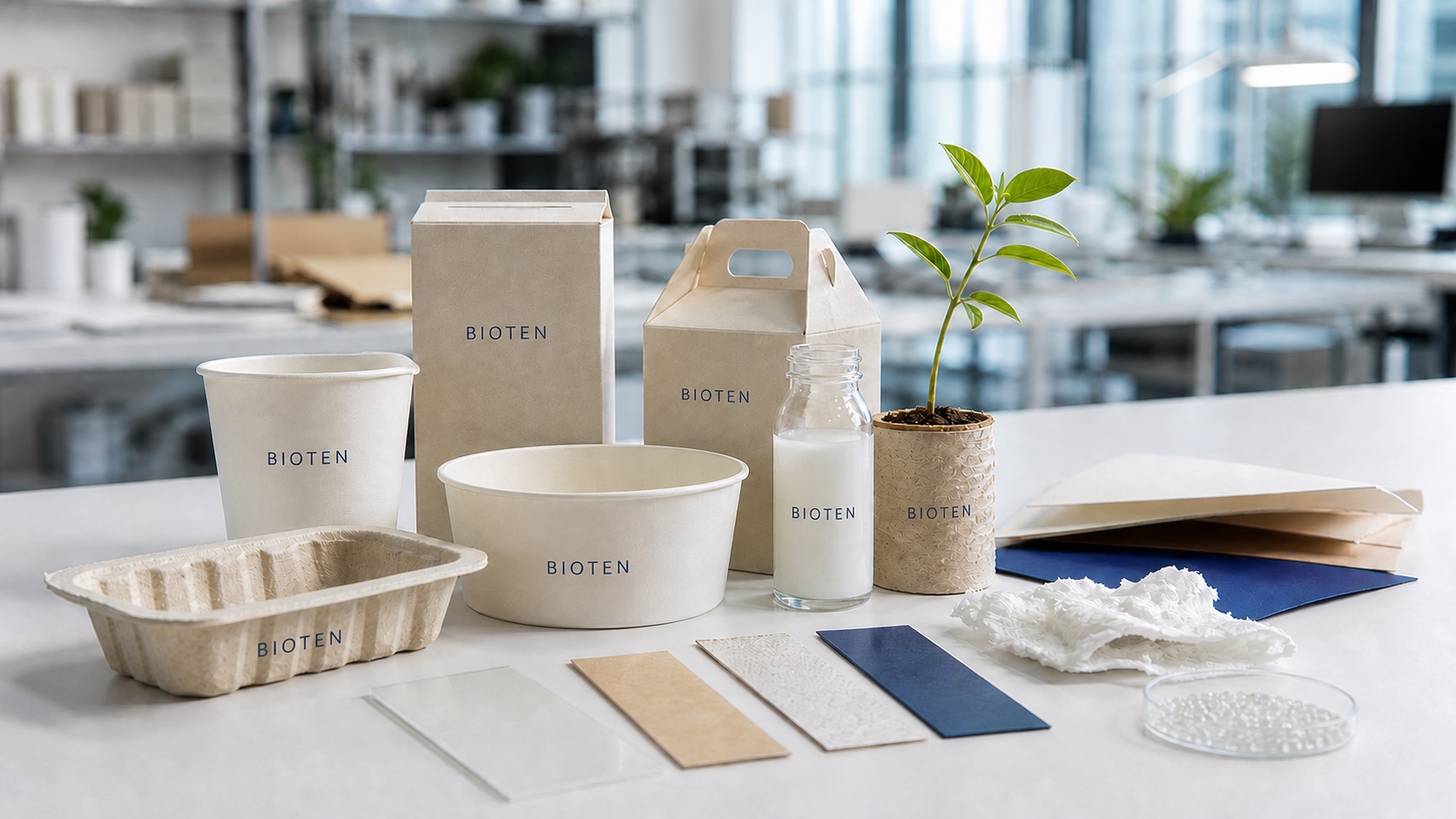
For functional-material suppliers, including BIOTEN Packaging, these should be treated only as potential areas for collaboration. Until validation has been completed on actual paper grades, coating processes and finished packaging, it would be inappropriate to infer that Chenming has adopted the relevant materials or to imply that the two parties have established a partnership.
CONCLUSION
The System’s Value Must Be Proven Again Through Results
Chenming Paper’s real strength lies not in how large it once was, but in the fact that it still retains an industrial system that can be reorganized.
The full resumption of its five bases has restarted the engines of this pulp-and-paper giant. Product-mix adjustments, cost and efficiency measures, and narrowing losses show that it is beginning to regain speed.
A true system restart will come only when every tonne of pulp, every paper machine, every product and every cash collection reconnects—and consistently converts into positive gross profit, strong cash flow and sustainable deleveraging.
The process will not be completed overnight, but the direction is clearer than it was a year ago.
BIOTEN Packaging · Industry Insights — Data Sources and Verification Notes
Chenming Paper 2025 Annual Report
Chenming Paper 2025 Annual Results Briefing Record
Chenming Paper First Quarter 2026 Report
Chenming Paper 2026 Half-Year Results Forecast
National Bureau of Statistics of China: 2025 Profits of Industrial Enterprises Above Designated Size
Information was verified through August 13, 2026. Half-year figures are company forecasts and are unaudited. Capacity, self-sufficiency, financing arrangements, product plans and future operating measures are presented on the basis of company disclosures and do not indicate that the corresponding operating results have already been achieved.
This article is an industry study of paper and packaging. It does not constitute investment advice or a basis for trading, nor does it endorse any company’s product performance, partnership status or certifications.