
Getting the barrier layer right in campus paper packaging means keeping drinks secure, delivering hot meals reliably, and ensuring smooth converting on the factory floor. Replacing PE extrusion coating with a PHA waterborne barrier should begin with a clearly defined end product.
A hot latte handed across a campus coffee-shop counter and a hot meal packed at a canteen window both depend on packaging for the final stage of delivery. What looks like a simple paper cup or bowl often also relies on a functional layer on the paper to hold back liquids and enable sealing.
When operators seek to upgrade paper packaging and converters begin assessing PHA waterborne barriers as an alternative to PE extrusion coating, the most useful question is: what functions does the existing layer perform, and what will take over those functions after it is replaced?
Zhengzhou University officially scheduled autumn registration for 5-6 September, while universities across China are welcoming the new academic year on their own timetables. For papermakers, coaters and converters, campuses offer a useful setting: coffee and tea, hot-meal takeaway and light bakery foods are concentrated within relatively well-defined service areas, allowing packaging upgrades to be studied one use case at a time.
Demand is written into campus notices
A campus-wide takeaway service notice published on 17 July by Yunnan Normal University Asset Management Co., Ltd. described approximately 40,000 students and staff, more than 80 food counters and over 10 milk-tea shops and other ground-floor outlets. It also required on-campus orders to be delivered within 40 minutes, leakage and drips to be controlled, and insulated delivery boxes to be used. These were tender requirements for a project whose application period has closed, not evidence of actual delivery performance; nevertheless, they clearly show that campus takeaway is a service process in which packaging must provide protection.
A 1 September logistics report from East China Normal University likewise noted that a pre-semester food-safety meeting covered 18 catering service providers, including dining centres, catering companies, coffee shops, convenience stores and supermarkets.
Reusable tableware for centralised dine-in service has established washing, sanitisation and circulation routes. Food carried away by students or delivered elsewhere, by contrast, relies on cups, bowls, boxes and bags to cope with different temperatures, durations and mechanical stresses. The opportunities for improvement should be identified from these real uses.
Research sources: Yunnan Normal University Asset Management Co., Ltd. | Campus-wide Takeaway Service Notice; East China Normal University | School Food Safety Working Meeting.
What does the PE layer do?
PE stands for polyethylene. Stora Enso's barrier-coating literature identifies it as one of the most widely used barrier materials, with typical applications including packaging for drinking cups, ice cream and yoghurt, and highlights its moisture resistance. Depending on the structure, a polymer functional layer on paperboard may also provide liquid resistance and sealing performance.
In conventional PE extrusion-coated paper cups and bowls, the paper provides shape and structural support, while the coating separates the contents from the fibres and, in the relevant constructions, enables heat-sealed joints. This interaction between material and process is the baseline that any replacement must respect.
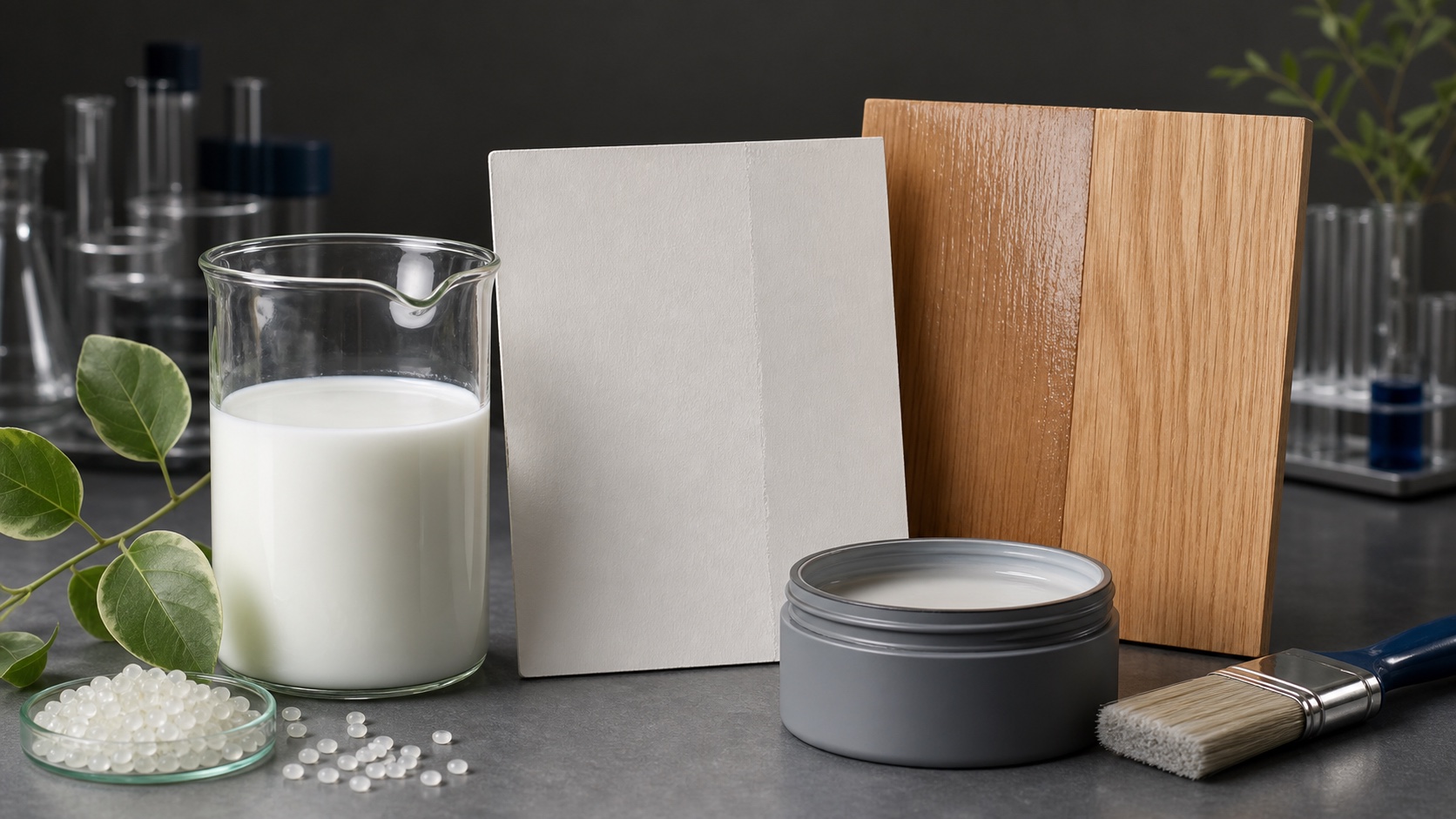
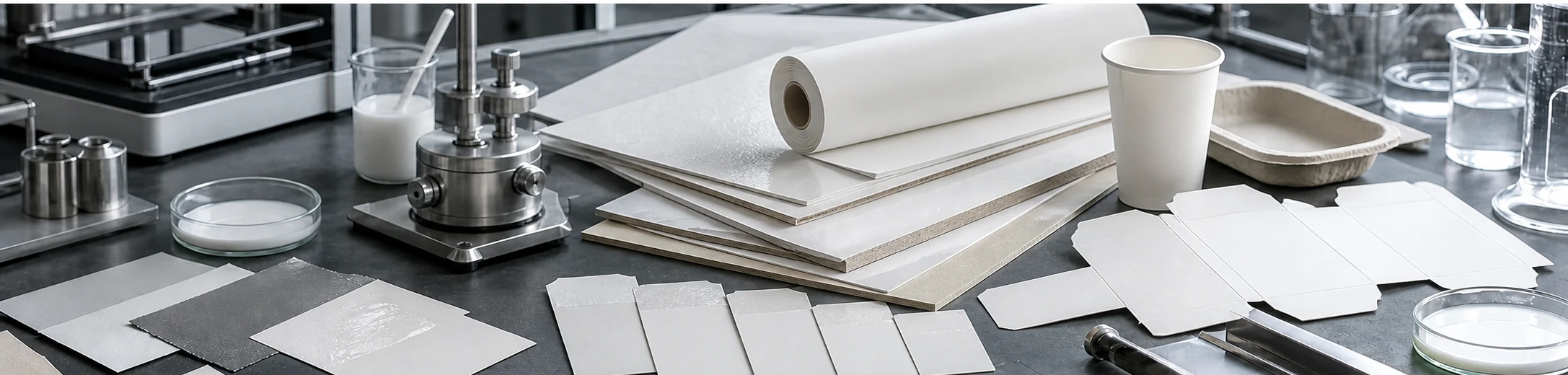
PHA waterborne barriers merit investigation because they can introduce a bio-based material route for the functional layer while retaining the required performance, with film formation, coating position and process compatibility engineered through aqueous coating. For companies that already have, or can add, waterborne coating and drying capabilities, this offers a development route distinct from PE extrusion coating.
The two processes are not directly interchangeable: water must be removed effectively, the coating must form a continuous film, and the finished material must withstand subsequent forming and sealing. Whether the new structure can reduce material use, improve cost or enhance recyclability depends on the specific design; a coating is not automatically more energy-efficient or less expensive simply because it is waterborne.
The material being replaced may be clearly identified as PE extrusion coating, but the scope of replacement must be defined at the level of a specific end product.
Research sources: Stora Enso | Barrier Coatings; BIOTEN | Paper-based Barrier Systems Engineering.
Scenario 1 | Coffee and tea
For a cup of coffee, the joint is where performance is proven
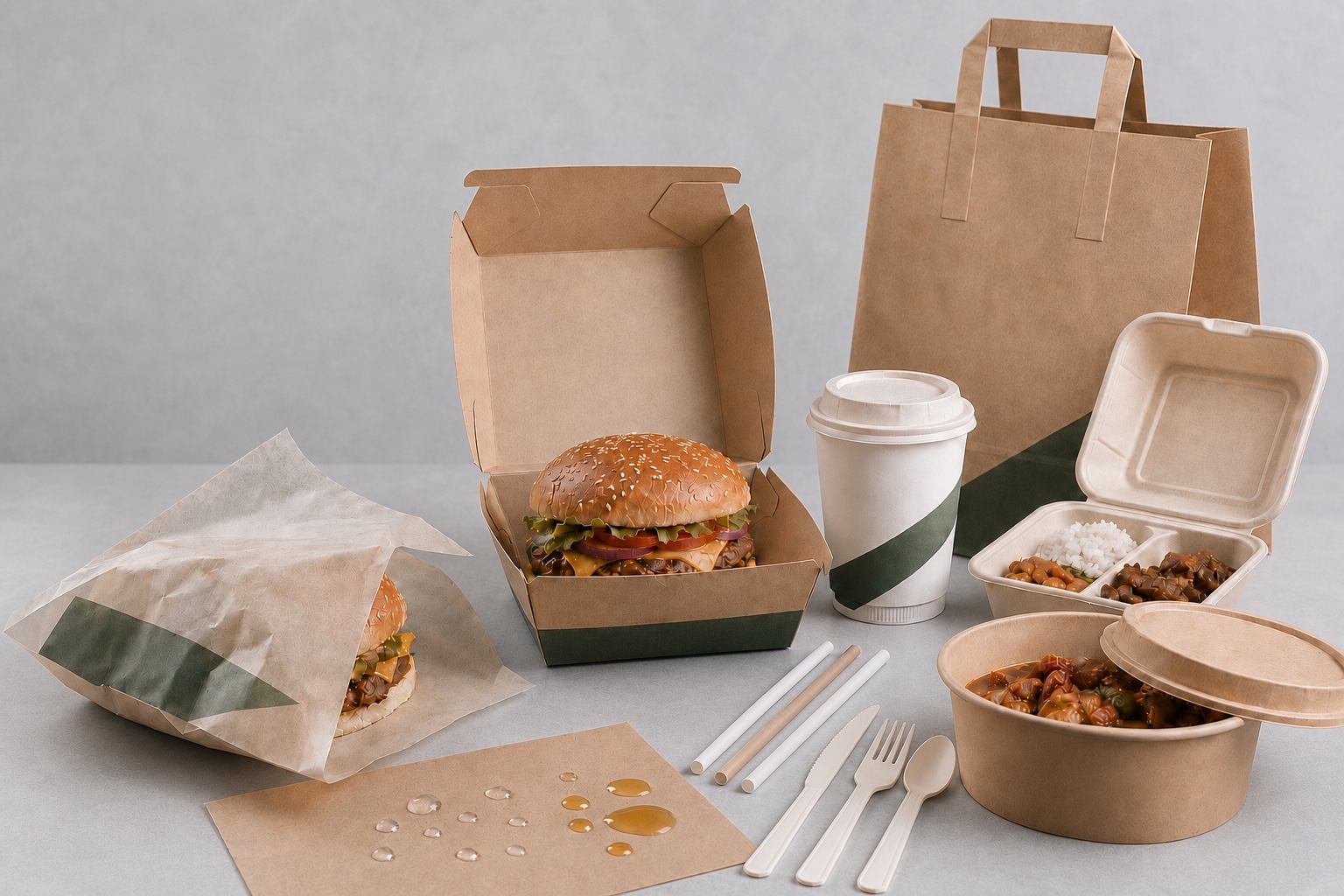
For a campus coffee shop, a drink must be quick to serve, secure to hold and free from off-odours. For cup manufacturers, the challenge in replacing PE often lies in the joints consumers do not see: the side seam, bottom seal and rim forming must continue to work with the new coating.
Once the current cup has been confirmed as a PE extrusion-coated structure, a single SKU with a fixed volume, lid and consumption window can be selected to compare the incumbent cup with one made from PHA waterborne barrier-coated paper. First assess hot-drink containment and seal integrity under actual use, then evaluate production speed, appearance and feel, so that seal performance is not sacrificed in pursuit of a more paper-like finish.
Cold drinks introduce an additional external challenge: condensation on the cup wall may affect the cup carrier and outer bag. Replacing the cup's internal functional layer will not automatically resolve lid engagement or paper-bag exposure to moisture; external-surface protection, bag construction and cup carriers must still be specified as needed.
By fixing one beverage SKU, the paper producer, coater, cup manufacturer and outlet can compare the same object under the same conditions. It is a sensible place to start because the use conditions are easy to define, while the technical difficulty remains governed by the actual construction.
Scenario 2 | Hot-food takeaway
For a hot meal, the corners and seams must hold
A paper bowl containing clear soup, thick sauce or oily hot food faces different contact conditions; collection at the counter and stacked delivery also impose different stresses on the lid edge and seams. Water- and oil-resistance measured on a flat specimen face the real package test only at the bowl bottom, score lines and cut edges.
When evaluating alternatives to PE, first confirm the complete construction of the existing bowl or container. If the PE layer provides both liquid resistance and sealing, the replacement must take over both functions. If a separate lidding film or another barrier layer is also present, each must be addressed individually; one PHA layer should not be assumed to perform every function.
For operators, the value lies in less leakage and easier opening when the food arrives. For converters, the value lies in reproducing that performance at stable line speeds and yields. A sample that contains the food but sticks frequently or seals inconsistently in production does not yet support a viable replacement case.
Start with one menu item and a bowl or container with defined time-temperature conditions and a fixed delivery route; develop solutions for extended high-temperature exposure, microwave reheating and more complex uses separately. A campus requirement for delivery within 40 minutes helps describe the service process, but it cannot be treated as the package's contact duration or as a guarantee of food safety.
Scenario 3 | Bakery and light meals
For bakery packaging, grease resistance must be balanced with moisture release
Campus bakery offerings range from bread taken away straight from the oven to products requiring refrigeration or longer storage. Not all greaseproof papers and bread bags use PE; the existing construction should be confirmed from supplier specifications and physical samples.
If a wrapping paper does rely on a PE layer for grease resistance, it is reasonable to investigate whether a PHA waterborne functional layer can maintain protection after folding and contact with actual oily foods. If another greaseproof paper already meets the need, development should begin with a genuine performance gap rather than adding a layer merely for the sake of substitution.
Pastries present an intuitive trade-off: grease must be contained, but heat and moisture should not necessarily be trapped entirely inside the bag. Coating water-vapour transmission, the timing of bagging and the opening design all affect eating quality. A stronger barrier does not always produce a better-tasting product.
Short-duration takeaway uses with clearly defined boundaries can therefore be compared first. Products with longer shelf lives must also address the combined effects of oxygen, water vapour and sealing. A grease-resistance rating cannot substitute for a shelf-life conclusion.
Connect the PHA route to a specific product
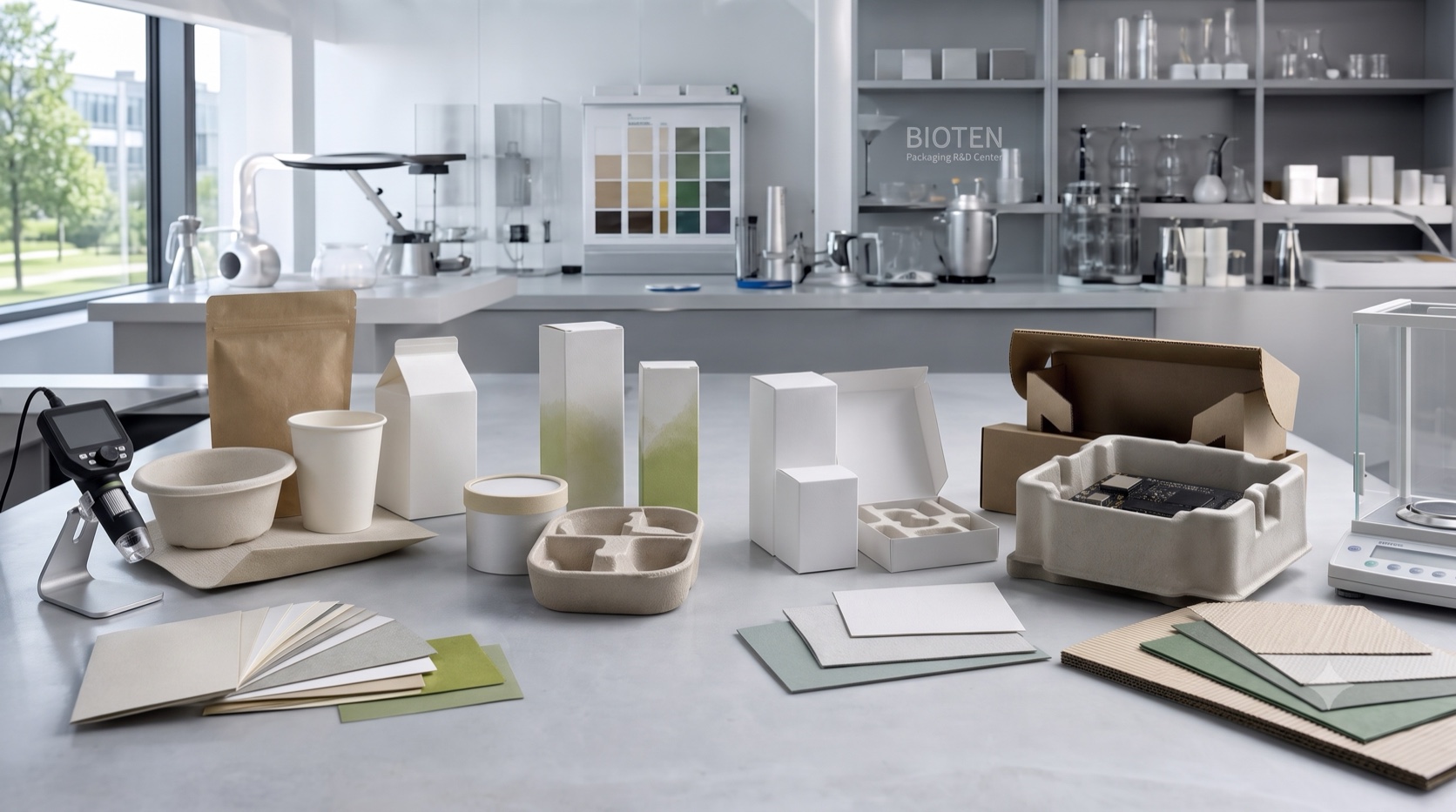
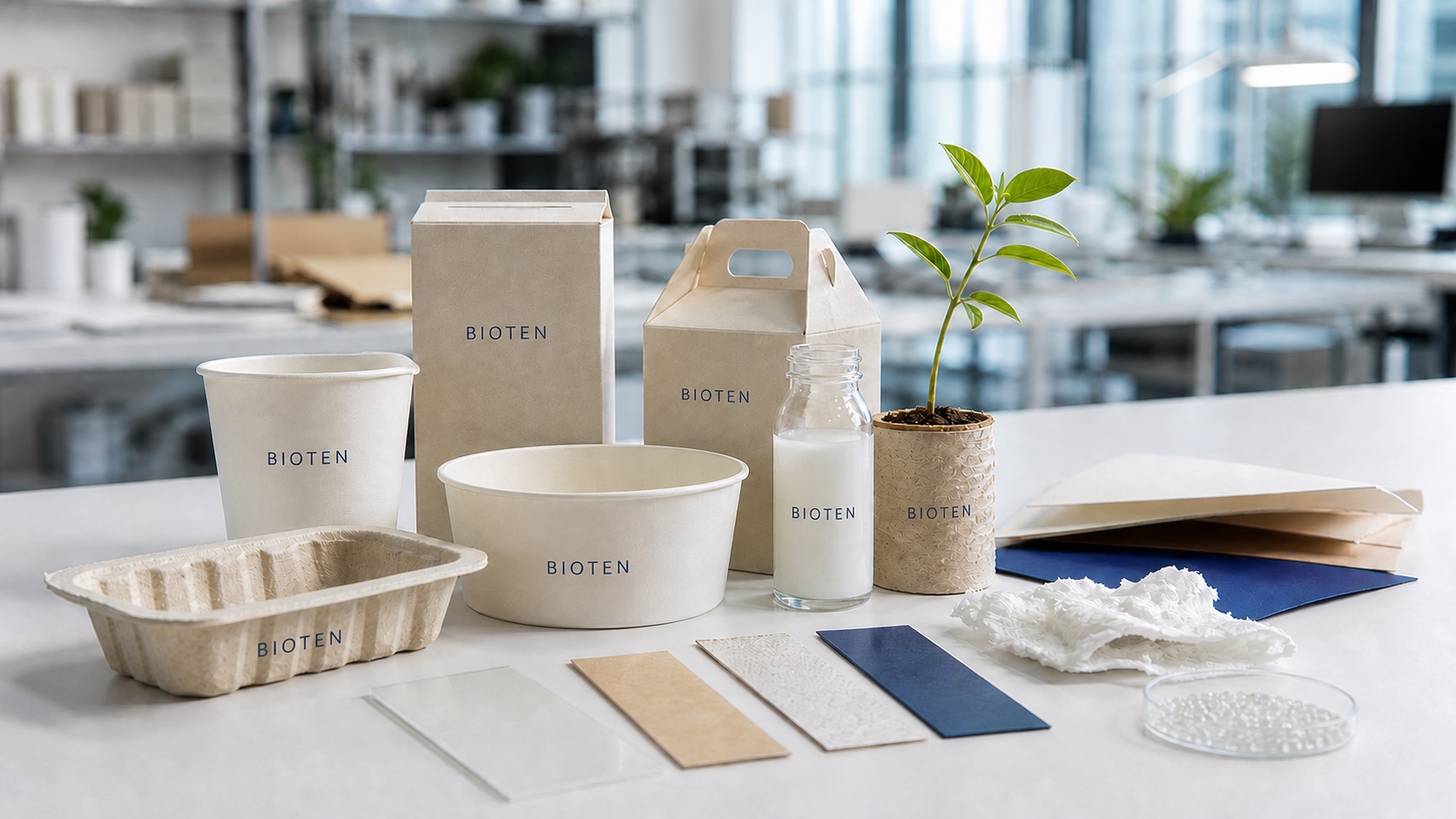
BIOTEN advances paper-based barrier applications with PHA waterborne functional materials. Its publicly disclosed BIOTEN Plus universal balanced route applies project-based development to paper cups, bowls, food containers and bags, covering liquid and grease resistance, coating and film formation, heat-seal converting, and recycling and repulping.
For converters, the choice can be reduced to three questions: which functions does the existing PE perform; can the company provide a compatible coating, drying and converting process; and is there a clearly defined end product for which the customer needs comparable results?
Once those three points are clear, a PHA waterborne barrier has a specific assignment: form the required functional layer on the specified paper and in the specified position, meet the protection and processing requirements of the existing product, and then determine which PE structures are worth replacing. The material route, exact grade and finished article are three distinct levels. Food-contact compliance must still be confirmed for the complete construction, food type and time-temperature conditions.
There is no need to roll out cups, bowls, boxes and bags all at once. Perfect one product first; only then can the resulting experience in base paper, coating and forming support the next.
Research source: BIOTEN Plus | Universal Paper-based Food Packaging Route.
Where do the fibres go after use?
Paper packaging should perform its job while preserving a viable pathway for the paper fibres to be recovered and used again.That should be a shared objective of replacement development, not a label acquired automatically by changing the name of the material.
Research source: 4evergreen | Circularity by Design Guideline for Fibre-based Packaging.
Start with one product
A 2024 procurement notice for campus food-delivery tableware from Nanjing Tech University specified customised markings, two daily delivery windows and batch documentation. This historical notice reminds the supply chain that campuses need products that can be replenished continuously, with consistent quality and traceable evidence.
Back-to-school development can begin with one existing PE extrusion-coated paper cup, one takeaway bowl, or one bakery wrap whose construction has been confirmed. Use the incumbent product as the benchmark and, under the same food and use conditions, compare protective performance, converting yield, outlet handling and total cost, then verify acceptance conditions in the recycling stream. If the alternative increases leakage or unnecessary packaging, the design should be revised.
Converters and campus operators can provide BIOTEN Packaging with details of the existing construction, food type and time-temperature conditions, processing equipment, and the issue they most want to improve. Together, the parties can define the position of the PHA functional layer, select the first-round paper and process, produce comparative samples and validate the complete article. Sample specifications, batches and availability are confirmed project by project. The trial may focus first on the issue with the greatest impact on use, while retaining seal integrity, food-contact compliance and delivered cost as non-negotiable requirements.
From a cup of coffee to a takeaway meal, the opportunity to upgrade campus paper packaging lies in products whose requirements can be defined, whose designs can be manufactured and whose performance can be compared.
Research source: Nanjing Tech University | 2024 Invitation to Procure Tableware for Campus Food Delivery.
BIOTEN Packaging | Industry Insight | Research Note
This article was independently researched and compiled by BIOTEN Packaging from notices issued by universities and university-affiliated companies, publicly available corporate product information and industry guidelines. Information was verified through 5 September 2026. It is provided for industry research and learning and does not constitute a procurement recommendation or performance guarantee. For corrections, clarifications or removal requests, please contact us through this WeChat Official Account; we will review the request within 24 hours of receipt.
BIOTEN Observer data and verification sources
01 | Zhengzhou University | Autumn Registration and Return-to-Campus Reminder
02 | Yunnan Normal University Asset Management Co., Ltd. | Campus-wide Takeaway Service Notice
03 | East China Normal University | School Food Safety Working Meeting
04 | Stora Enso | Barrier Coatings
05 | BIOTEN | Paper-based Barrier Systems Engineering
06 | BIOTEN Plus | Universal Paper-based Food Packaging Route
07 | 4evergreen | Circularity by Design Guideline for Fibre-based Packaging
08 | Nanjing Tech University | Invitation to Procure Disposable Tableware for Campus Food Delivery
Original source access restricted