











BIOTEN PACKAGING POLICY BRIF
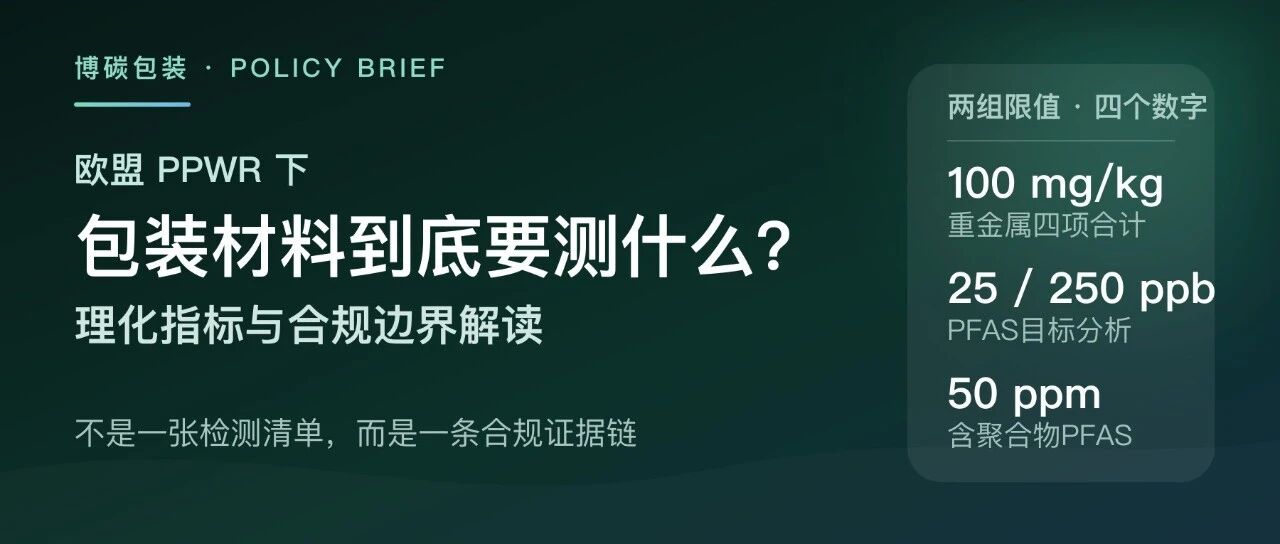
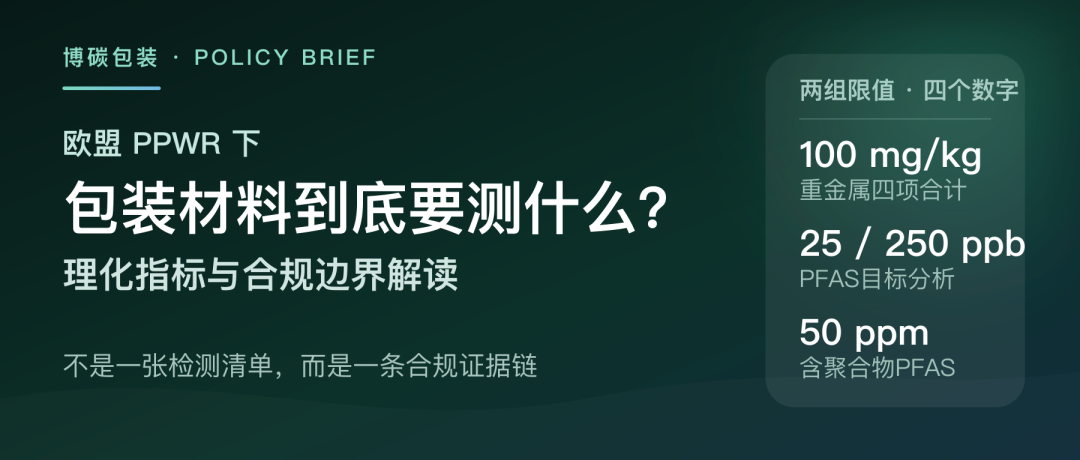
100 mg/kg is the combined limit for four heavy metals; 25 ppb, 250 ppb and 50 ppm are the PFAS thresholds for food-contact packaging. Identifying the test object, evidence method and responsible party matters more than memorizing numbers.
First answer: PPWR does not have a “harmonized list” applicable to all packagings.
• All packaging or packing components, showing that the combined concentrations of lead, cadmium, mercury and hexavalent chromium do not exceed four100 mg/kg(a) The following:
• The following: food contactPacking. Check three more.PFAS(a) Limit values;
• Technical papers, EU conformity declarations (DoC) and EPR are not testing projects.
The EU Packaging and Packaging Waste Regulation (PPWR), Regulation (EU) 2025/40, entered into force on 2025-02-11 and becomes generally applicable from 2026-08-12. As implementation approaches, claims about “PPWR testing packages” and “one certificate covering all compliance” are appearing. Companies must instead establish what is tested, what evidence demonstrates compliance and who ultimately bears responsibility.
One food paper cup. Why can't we just look at four raw material reports?
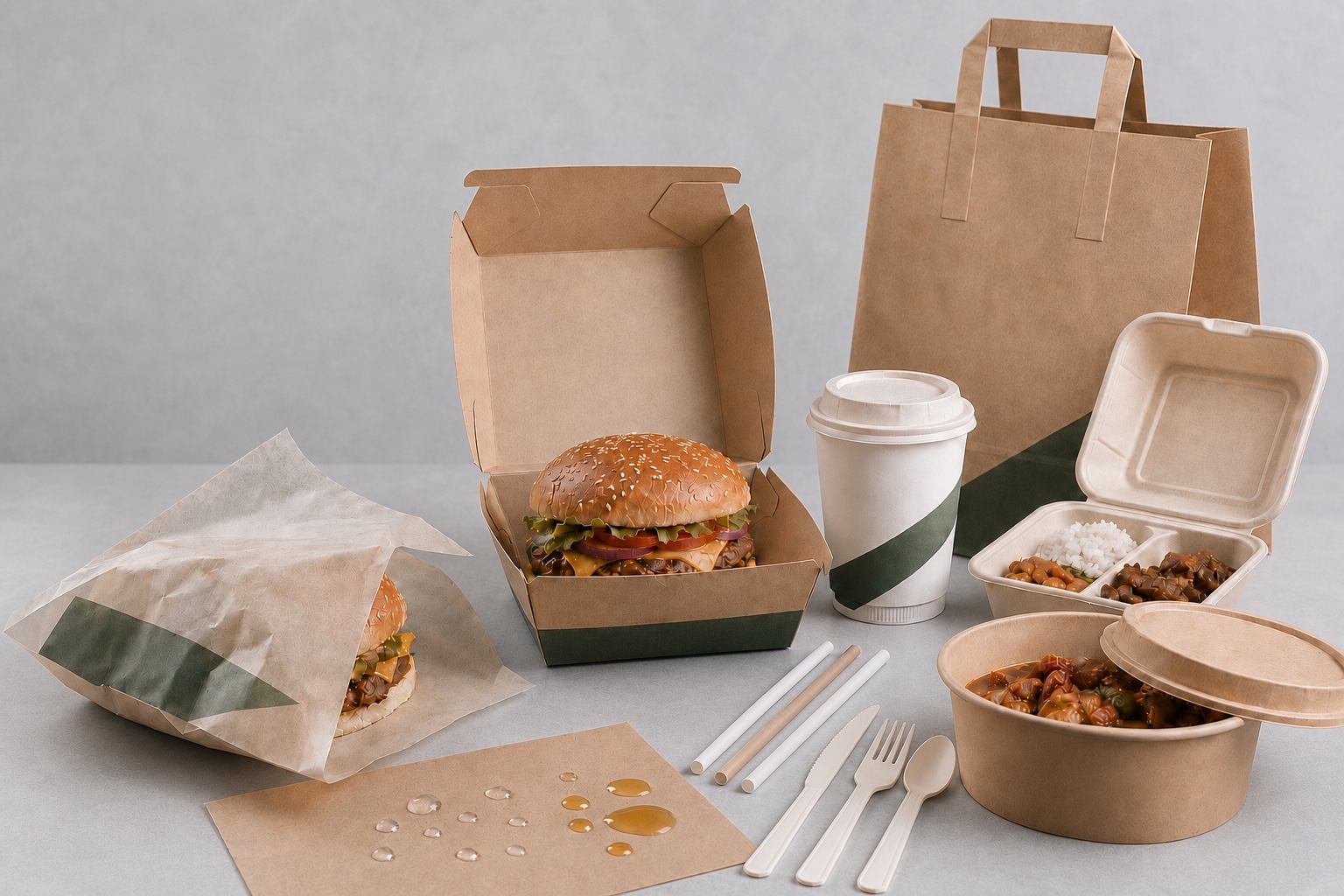
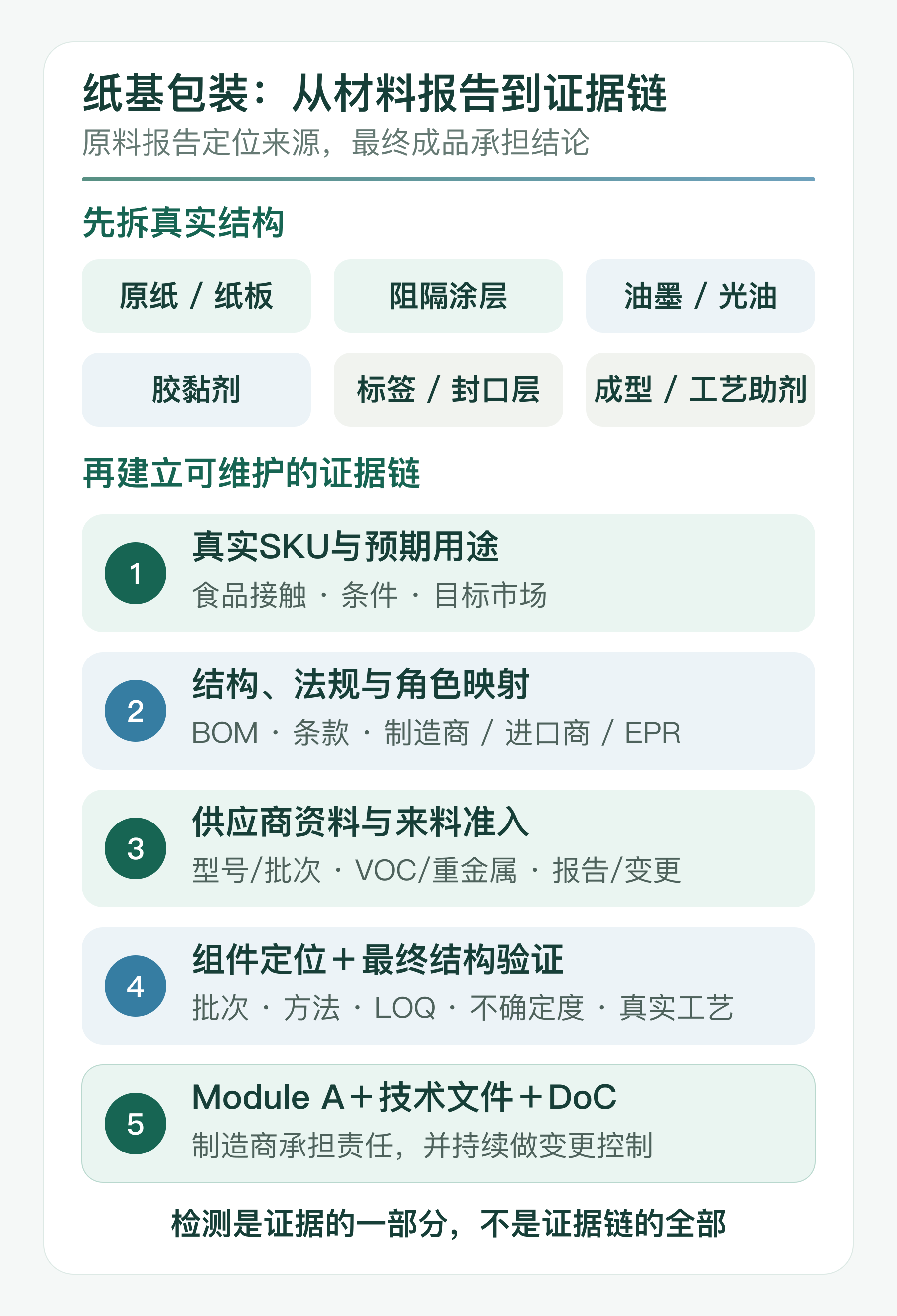
For example, a food paper cup may consist of original paper, blockage coatings, ink, light oil, glue and sealing materials. It also undergoes fabrication, printing, clinking, formatting, and seals. Even if each supplier provides a report, it cannot be directly introduced as “the whole cup matches the PPP.”
The reasons are simple: the material report proves results under a particular sample and method; component evidence is used to locate risks; final packaging evidence also covers real structures, processing state and intended uses. Taking all materials together takes an average may mask low-quality ratios, high-concentration ink, labels or glue risk.
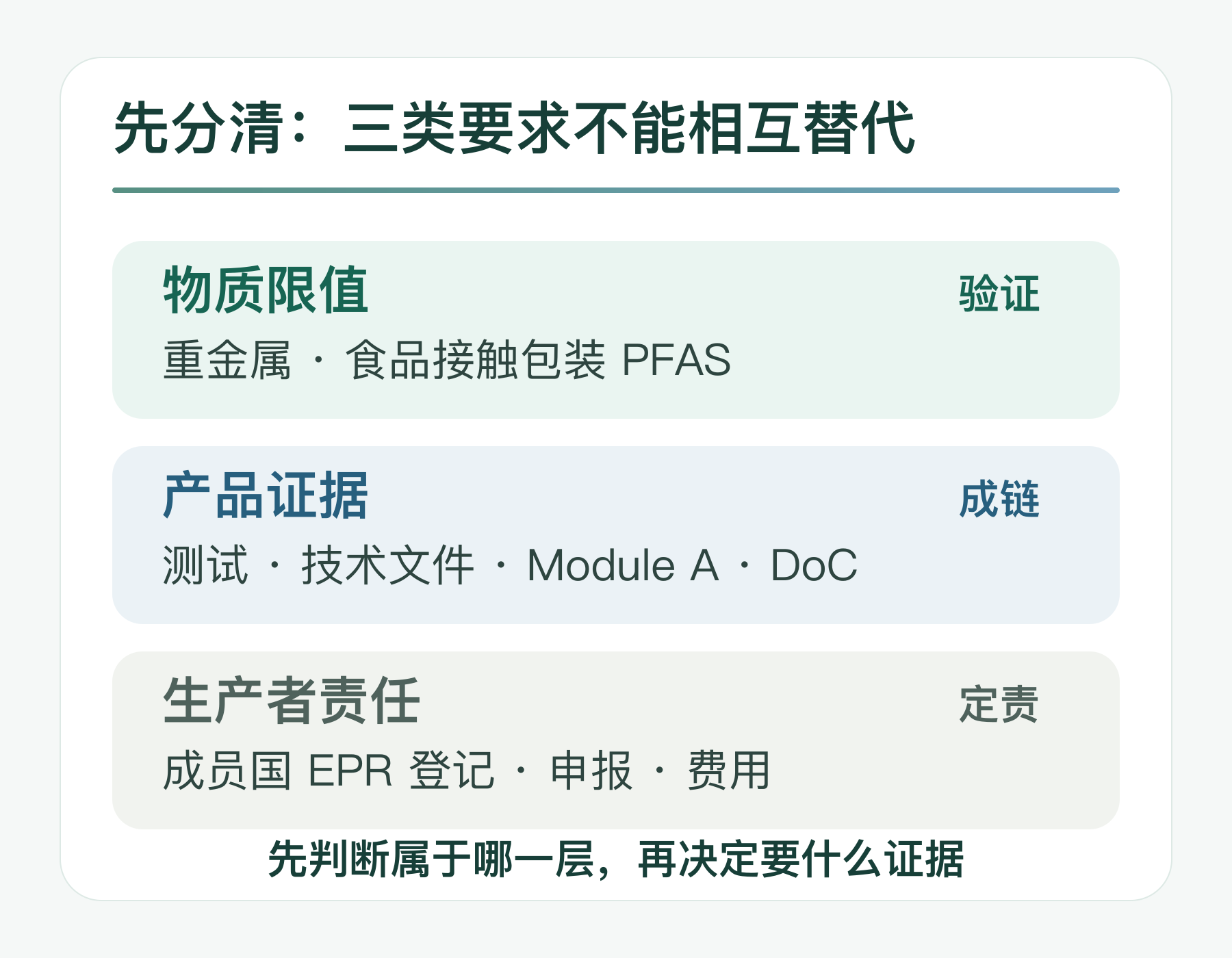
The PPWR-related work is therefore to be divided into at least three layers:
1. Substance limits: heavy metals and PFAS in food-contact packaging, identifying the required outcome for the specified object;
2. (a) Evidence of products: testing, technical documentation, qualification and DoC to answer how the evidence is chained;
3. Producer responsibility: EPR registration, declaration and fees, answer who bears the liability for packaging waste.
The three are relevant but cannot be substituted for each other.
02 Heavy Metal100 mg/kg: Four totals, not 100 each
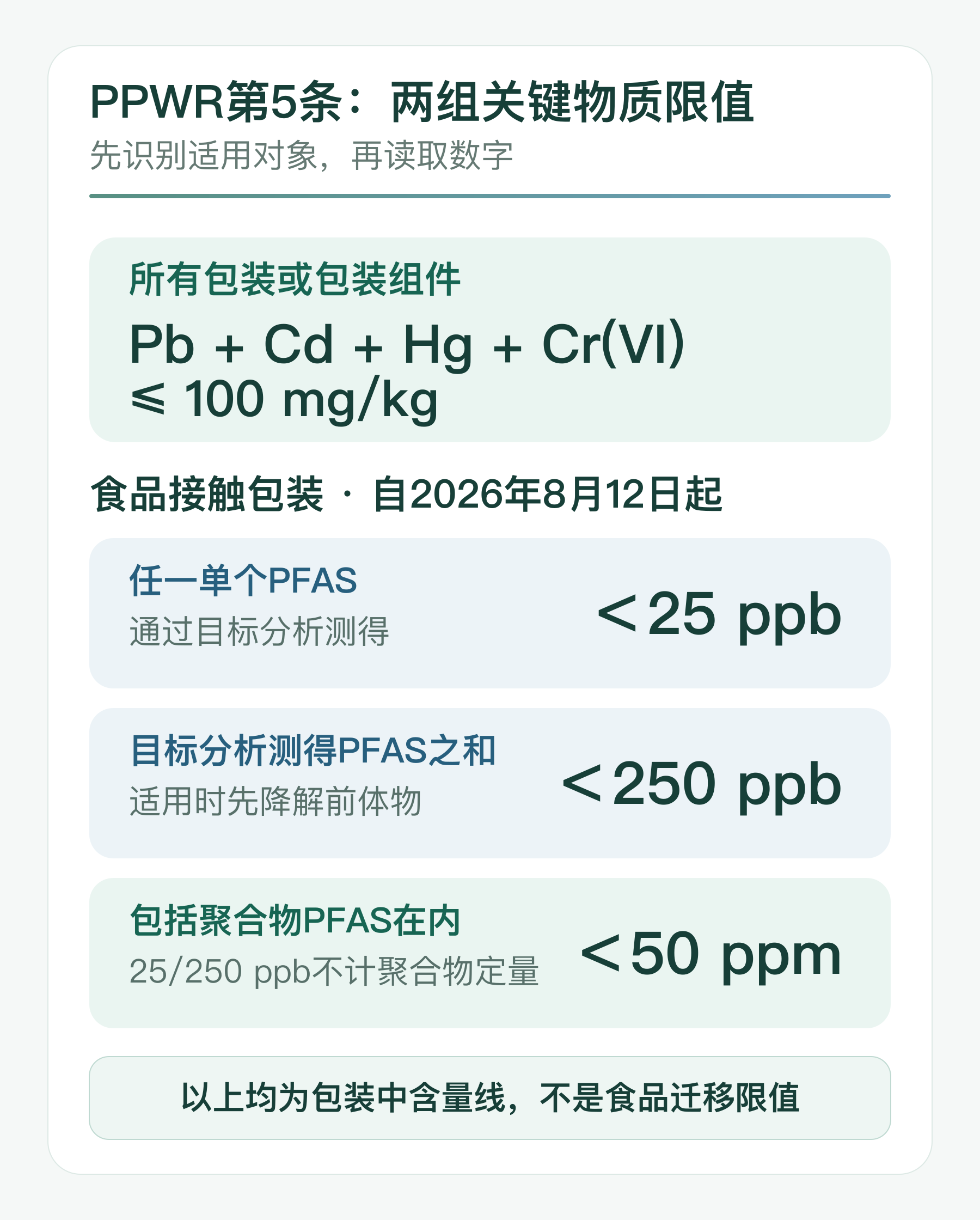
PPWR Article 5(4) specifies that the sum of lead, cadmium, mercury and hexavalent chromium concentrations resulting from substances in packaging or packaging components must not exceed 100 mg/kg:
Pb+Cd+Hg+Cr(VI) 100 mg/kg
Here are three boundaries to be captured.
First, this is the content requirement in packaging and not the transport limit value to food.food contactRelocation evaluation; migration eligibility reports do not provide a reverse proof that the requirement for PPWR heavy metals has been met.
Second, total chromium is not equivalent to hexavalent chrome.
The results of the test for chromium 6 cannot be directly recast into " Cr" or "total chrome" in the laboratory report. If Pb+Cd+Hg+ total chromers are considered to have no more than uncertainty after measuring them,100 mg/kg, as conservative screening evidence; if conservative totals exceed100 mg/kgThe need for further Cr (VI) morphological analysis appropriate to the material matrix can only be explained and cannot be directly determined as ineligible.
The report must state whether the whole package, separated components, local areas or single material layers are analysed.
Strictly defined exceptions to the 100 mg/kg requirement remain. Under PPWR Article 70(3), qualifying recycled-glass packaging under Decision 2001/171/EC and plastic crates and pallets in closed, controlled loops under Decision 2009/292/EC retain their exceptions until the relevant decisions are repealed. Recycled content alone does not create an automatic exemption.
03PFAS three barring lines: only forfood contactPackaging
Under PPWR Article 5(5), from 2026-08-12, food-contact packaging must not be placed on the EU market where PFAS concentrations reach or exceed the following limits:
1. Any individualPFAS(Approves objective)PFASAnalysis measured:25 ppbPolymericsPFAS(b) Does not include this amount;
2. Sum of PFAS measured by targeted analysis: 250 ppb, with precursor degradation where applicable; polymeric PFAS are excluded from this quantification;
3. PFAS including polymeric PFAS: 50 ppm.
Thus, the expression “accession requirement” should be read as follows:25 ppbLess than250 ppbLess than50 ppmThe law provides that “attaining or exceeding” is the line of prohibition.
These three are content lines in packaging, not food migration limits. At mass fractions, ppb corresponds to μg/kg and ppm to mg/ kg; if the laboratory reports on μ g/dm2, dry base or unit area, it is necessary to describe the gram weight, sample quality, water-bearing state and conversion process, which cannot be directly compared.
A laboratory package covering 20, 30 or 40 substances is not a fixed regulatory list. PPWR does not specify a fixed target list or a single laboratory method for every packaging matrix. “Not detected” describes results within a particular target list, method and detection capability. If the quantification limit exceeds 25 ppb, “not detected” does not establish a result below 25 ppb.
At least the target list, precursor handling, sample and component boundary, LOD, LOQ, blanks, recovery rates, measurement uncertainty and conformity determination rules are confirmed when commissioning tests.
The European Commission guidance also distinguishes market-placement dates: packaging already placed on the market before 2026-08-12 may continue to circulate. Packaging first placed on the market after 8 / 12 must meet the PFAS limits even if produced earlier. The PFAS provisions do not exempt packaging containing recycled materials.
04 Total fluorine is not PFAS: the Commission’s three-step screening approach
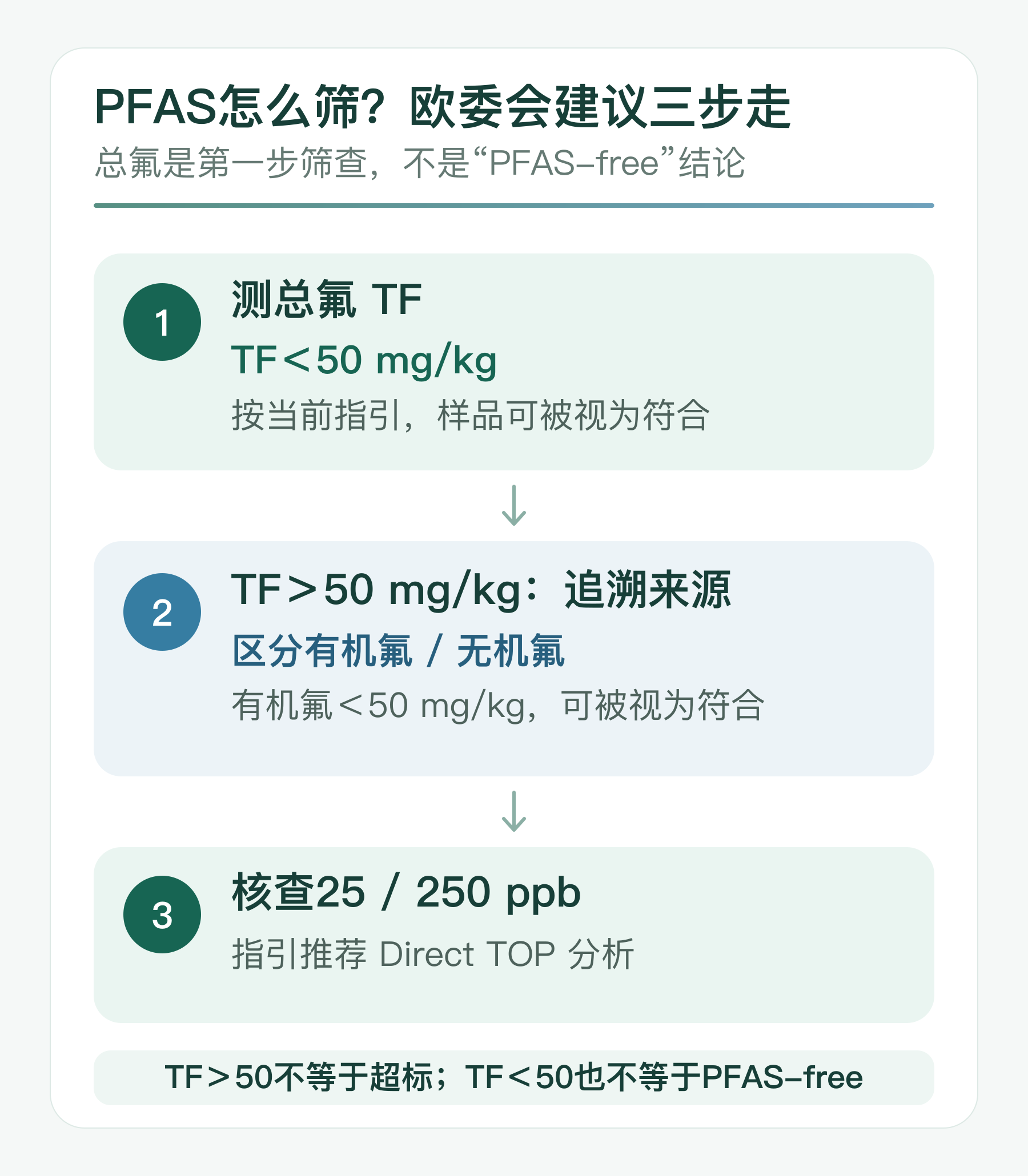
The PPWR Act provides that if total fluorine exceeds50 mg/kg, the manufacturer, importer or downstream user in the meaning of REACH, at the request of the manufacturer or importer in the sense of PPPWR, provided the controlled fluorinated fromPFASor notPFASii. Evidence in support of Annex VII technical paper.
The total fluorinated is the elemental fluorine.PFASThe limit value is bound byPFAS; they're not the same amount of analysis. But EC2026The current recommended law enforcement screening path has been given in the annual implementation guidelines:
1. Total SF<50 mg/kg: Samples may be considered to be compatible; EC also stated that, based on the available evidence, samples passed through the first step were tested in subsequent steps;
2. TF >50 mg/kg: Organofluorofonyl fluoride can be distinguished from inorganic fluorine by, for example, thermal fission GC/MS; organic fluorinated <50 mg/kg(b) The sample may be considered to have met;
3. Check the 25/250 ppb thresholds: the guidance recommends Direct TOP analysis to assess the 25 μg/kg and 250 μg/kg limits.
Total fluorine is a screening indicator, not an advocacy slogan.
This is a solution to the current law enforcement screening problem.50 mg/kg"Created as a "PFAS-Free." Conversely, TF.50 mg/kgIt doesn't mean it.PFASOverstepped, but entered the source of fluorinated emissions retroactively and further analysed.
Direct TOP expands coverage of oxidizable precursors; it is not a measure of all PFAS. Assessment against the 50 ppm threshold, including polymeric PFAS, generally requires supplier composition and identity information, total fluorine/organic fluorine screening, necessary mass balances and targeted analysis.
055 "No substitute", deciding whether articles will be misused
1. Content cannot replace migration assessment. The PPWR 100 mg/kg and three PFAS thresholds concern content in packaging. Food-contact migration, NIAS and sensory safety must still be assessed under Regulation (EC) No 1935/2004 and applicable EU or Member State rules.
2. A PPWR DoC cannot replace a food-contact DoC: their legal bases and required content differ. Where appropriate, a combined declaration or document package can list the relevant EU regulations, but “PPWR compliant” cannot replace food-contact evidence. For BPA and other hazardous bisphenols and derivatives with relevant hazard properties and harmonized classifications, check Regulation (EU) 2024/3190 and the correction rules in Regulation (EU) 2026/250.
3. Not aquatic.zero VOCNot really.food contactAqueousity is only a system or process route and not equal tozero VOCThe wet material content, the fugitive and discharge during coatings and drying, the volatile product residues, the odour of packaging and food affluence transport are five different objects; the PPPWR does not provide for a generic VOC limit value for all packagings.
The trend observation pips move the control point forward to pre-painting.
Why now? The State Council Action Plan for the Continuous Improvement of Air Quality has clearly proposed that there be greater substitution of low (none) VOCs content in packaging printing.waterborne barrier coatingEnter morefood packagingApplying, the control logic should also be changed from a “water label” to a three-tier evidence of a “liquid material—paint and dry—final packaging”.
What does 2.0 g/L control? An approach for further industry validation is to explore VOC content ≤2.0 g/L, excluding water, for each independently formulated waterborne barrier coating ready for use. Where a base emulsion requires crosslinkers, additives or other components, test the complete system prepared under a controlled formulation, not the base emulsion alone or a temporarily diluted sample. GB/T 23986.2–2023 provides gas-chromatography testing and calculation methods; coatings within GB 30981.2–2025 must also meet its mandatory requirements. Neither standard is the source of the 2.0 g/L value, and 2.0 g/L is not a statutory PPWR or EU food-contact limit. It is a potential source-control value for company or group standards.
How to do this: Bottom, surface and other stand-alone coatings should be determined separately and not weighted between layers; the report should state the sample status, group distribution ratio, moisture, density, reporting limits and determination rules. “Undetected” is not zero, reporting limit is higher2.0 gConformity judgement cannot be supported at the time of/L.
Where is the boundary: creating heavy metals for wet milk etc. access has an equally source-based screening value; but PPWR100 mg/kgThe mandatory target is still packaging or packing components.
4. The raw material is not a substitute for the final packaging.
5. The substance limit value cannot be replacedrecyclableorcompostableConclusion. "Paper-based" "Water-based", "Bio-based".biodegradableandrecyclable“The boundaries of each with its own structure, test and process system cannot be inferred from one another.
Besides, PPWR No.5There is also a general requirement for “minimizing substances of concern”.PFASThe two most explicit values limit, but complete the whole substance management without checking several numbers; REACH, POPs,food contactRules, supply chain information and risk assessment remain applicable.
Technical paper 06, DoC and EPR respectively, what does it solve?
Annex VII to the PPWR uses internal production control of Module A. That is, manufacturers establish technical documents, implement in-house production controls and are responsible for packaging compliance with applicable requirements. Laboratory or third party reports can support judgement, but PPWR does not convert all packaging into a generic mandatory third-party “PPPWR certificate”.
Formal conformity and EU DOC are directed towards the entire packaging unit, which should cover all integrated and separated components; component reports are input evidence and not a multi-reporting mechanical sum.
The correct order is:
Use and structure Applicable provisions Vendor information Risk testing and calculation Technical judgement Technical paper + Module A Internal Production Control EU DOC
The technical paper should at least be able to describe the packaging use and traceable marking, structure and material, applicable requirements, standards or technical specifications used, measurements and calculations, risk assessment, test reports and their correspondence with true packaging.
Technical documentation and DoCs are retained from market placement for 5 years for single-use packaging and 10 years for reusable packaging. Following a reasoned request from a national competent authority, manufacturers must provide information and documentation demonstrating compliance with Articles 5–12 within 10 days.
The EPR is another chain of responsibility: it involves the registration, declaration and cost of producers in the member country concerned, not product-based testing, nor can it be replaced by a DoC.
07fiber-based packagingThe company can just follow the six-step checklist.
Step 1: Lock a real SKU and intended use
Specify type of packaging, if anyfood contactPackaging, whether there is direct, indirect or foreseeable movement, and the type of food, time, temperature, conditions for use and target member State.
Step 2: Dismantling complete structures and final processes
List original paper, ink and oils, photo-oil, glue, labels, sealing and process aids, and record the amount of coating, print cover, glue volume, batch size, formation and encapsulation.
Step 3: Establishment of a regulatory and role matrix
PPWR,food contactREEACH/POPS, BPA,recyclableorcompostable(b) Target countries and customers ' requirements, while recognizing the roles of manufacturers, importers, suppliers and EPR producers.
Step 4: Document review first, then testing
Request accurate models, formulation version, supplier statement, available reports,food contactInformation and change notifications; risk-based establishment of pending VOC, heavy metals etc. for water barrier paints. “not intentionally added” is considered source management evidence rather than a concentration certificate.
Step 5: Let testing match real risk
High-risk components are used to locate sources and complete the final structure of printing, glued, clinker, formatting and sealing for authentic state; reports write samples, batches, quality benchmarks, methods, target ranges, LOD/LOQ, uncertainty and determination rules.
Step 6: Forming a sustainable evidence chain
Re-judges whether the evidence is still applicable after changes in materials, formulations, coatings, colour groups, glues or processes.
No more questions, no more tests.
PPWR really requires that enterprises be established, not by an additional isolated certificate but by allowing each data to return to the real packaging, true components, intended use and responsible subject.
The only action
The collection is a checklist. When preparing the EU order, take a true package and check it in six steps according to "Use - Structure - Applicable Regulations - Information Gaps - Risk Tests" Technical Paper/DoC " ; any step that is unclear will be followed by proof before the decision is made.
Main basis
1. Regulation (EU) 2025/40 (PPWR): focus on Articles 5, 15, 16, 38 and 39, and Annexes VII and VIII;
2. European Commission PPWR implementation guidance C/2026/3084: check the three-step PFAS screening approach for food-contact packaging;
3. PPWR FAQ and Packaging intte, European Commission;
4. Regulation (EC) No 1935/2004 and Regulation (EC) No 2023/2006: food-contact materials and GMP;
5. The current consolidated text of Regulation (EU) 2024/3190 and Regulation (EU) 2026/250: BPA and specified hazardous bisphenol requirements;
6. Decision 2001/171/EC and Decision 2009/292/EC: strictly defined exceptions to the 100 mg/kg heavy-metal requirement;
7. (b) The State Council ' s Action Plan for the Continuous Improvement of Air Quality, which replaces the source direction of the original VOCs auxiliary material in the packaging industry;
8. GB 30981.2–2025, Limits of Harmful Substances in Coatings, Part 2: Industrial Coatings, the mandatory baseline for applicable industrial coatings;
9. GB/T 23986.2–2023, Determination of VOC and/or SVOC Content in Paints and Varnishes, Part 2: Gas-Chromatographic Method.
BIOTENPackaging, containment system -
Empowermentfiber-based packagingSustainable quality development of industrial chains.