



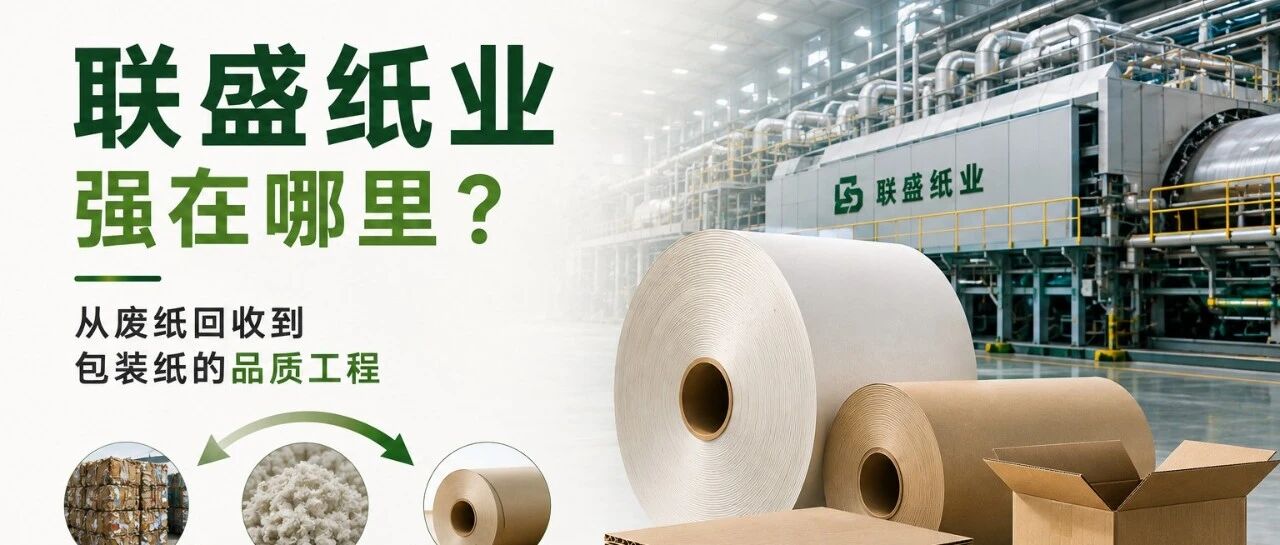
Liansheng Paper's advantage lies in turning the variability of recovered paper into containerboard strength, consistency and reliable delivery.
CHINA'S TOP 20 PAPER PRODUCERS / INDUSTRIAL PAPER STUDY
What Makes Liansheng Paper Strong? — Quality Engineering from Recovered Paper to Containerboard
2.824 million tonnes is only an industry-association output benchmark. Liansheng Paper (Longhai)'s core capability is to convert variability in recovered fiber into stable performance across furnish preparation, paper-machine operations, combined heat and power, water systems and containerboard applications.
CORE JUDGMENT
Liansheng Paper's strength does not come solely from using recovered paper at scale. It comes from managing fiber quality, paper-machine efficiency, energy and water systems, and downstream converting requirements within one manufacturing equation: more consistent furnish produces more consistent paper, and more consistent paper underpins reliable converting and customer delivery.
The competitiveness of a sheet of containerboard begins with recovered-paper sorting and is completed through furnish preparation, the paper machine, energy, water and customer converting.
01 · SCALE AND SCOPE
2.824 Million Tonnes and 2.6 Million Tonnes: Two Measures of the Same Mill
The China Paper Association's Annual Report on China's Paper Industry 2025 states that Liansheng Paper Industry (Longhai) Co., Ltd. produced 2.824 million tonnes of paper and paperboard in 2025, up 0.57% year on year, ranking tenth among the key enterprises listed in the report. The association also notes that the ranking is based on the data collected.
According to the company profile on Liansheng Paper's website, the Longhai operation primarily uses recovered paper as its raw material and covers recovered-paper collection, recovered-fiber pulping, papermaking, sales and logistics, supported by combined heat and power. Project-acceptance documents from 2021 record six pulping and papermaking lines with a combined designed and existing project scale of 2.6 million tonnes per year.
THREE DATA BENCHMARKS
2.824 million tonnes: Paper and paperboard output for 2025 as reported by the association; the 0.57% year-on-year increase is used only as a scale benchmark for this series.
2.6 million tonnes per year: The containerboard and project scale cited on the company website and in 2021 project-acceptance documents; it is not the same as actual output in 2025.
Six paper-machine lines: PM5 through PM10 form the established manufacturing base at the Longhai mill. This article does not infer the real-time operating rate or profitability of any individual line.
Fujian Province's overview of the paper industry's performance in the first half of 2025 also listed Liansheng Paper (Longhai) among paper enterprises above designated size whose output grew by more than 10% year on year, although the page did not disclose the company's absolute output. Taken together with the association's full-year figure, this confirms that Longhai has established a large-scale production base. The next questions are product mix, raw-material efficiency and unit manufacturing cost.
SCOPE BOUNDARY: Association-reported output, company-profile information, engineering design capacity and project-acceptance figures use different statistical bases. They cannot be divided to calculate a utilization rate, nor can they be used to infer the mill's actual output in 2026.
Sources: China Paper Association, Annual Report on China's Paper Industry 2025; Overview of Production and Sales in Fujian's Paper Industry in the First Half of 2025.
02 · FIBER QUALITY ENGINEERING
From OCC to the Sheet: Recovered Fiber as a Quality-Engineering Discipline
OCC, or old corrugated containers, is a major fiber source for recycled containerboard. Fiber length, contaminants, stickies, ash, moisture and batch-to-batch consistency successively affect screening and cleaning, furnish preparation, sheet formation, sizing, drying, ring crush strength, burst strength and printability.
Liansheng's published patents are not merely a patent list; they reveal a set of process challenges centered on recovered-fiber quality: how to allocate short, medium and long OCC fibers by layer, how to control sheet cleanliness, and how to improve strength and moisture resistance through recycled linerboard furnish design and sizing.
CAPABILITY PATH A · FIBER SORTING
Fiber fractionation: Allocate short, medium and long OCC fibers to different sheet layers to establish the foundations of cleanliness, formation and strength.
CAPABILITY PATH B · FURNISH DESIGN
Furnish design: Balance strength, cost and consistency between recovered fiber and virgin pulp so that raw-material variability is not passed directly to the customer.
CAPABILITY PATH C · FORMING AND SIZING
Forming and sizing: Convert the fiber system into sheet strength, surface properties, moisture resistance and convertibility.
CAPABILITY PATH D · CUSTOMER CONVERTING
Converting and delivery: Ensure that the base paper runs reliably through printing, lamination, die-cutting, forming, stacking and transportation to deliver the packaging performance customers actually experience.
Patent CN108824062B describes a route for using OCC pulp in place of conventional ONP pulp to produce coated white-lined chipboard; CN113308944B describes a furnish route for recycled linerboard; and CN112012042B describes a sizing-agent route for linerboard and corrugating medium. These patents demonstrate a publicly disclosed technology portfolio, but they do not prove current application across every paper machine, every SKU or every customer.
GB/T 43393—2026, Recycled Pulp, lists Liansheng Paper Industry (Longhai) Co., Ltd. as one of the principal drafting organizations. The standard was issued on 31 March 2026 and takes effect on 1 October 2026. Participation in the standards process demonstrates investment in recovered-pulp technology, but it does not mean that every product complied before the effective date or that the company owns exclusive rights to the standard's technologies.
Sources: National Standard GB/T 43393—2026, Recycled Pulp; CN108824062B; CN113308944B.
03 · PRODUCT AND CONVERTING
The Value of Seven Containerboard Grades Lies in Serving Different Converting Applications
The principal products listed on Liansheng Paper's website include coated white-lined chipboard, coated kraft linerboard, high-strength corrugating medium, premium kraft linerboard, coreboard, greyboard and T-paper. The broader the grade portfolio, the greater the need to organize fiber grades, furnish preparation, sizing, coating, calendering, slitting and inventory into a flexible manufacturing system.
THREE CONVERTING INTERFACES FOR PACKAGING PAPER
Transport packaging: High-strength corrugating medium and linerboard must meet requirements for ring crush strength, burst strength, stacking and logistics durability.
Printing and folding cartons: Coated white-lined chipboard, coated kraft linerboard and greyboard are more closely tied to printing, folding-carton production and consumer-goods packaging.
Industrial-paper extensions: Coreboard enters applications such as paper tubes, testing whether the base paper can perform reliably in downstream converting.
A Valmet supplier case published in 2022 states that, during its early operation, PM10 at Longhai primarily produced 125–230 g/m² linerboard. The interview cited a speed of about 1,150 m/min and daily output of about 2,200 tonnes, using domestic recovered paper together with automatic reel change and winding equipment. The case helps explain how paper-machine engineering can buffer raw-material variability; it should not be presented as current operating data for 2026.
Another link from base paper to application is the paper-tube project. Public project information from 2024 indicates that the Longhai mill planned annual capacity of 6 million meters of paper tubes; an industry project roundup in November of that year recorded the project's first trial production. This suggests that the company is extending its coreboard and containerboard capabilities into specific converting applications, but first trial production does not establish stable commercial production, customer qualification or realized revenue.
PRODUCT BOUNDARY: Product categories, historical supplier interviews and the stage of the paper-tube project do not substitute for evidence on a specific SKU's performance, food-contact suitability, recyclability, order volume or repeat purchases.
Sources: Valmet, A 15-year collaboration has made Valmet an all-round developer for Liansheng Paper; reports on the paper-tube project's planned capacity and first trial production.
04 · ENERGY AND WATER
Energy and Water Systems Form the Manufacturing Foundation for Stable Paper-Machine Operation
A paper mill's energy and water systems are not peripheral utilities. They determine whether paper machines can run continuously and influence unit manufacturing cost, freshwater intake, environmental responsibility and the reliability of customer deliveries.
Acceptance documents for the 2.6-million-tonne Longhai project record two 410 t/h circulating fluidized-bed boilers, one 60 MW extraction-condensing turbine generator and one 70 MW back-pressure turbine generator in the power plant. Process water is drawn from the left main canal of the Beixi section of the Jiulong River. The documents also record a water-treatment station, partial wastewater reuse, beneficial use of ash and slag, and disposal routes for sludge and waste oil.
TWO EXTERNALLY VERIFIABLE BENCHMARKS
2025 water-efficiency qualification: Liansheng Paper (Longhai) was included on Fujian Province's list of taxpayers whose industrial water-use efficiency met the advanced values in the national water-use quotas.
2026 carbon-management responsibility: The company was included on Fujian Province's list of existing key emitting entities covered by the provincial carbon market.
The advanced water-efficiency qualification indicates external recognition of the company's water-management practices; designation as a key emitting entity means that energy and carbon management must be embedded in day-to-day operations. Neither fact can be extrapolated into a specific water-consumption figure per tonne, carbon intensity or a conclusion about the mill's current overall environmental performance.
ENGINEERING BOUNDARY: The combined heat and power, water-treatment and solid-waste routes come from 2021 project-acceptance and existing-project documents. This article does not present them as real-time operating conditions for the entire mill in 2026, nor does it claim that all solid waste is fully recovered or that the whole mill is currently compliant in every respect.
Sources: Acceptance documents for the technical upgrade of the captive power plant serving the 2.6-million-tonne Longhai project (2021 project-acceptance basis; original extracts retained in the local source register); Fujian Province's 2025 list for advanced industrial water-use efficiency; Fujian Province's 2026 list of key emitting entities covered by the carbon market.
05 · NETWORK AND DELIVERY
From the Recovery Network to End Use: How Base-Paper Capability Becomes Reliable Delivery
A 2026 circular-economy article from the Fujian Provincial Department of Industry and Information Technology names Liansheng Paper (Longhai) as having built a closed loop spanning recovered paper, collection, pulping and papermaking. A case study republished by Zhangzhou's industry and information authorities also describes a cooperation network linking collection points, recycling companies and corrugated-box plants.
This supports a more useful industry judgment: Liansheng's manufacturing system connects both the raw-material and demand sides. Recovery quality determines paper-machine stability; paper quality determines whether boxes, board and tubes can be converted reliably; and downstream converting feedback, in turn, informs base-paper formulations and inventory planning.
The case study also discloses production value, recovered-paper volume and selected technical outcomes, but these are case-study or company figures rather than audited financial statements. This article uses them only to understand the value-chain structure, not to draw conclusions about operating performance. For industry participants, the more important question is whether recovery quality, paper-machine stability, downstream demand and project commercialization can form a durable closed loop.
FOUR COLLABORATION INTERFACES ACROSS THE VALUE CHAIN
Raw materials and fiber quality: Recovered-paper sorting, OCC fractionation, stickies control, fiber testing and traceability across collection points.
Chemicals and paper-machine operation: Sizing, starch, retention and drainage aids, screening and cleaning, press dewatering, coating and winding.
Water, energy and solid waste: Water efficiency, condensate reuse, and ash, slag and sludge management—ultimately reflected in energy use, freshwater intake and stable operations.
Corrugated-box and paper-tube applications: Application value is tested through converting yield, stable output, order quality and cash collection.
WHAT TO WATCH: Whether the circular network can create sustained value depends on recovered-paper cost and quality, machine speed and web-break rates, product mix, energy use and water efficiency per tonne, downstream order quality, and the paper-tube project's progress from trial production to stable commercial output.
Sources: Fujian Provincial Department of Industry and Information Technology article on the circular economy; circular-economy case study republished by Zhangzhou's industry and information authorities.
CONCLUSION
Quality Engineering Ultimately Means Reliable Converting and Delivery
Liansheng Paper (Longhai)'s strength is not merely its ability to turn recovered paper into new paper, but its manufacturing capability to translate recovered-fiber variability into strength, consistency and convertibility.
The 2.824-million-tonne figure is a scale benchmark. Six paper-machine lines, seven containerboard grades, patents covering OCC fractionation and furnish preparation, energy and water systems, participation in the recycled-pulp standard, the water-efficiency qualification and the paper-tube project together form a more complete map of capability.
This pathway has taken shape, but it still requires continuing validation through raw-material quality, paper-machine stability, product mix, energy use and water efficiency per tonne, the depth of corrugated-box partnerships and commercialization of the paper-tube project. For recovered-fiber and containerboard producers, these factors come closer to the essence of operating competition than a simple comparison of capacity figures.
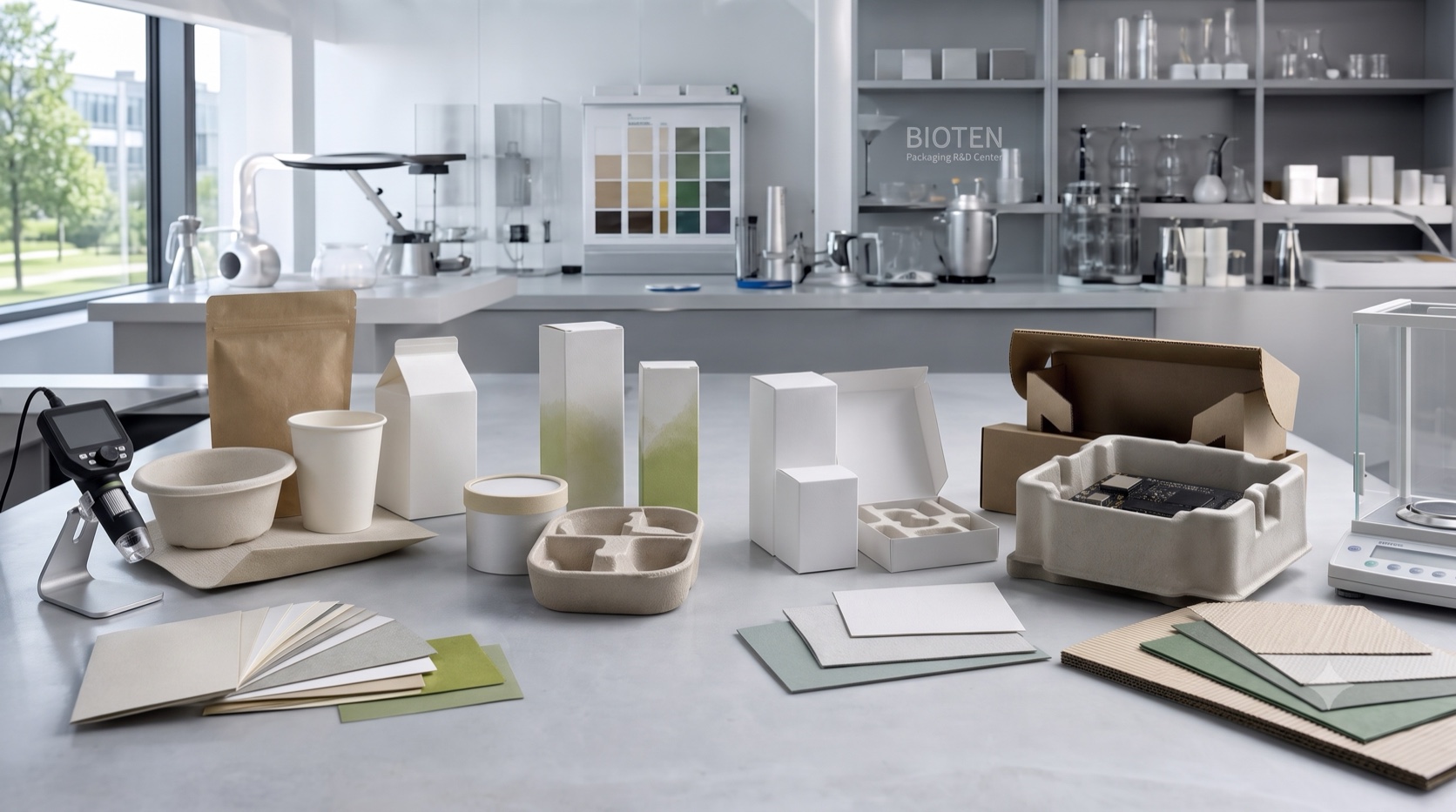
For BIOTEN Packaging, the value of studying companies like this lies in clarifying the interfaces among materials, chemicals, equipment and applications. An innovation creates long-term value only when it enters the right paper grade, process and customer-converting conditions—and is then validated by stable production, converting yield and sustained orders.
Only when recovered fiber passes reliably through customer converting and delivery does circular manufacturing advance from resource utilization to sustainable operations.
NEXT COMPANY · NO.11
Next: Guangxi Jingui Pulp & Paper Co., Ltd.
The ranking is used only to determine the sequence of this series. The next article will form its view after independent research rather than presupposing a conclusion based on Guangxi Jingui Pulp & Paper's business model.
BIOTEN PACKAGING · INDUSTRY INSIGHTS · RESEARCH NOTES
This article uses the China Paper Association to establish the series benchmark; the company's website to confirm the legal entity and product portfolio; government sources to verify water-efficiency and carbon-market status; the national standards platform to verify participation in standards; environmental and project-acceptance documents and patent filings to analyze process routes; and industry and supplier materials to supplement application context. Information was verified through August 2026.
The 2.824-million-tonne figure comes from the association's 2025 output table for key enterprises. The 2.6-million-tonne figure comes from the company website and project-acceptance or design-capacity documents. The RMB 7.5 billion production-value figure, 2.2 million tonnes of recovered-paper collection and cited technical outcomes are case-study or company disclosures and must not be presented as audited financial data. This article did not obtain independently audited financial statements for Liansheng Paper (Longhai) for 2025 or the first half of 2026 and therefore does not construct conclusions about revenue, profit, cash flow or gross margin.
The subject of this research is Liansheng Paper Industry (Longhai) Co., Ltd., unified social credit code 913506815575947589. Unrelated companies may have similar names. Fujian Liansheng Paper Industry Co., Ltd., Liansheng Pulp & Paper (Zhangzhou) Co., Ltd. and other similarly named or affiliated entities are not included in conclusions about the Longhai company's operations.
BIOTEN OBSERVER · DATA AND VERIFICATION SOURCES
01 | China Paper Association, Annual Report on China's Paper Industry 2025
02 | Company Profile on the Liansheng Paper website
03 | Overview of Production and Sales in Fujian's Paper Industry in the First Half of 2025
04 | Fujian Province list for advanced industrial water-use efficiency
05 | Fujian Province's 2026 list of key emitting entities covered by the carbon market
06 | National Standard GB/T 43393—2026, Recycled Pulp
07 | Fujian Provincial Department of Industry and Information Technology: Strengthening the Green Foundation for High-Quality Development
08 | Ministry of Industry and Information Technology, Fifth List of Green Factories
09 | CN108824062B: Producing coated white-lined chipboard by replacing ONP pulp with OCC pulp
10 | CN112012042B: Papermaking sizing agent and its preparation method
11 | CN113308944B: Recycled linerboard and its preparation method
12 | Report on the planned Longhai paper-tube project
13 | Report on the first trial production of the Longhai paper-tube project
14 | Valmet: A 15-year collaboration has made Valmet an all-round developer for Liansheng Paper
15 | Southeast Net: Liansheng Paper continues to reduce costs, improve efficiency and advance green circular development
16 | Zhangzhou circular-economy case study republished by industry and information authorities (case-study basis)