









Chain-Restaurant Packaging Review
1.11 Billion Cups Sold and 51 New Products in Six Months: What Must Packaging Suppliers Deliver for Guming’s 10,000-Store System?
From its 24-warehouse distribution network and five supplier capabilities, this analysis further unpacks the qualification gates for paper cups, paperboard, paper bags, barrier-coated paper, grease-resistant paper, and molded fiber in a tea-drink network.
Guming’s strength lies not only in billion-cup volume and a 10,000-plus-store footprint, but in a replicable system built around product launches, coffee equipment, centralized procurement, and 24 warehouses. Packaging suppliers can enter a system of this scale only by delivering materials, manufacturing, distribution, and obsolete-inventory management as one integrated capability.
This system turns cups, lids, sealing film, paper bags, cup carriers, and molded-fiber components from individual products into an engineering program that must work across warehouses, stores, and use scenarios.
The figures of 1.11 billion cups, 51 products, 14,351 stores, and approximately 13,500 coffee-machine-equipped stores follow the interim-reporting scope. The company did not disclose a paper/plastic breakdown, specific paper grades, basis weights, or per-SKU usage.
According to Guming’s 2026 interim results, the network comprised 14,351 stores as of June 30. In the first half, it sold approximately 1.11 billion cups of beverages and launched 51 new products, including 12 coffee beverages; around 13,500 stores had been equipped with coffee machines. Revenue reached RMB 7.47 billion, up 31.9% year on year; gross profit rose 39.6%, and adjusted profit increased 44.4%.
The network comprised 24 warehouses, approximately 277,000 square meters of warehousing space, and more than 82,000 cubic meters of cold-storage capacity, enabling on-demand delivery every two days to approximately 99% of stores. These cold-chain metrics cannot be treated as packaging-delivery performance, but they clearly illustrate the operating cadence that packaging must support.
Research source: Guming Holdings Limited | 2026 Interim Results Announcement
SECTION 01 · PROCUREMENT AND QUALITY
Packaging Is Already Part of the Central Quality and Procurement System
Guming’s 2025 Annual Report states that, to ensure consistent beverage quality, franchisees are required to purchase ingredients, packaging materials, and related equipment from the Group. Centralized procurement and supplier audits mean packaging is no longer a low-value consumable managed independently by each store.
Under the continuing connected-transaction framework between the company and Zhejiang Mingxing Packaging for 2025–2027, the covered items include insulated bags, plastic cups, paper cups, and cup lids. Pricing considers product type, quality, specifications, quantities, manufacturing costs, and market prices, with quotations from at least three independent suppliers used for comparison.
Publicly Disclosed Amounts Under the Named Framework
RMB 217.55 million Actual transaction amount in 2025.
RMB 392.09 million / RMB 491.68 million Annual caps for 2026 and 2027, respectively.
The caps are not actual expenditure, and this framework does not represent all of Guming’s packaging procurement. What it does reveal is the procurement language of a large chain: quality, specifications, volume, cost, and market-comparable pricing must all be satisfied at the same time.
Research source: Guming Holdings Limited | 2025 Annual Report
SECTION 02 · FIVE CAPABILITIES
Suppliers Must Put All Five Capabilities on One Operating Scorecard
Version control.Product codes must bind the beverage, size, temperature, cup body, lid, sealing film, artwork, campaign period, and store. Expired authorization or content changes must trigger a controlled production stop.
Consistency.Control dimensional tolerances, rim forming, stiffness, heat-sealing window, odor, abrasion resistance, and color variation, then verify leakage, drops, and stacking in the assembled pack.
Peak capacity.Document steady-state capacity, peak-shift capacity, artwork changeover time, yield, backup plants, and recovery time after disruption.
Multi-warehouse fulfillment.Use on-time delivery, mis-shipment rate, minimum replenishment lot, and batch traceability to prove that “nationwide availability” reaches the store.
Obsolete and residual inventory.At project launch, define forecast-error tolerance, the final replenishment date, reuse of common structures, residual-material disposal, and intellectual-property exit arrangements.
Initial forecasts, allocation by warehouse, actual sell-through, replenishment orders, stockouts, incorrect artwork, obsolete inventory, and complaint causes should be placed on one operating scorecard. Only then can the business determine whether a problem arose in forecasting, manufacturing, transportation, or in-store use.
SECTION 03 · PAPER-BASED MATERIALS MAP
Application Comes Before Paper Grade; the Final SKU Comes Before Any Material Conclusion
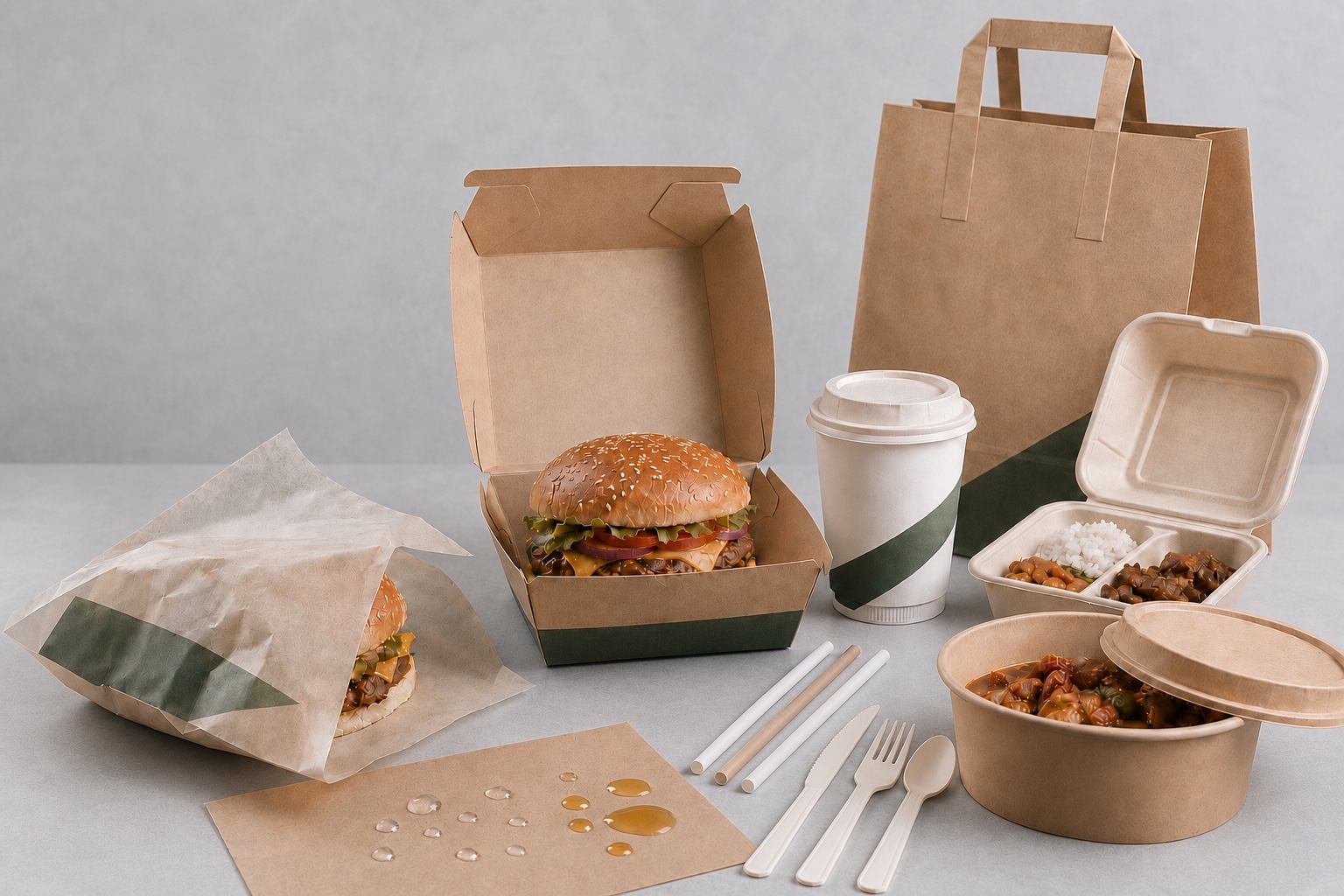
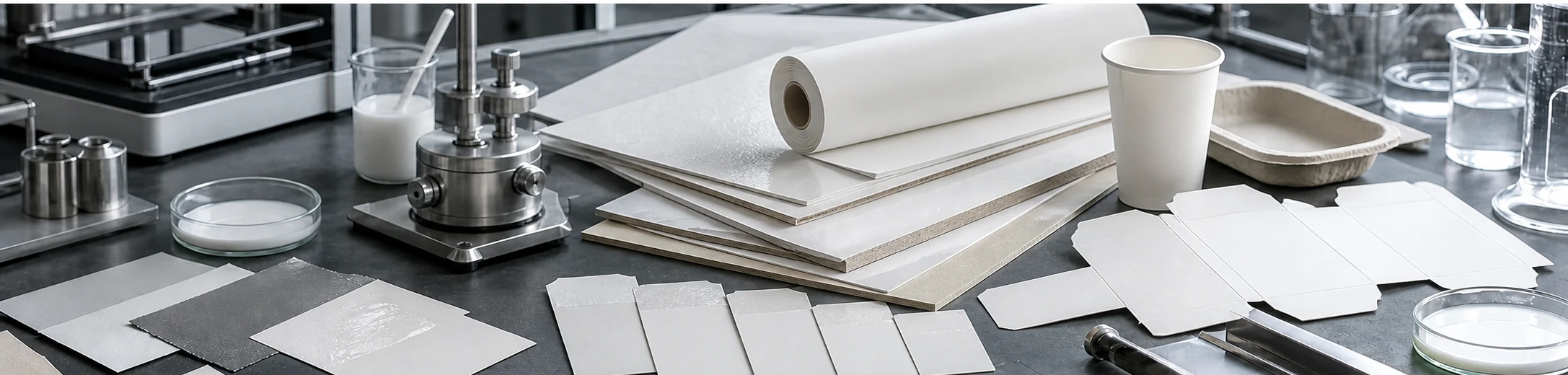
The following categories support packaging development and do not indicate what Guming actually uses. The correct sequence is to define the beverage or food application first, select the base paper or paperboard next, determine surface engineering and structure, and finally validate the finished SKU and its intended regional end-of-life pathway.
Cupstock / Paper Cup Board
Application |Paper cup bodies and other applicable beverage containers.Functions |Stiffness, rim forming, converting, barrier-layer adhesion, printability, and food-contact compliance.
Qualification gates |Validate the combined system—base paper, coating, curing, and cup format—for rim integrity, seams, leakage, and migration.
Guming disclosure | Only the procurement category “paper cups” is disclosed; paper grade, basis weight, and coating are not.
Food Packaging Board / Paperboard
Application |Cup sleeves, takeaway cartons, display packaging, or transport packaging.Functions |Stiffness, die-cutting and creasing, printability, compression strength, and stacking performance.
Qualification gates |Distinguish direct from indirect food contact; verify creases, heat and humidity resistance, distribution conditions, odor, and migration.
Guming disclosure | Specific paperboard grades, basis weights, and corresponding SKUs were not disclosed.
Paper-Bag Stock / Kraft Paper
Application |Single-cup, multi-cup, and other takeaway carrying applications.Functions |Tensile and tear strength, wet-load performance, printability, bottom sealing, and handling.
Qualification gates |Test bag bottoms, side seams, condensation, rain exposure, drops, and odor under actual loads.
Guming disclosure | Paper grades, basis weights, bag structures, and load-bearing data were not disclosed.
Barrier-Coated Paper / Extrusion-Coated Paper
Application |Cups, cartons, and paper-based components requiring water resistance, grease resistance, or heat sealing.Functions |Barrier performance, heat sealing, interlayer adhesion, odor, converting, and printability.
Qualification gates |Creases and seams, time-temperature exposure, food-contact compliance, repulpability, and the intended end-of-life pathway.
Guming disclosure | Specific coatings, plastic layers, waterborne barrier routes, and final bills of materials (BOMs) were not disclosed.
Grease-Resistant Paper / Packaging Paper
Application |Dry foods, lightly greasy foods, liners, or wraps.Functions |Grease resistance, fold endurance, printability, odor control, and appropriate wet strength.
Qualification gates |Test with actual fats under relevant temperatures, dwell times, and folding conditions; the Kit test does not cover free liquids.
Guming disclosure | Relevant paper grades and corresponding food applications were not disclosed.
Molded Fiber
Application |Cup carriers, trays, cushioning, and other combination packaging.Functions |Load-bearing capacity, wet strength, nesting, dimensional tolerance, and surface treatment.
Qualification gates |Loaded-drop, stacking, humidity and heat, in-store handling, additives, and end-of-life testing.
Guming disclosure | No molded-fiber cup carriers, trays, or cushioning applications were disclosed.
Research sources: National Health Commission standards catalogue; announcement issuing GB 4806.10—2025; TAPPI grease-resistance test methods; IMFA molded-fiber materials
SECTION 04 · MATERIAL OPPORTUNITIES
The Opportunity for Better Materials Must Show Up in Total System Cost
Under Guming’s 2025 ESG reporting scope, total finished-product packaging materials amounted to 5,700.18 tonnes, up approximately 20.8% year on year; packaging-material intensity per RMB 1 million of revenue fell from 0.54 tonnes to 0.44 tonnes, a decrease of approximately 18.5%. Total volume rose with growth while intensity declined, indicating that scale and material reduction can advance together. Because the company did not disclose the paper/plastic split, per-cup material weight cannot be calculated.
The company also disclosed efforts to expand the use of degradable and recyclable materials, optimize cup materials in selected regions in line with policy, use degradable materials for some takeaway bags, and reduce polypropylene use through improved material performance. Reusable turnover boxes and baskets are also used in the warehousing and distribution of fruit and other goods.
Paper cups, paperboard, paper bags, barrier-coated paper, grease-resistant paper, and molded fiber may each fit the right application. The opportunity does not come from a “paper-for-plastic” slogan, but from lower basis weight, more reliable seals, lower odor, fewer complaints, higher yield, and verifiable food-contact and end-of-life pathways.
SECTION 05 · THE STRONGEST COUNTERARGUMENT
This Material Map Is Not Guming’s Procurement List
Guming did not disclose specific paper grades, basis weights, coatings, molded-fiber applications, per-SKU usage, or campaign-packaging volumes. The map above can only help the value chain understand potential applications and qualification gates; it must not be presented as materials the company already uses or plans to purchase.
Guming has demonstrated product-development and supply-chain capabilities at 10,000-store scale. The packaging industry’s task is to connect material capabilities to this growth using real BOM, batch, yield, delivery, and complaint data.
FROM THEORY TO EVIDENCE · LET THE DATA REVEAL THE ESSENTIALS
Good materials can enter a 10,000-store system only after becoming packaging that is manufacturable, allocable across warehouses, traceable, and reviewable.
Guming’s 1.11 billion cups sold in six months, 51 new products, approximately 13,500 coffee-machine-equipped stores, and 24-warehouse network demonstrate how a chain brand converts product innovation into scaled operations. Continued system expansion will create demand for more high-quality packaging and materials while shifting the supplier threshold from unit-price quotations to integrated execution.
BIOTEN Packaging · Industry Insight · Research Note
This article was independently researched and compiled by BIOTEN Packaging using exchange filings by Guming Holdings Limited and public materials from the National Health Commission, ISO, TAPPI, IMFA, and Cepi. Information was verified through August 29, 2026. It is intended solely for research and learning by participants in the foodservice, papermaking, packaging, and materials value chains and does not constitute investment, procurement, product-compliance, or engineering advice. Facts concerning Guming are presented according to the company’s public disclosures; the paper grades and qualification gates are industry analysis and do not represent Guming’s current SKUs or procurement plans. If any content, data, or rights are disputed, requests for correction, clarification, or removal may be submitted, and we will review them within 24 hours of receipt.
BIOTEN Observer Data and Verification Sources
01 | Guming Holdings Limited | 2026 Interim Results Announcement
02 | Guming Holdings Limited | 2025 Annual Report
03 | National Health Commission of the People’s Republic of China | Catalogue of National Food Safety Standards
04 | National Health Commission of the People’s Republic of China | Announcement Issuing GB 4806.10—2025
05 | ISO | Vocabulary for Paper, Board, and Pulps
06 | TAPPI | Grease Resistance Testing for Paper and Paperboard
07 | TAPPI | Cobb Water Absorption Test
08 | IMFA | Molded Fiber Types and Applications
09 | Cepi | Paper and Board Recyclability Laboratory Test Method, Version 3