













Chain Restaurant Packaging Review
A new test for takeaway meal boxes: Haidilao delivery revenuejumps 121.2%. What must single-serving meals validate?
Haidilao Group's delivery business generated RMB 2.0514 billion in revenue in the first half of 2026, up 121.2% year on year and accounting for 9.2% of Group revenue. The figure was not broken down by geography, but suppliers can begin by preparing three sets of data.
The growth in Haidilao Group's delivery business is real; changes to its packaging have not yet been disclosed. For suppliers, the practical value lies in preparing three sets of verifiable data in advance.
The Group's single-serving offerings and delivery stations are extending growth beyond dine-in hot pot into everyday meals. Whether meal boxes need to change depends on the packaging configuration per order, delivery outcomes and total cost.
RMB 2.0514 billion and 121.2% are consolidated Group delivery-business figures. The Group operates mainly in Chinese mainland and the Hong Kong, Macau and Taiwan regions, but the report did not disclose a geographic breakdown of delivery revenue.
RMB 2.0514billion in Group delivery-business revenue · 121.2%year-on-year growth
9.2%of Group revenue, up from 4.5% in the same period of 2025. These are revenue metrics, not order or meal-box volumes.
RMB 2.0514 billion: Start with the reporting scope
On 25 August 2026, Haidilao announced its interim results. Group revenue for the first half reached RMB 22.3369 billion, up 7.9% year on year. Consolidated delivery-business revenue was RMB 2.0514 billion, up 121.2%, and accounted for 9.2% of Group revenue, compared with 4.5% a year earlier. The 121.2% increase applies only to delivery-business revenue, not total Group revenue.
The report states that the Group operates mainly in Chinese mainland and the Hong Kong, Macau and Taiwan regions. At period end, its self-operated Haidilao restaurants comprised 1,267 in Chinese mainland and 23 in the Hong Kong, Macau and Taiwan regions, in addition to 99 franchised restaurants. Delivery revenue was not broken down by geography, so the public metric should be described only as "Group delivery-business revenue," without adding a global or single-region qualifier.
The Company attributed the growth to two main factors: higher sales of single-serving products, represented by rice-bowl takeaway products, which expanded delivery from an extension of hot pot into an everyday-meal category; and further densification of its self-built delivery-station network, improving coverage and fulfilment efficiency while easing pressure on restaurant kitchen capacity.
In 2025, Group delivery-business revenue reached RMB 2.6576 billion, up 111.9% year on year, and the Company had established more than 1,200 delivery networks nationwide. The 2026 interim report did not update the network count, so 1,200 should be treated only as a historical reference point.
These figures show that the business structure has changed. Delivery is no longer simply dine-in hot pot sent to the home. Single-serving meals are becoming a distinct category, while delivery stations are becoming more clearly defined fulfilment nodes rather than appendages to restaurants.
Source documents:Haidilao 2026 Interim Results; Haidilao 2025 Annual Report
Why single-serving meals put the meal box front and centre
Traditional hot pot delivery is often designed for sharing, with multiple soup bases, ingredients, dipping sauces and pieces of tableware. Single-serving meals are closer to everyday quick-service food: portions of staples, soups and condiments are smaller, order frequency may be higher, and restaurants have less time for portioning, lid application and order checks.
When more components are portioned separately, there are more interfaces among the main meal box, soup container and sauce cup, increasing the risks of missing items and leakage. When the pack is simplified, the number of components, packing steps and inventory pressure may all decline. Either direction is possible; order-level data must decide.
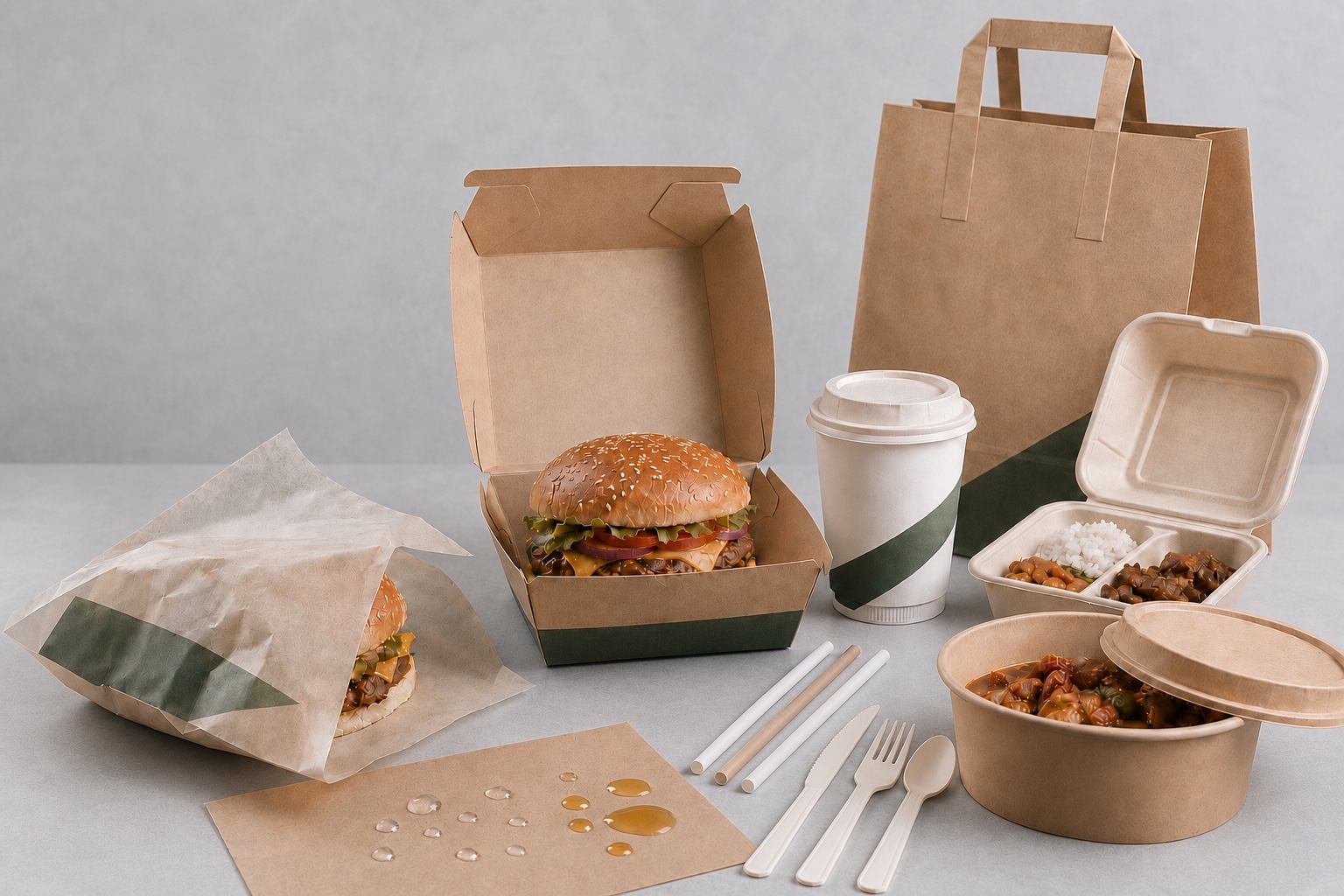
For suppliers, the meal-box material is only one part of the system. The full packaging configuration for an order also includes lids or lidding film, sauce cups, tamper-evident seals and outer bags. Failure at any interface can cause the entire order to be written off or redelivered.
Food-contact compliance is the baseline, but packaging must also remain intact under actual grease, moisture, temperature and delivery-time conditions. The online catering rules require food containers and packaging materials that comply with food-safety standards and tamper-evident closures that cannot be resealed once opened. Public platform rules also call for spill and deformation prevention, separation of soups from solid foods, and appropriate stacking.
These requirements do not prescribe paper, plastic or any particular coating. Suitability must still be assessed against the finished container, actual food and delivery conditions.
Source documents:Provisions on the Supervision and Administration of Online Catering Service Operators' Fulfilment of Primary Food Safety Responsibilities; Meituan Delivery Platform Dispatch Standards
Next, focus on only three sets of data
Packaging components and configuration per order.Record how many containers each order uses, which lids can be shared, and whether soups and condiments must be packed separately. This metric reveals whether single-serving meals increase packaging use or drive configuration simplification.
Leakage, damage and redelivery.At the order level, record leakage, deformation, broken tamper-evident seals, incorrect packing and missing items, together with the resulting write-offs, compensation and redelivery. Suppliers and procurement teams need to focus on post-delivery outcomes.
Total packaging cost per order.In addition to the actual consumption of meal boxes, lids, cups, seals and bags, include packing time, rework, obsolete inventory, compensation for leakage or damage, and redelivery. A cheaper individual meal box does not necessarily make the total order cheaper.
If these three data sets remain unchanged, growth is likely driven mainly by the menu, delivery channels and delivery-station density, with existing packaging simply scaling with order volume. Only when the data change materially does the supply chain have a basis for identifying opportunities in new capacities, configurations or structures.
Environmental claims such as paper-based, recyclable or biodegradable must also correspond to the finished product and actual municipal end-of-life systems. A material label cannot substitute for food-contact compliance, delivery performance or verified recycling outcomes.
Packaging can be prepared in advance; conclusions must wait for the data
Haidilao has expanded delivery from an extension of its hot pot business into everyday meals, with single-serving products and delivery stations emerging as clear growth drivers. The Company has not disclosed whether packaging has changed in parallel.
Foodservice-packaging suppliers and procurement teams do not need to extrapolate orders from the revenue growth rate. They need to establish reliable data on package configuration per order, delivery outcomes and total cost. When the brand begins comparing solutions, these data will be closer to the procurement decision than a material specification sheet alone.
BIOTEN Packaging · Industry Insight · Research Notes
This article is based on Haidilao's interim results, annual report and ESG report filed with the Hong Kong Stock Exchange, together with public rules issued by the market regulator and delivery platform. It was independently researched and compiled by BIOTEN Packaging and verified through 30 August 2026. It is intended solely for research and learning across the foodservice-packaging value chain and does not constitute legal, certification, procurement or investment advice. No investment, supply or project relationship between BIOTEN Packaging and Haidilao has been disclosed. Requests to amend, clarify or remove disputed content, data or rights-related material will be reviewed within 24 hours of receipt.
BIOTEN Observer: Data and Verification Sources
01 | Haidilao | 2026 Interim Results Announcement
02 | Haidilao | 2025 Annual Report
03 | Haidilao | 2025 Environmental, Social and Governance Report
04 | State Administration for Market Regulation | Provisions on the Supervision and Administration of Online Catering Service Operators' Fulfilment of Primary Food Safety Responsibilities
05 | Meituan | Delivery Platform Dispatch Standards
Original source unavailable