












Inside a pack of biscuits, the least conspicuous component—the inner tray—is becoming a business opportunity that merits serious attention from the paper-packaging industry.
On 4 September, Mondelēz announced that it had completed the conversion of rigid PET inner trays to paper trays across its flagship biscuit portfolio in Europe. The change covers more than 115 products, eight brands and over 25 European markets, including products sold under LU, Milka and Cadbury.
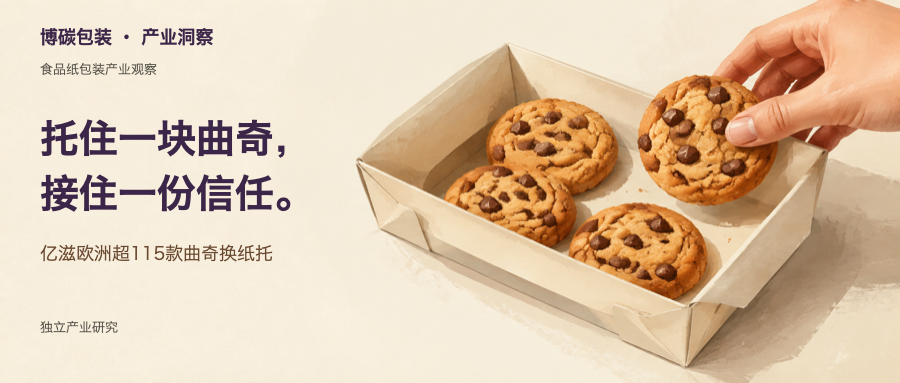
Based on projected output for fiscal 2026, the company expects the change to eliminate approximately 2,200 metric tonnes of virgin plastic each year.
For paper-packaging companies, the more important question is this: How can a paper tray satisfy product, factory and procurement requirements at the same time?
The industrial value of a paper tray must be proven through product protection, line compatibility and reliable delivery. The price of the base paper, the performance of the coating and the precision of die-cutting must ultimately deliver the same result: qualified biscuit packs moving reliably out of the factory.
Research sources: Mondelēz | Announcement on the conversion to paper trays for European biscuit products.
Start by defining the functions within a biscuit pack
Consumers expect two simple things from biscuits: they should be intact when the pack is opened and crisp when eaten.
Those expectations translate into different packaging tasks. In a common inner-tray-and-outer-wrapper format, the tray organizes, supports and mechanically protects the biscuits; paper surfaces in direct food contact need protection suited to the fat exposure and contact duration; and the outer wrapper and seals work together to control moisture ingress and preserve crispness throughout shelf life.
Before developing a paper tray, these tasks must be separated clearly. Only then can a team determine where paper substitution makes sense and which functions must be added.
The LU Véritable Petit Beurre multipack launched by Mondelēz and Saica in 2024 is a clear example: the outer layer uses paper packaging, while the biscuits remain in smaller packs to preserve freshness and crispness. The paper outer wrapper uses cold sealing and required corresponding adjustments to the packaging equipment.
This earlier project offers a useful lesson: A packaging upgrade may begin with one component, but development must consider the complete pack. A practical route is to provide the tray with the required mechanical protection and food-contact surface, then integrate it back into the existing freshness-preservation system.
For papermakers and coating companies, this also changes the question they should ask: Does the customer need support, grease resistance, sealing or freshness preservation? Each layer must perform its own role so that materials are used only where they are truly needed.
Research sources: Mondelēz | LU multipack paper-wrapper collaboration; CSIRO | Food shelf life and packaging.
Protect the biscuits—
and keep pace with the production line
The paper tray's first task is protection. The way its base supports the product, its sides constrain movement and its interior arranges the biscuits all affect stability during packing and transport. Because biscuits are vulnerable to impact damage, the tray should be designed together with the product geometry and loading method.
Its second task is hidden inside the factory: the tray must enter the packaging line smoothly, cycle after cycle.
IMA's published complete biscuit-tray packaging line links tray denesting, robotic biscuit loading, flow wrapping and cartoning in one continuous process. In such a factory, a tray is both a packaging component and an object that machinery must pick, position and convey.
Dimensional and geometric consistency therefore has direct commercial value. A sample that can be packed by hand and a tray that runs smoothly at scale represent two different levels of delivery capability. Deformation, poor denesting or positioning errors can propagate downstream through biscuit loading and wrapping.
A technical guide from paperboard producer Holmen highlights an easily overlooked detail: moisture absorption can warp paperboard, while excessive drying can make it brittle and impair feeding and creasing. Maintaining flatness and moisture condition after storage and transport is part of ensuring stable high-volume conversion.
The supply format must also be selected early. Suppliers can deliver preformed trays, or use a folding-tray route in which flat blanks are erected immediately before biscuit loading. In its 2022 IBIE materials, Syntegon described the latter approach: the blank is folded into a tray using locking tabs before entering a flow wrapper for the outer pack.
The two routes entail different shipping formats, on-site equipment and operating arrangements. The earlier a converter discusses these conditions with the customer, the easier it is to turn a design into a product that can run sustainably.
Supplier involvement should begin upstream, during the customer's packaging and line design; acceptance at delivery should then depend on whether the paper tray runs reliably on the production line.
Research sources: IMA | Complete biscuit-tray packaging line; Syntegon | Forming and packaging solution for bakery paper trays; Holmen | Technical guidance on paperboard storage, transport and conversion.
One paper tray—
why does it require four types of company?
An independent industry development project makes the division of responsibilities clear.
In the Folded Fibre Tray project for biscuit packaging disclosed by Walki in 2023, Billerud supplied the paperboard, Walki contributed the grease-barrier solution, Spiegel Verpackungen handled printing and die-cutting, and Syntegon developed the tray concept and the equipment used to erect it before biscuit loading.
The paperboard structure provides mechanical protection; the barrier treatment on the contact surface manages grease; printing and die-cutting create a processable packaging blank; and the equipment erects that blank into a three-dimensional tray. Only when these four capabilities are coordinated around the same food product does a deliverable solution emerge.
Research sources: Walki | Collaborative development of a fibre-based biscuit tray.
For Chinese converters, the lesson is to treat the formed paper tray as the shared development target: Does the paperboard retain the required support? Does the contact surface still provide the necessary protection after folding? Can the die-cut blank be erected and loaded smoothly?
This gives materials a more concrete basis for evaluation. The papermaker assesses how the paperboard works with the structure; the coater connects grease-resistance targets with coating, drying and post-fold performance; and the converter works with the equipment supplier to define dimensions, forming methods and volume-production standards. The performance of every link is ultimately tested in the same tray.
The converter can serve as the coordinator, turning the material and equipment capabilities of multiple suppliers into a packaging product the customer can use. The earlier all parties collaborate around the same food product, the more likely they are to avoid repeated rounds of sampling and redesign later.
Major brands also calculate the cost of
“qualified delivery”
Why is this collaboration so important? Because procurement ultimately depends on continuous production and reliable shipment.
Mondelēz's published requirements for packaging suppliers call for a packaging-supplier questionnaire whenever a material is newly developed or modified. Intended food use, material composition, target markets and supporting documents are all reviewed, as are potential odour and taste transfer.
For food-packaging suppliers, these requirements translate into direct product criteria: the paper tray must be suitable for the specified food, the packaging must not alter its flavour, and documentation for samples must correspond to the materials supplied at production scale.
Research sources: Mondelēz | Requirements for packaging suppliers.
When calculating cost, it is also worth moving the comparison unit from “one tonne of paper” or “one tray” to the “total packaging-related cost per 1,000 qualified finished packs.”
For the same food product, pack count and delivery requirements, first compare how many qualified packs can be produced reliably in the same operating time. Then allocate the costs of material conversion, line operation, breakage and scrap, associated warehousing and logistics, and any necessary equipment modifications. Lower output caused by downtime also changes how those costs are allocated.
The unit price of a paper tray tells procurement what it costs to buy; cost per qualified pack shows whether it is economical to use.
If reducing paper use increases breakage or frequent downtime, the structure must be reconsidered. If the structure and feeding performance work better together, the supplier creates value beyond the quoted price per tray.
For converters, the most persuasive sales evidence is a set of results that reflects actual operating conditions: product integrity after packing, smooth machine running, reliable delivery and a clearly calculated total cost.
Start with one product and prove the capability
For the next development project, start with a biscuit that already uses an inner tray and retain the current pack as the benchmark. Put the food sample, packaging structure and real line conditions into the same discussion. First preserve the validated outer-wrapper and sealing conditions; then use post-transport integrity, paper-surface condition and continuous line trials to decide what should change first, before comparing costs.
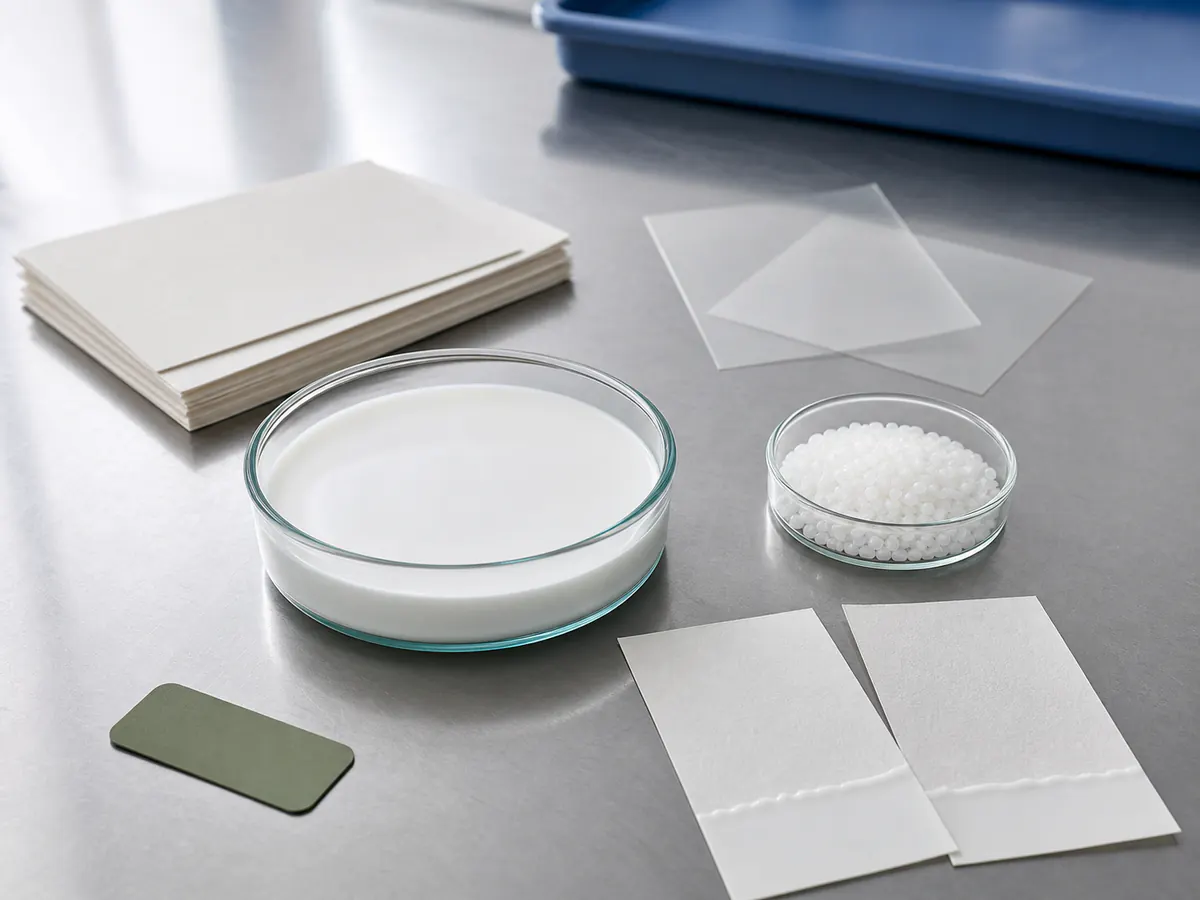
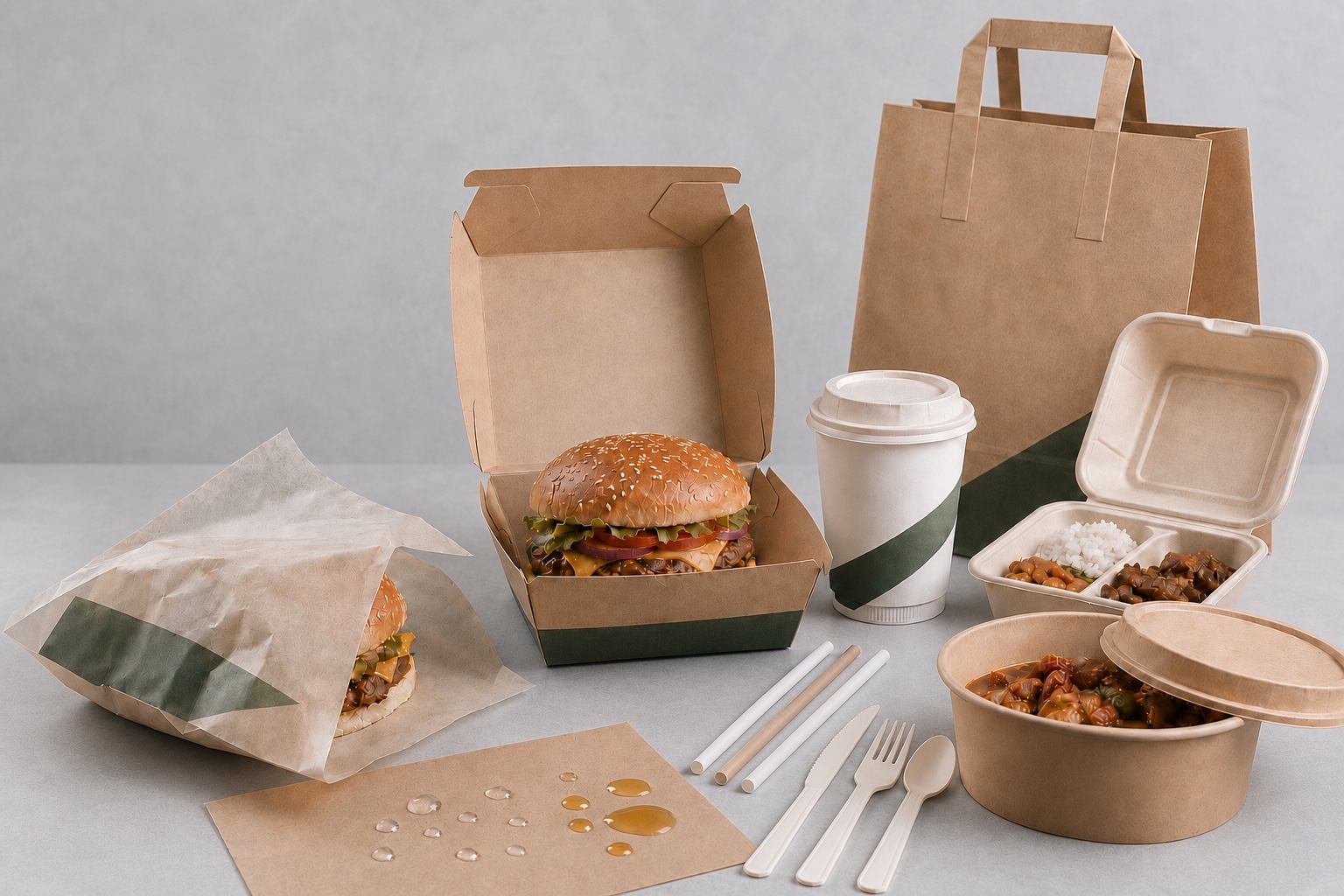
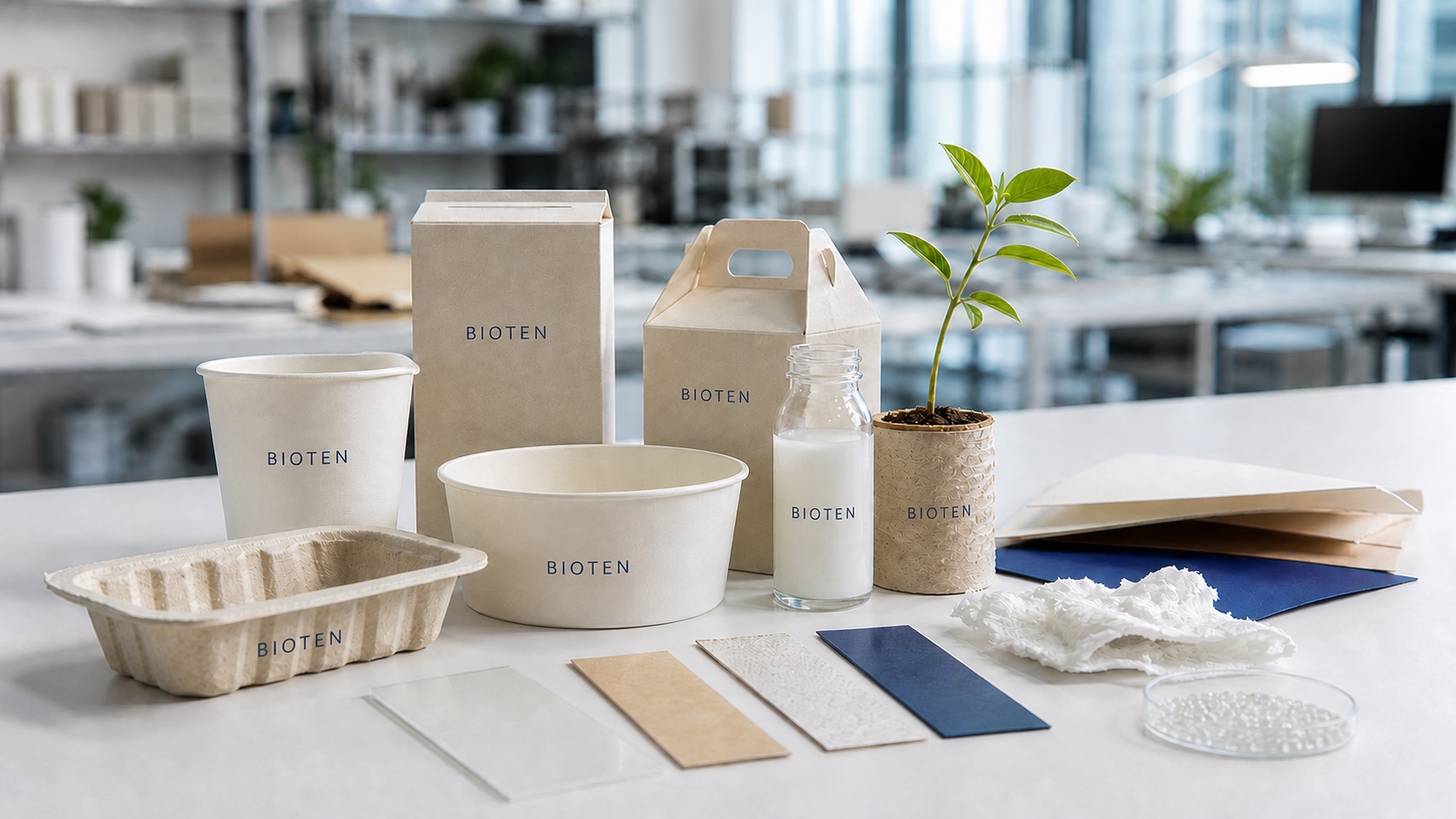
Where a food-contact surface requires grease resistance and paper protection, a water-based barrier has a clearly defined role. BIOTEN works on application development for PHA water-based barriers in paper and paperboard packaging, designing the required protection together with the base paper, coating, folding and forming conditions.
Papermakers, coaters, converters and food brands with a specific product requirement can bring a food sample, the current packaging and key production conditions to BIOTEN to discuss the paper-based structure and functional-layer selection, and to define the direction for the first round of prototyping.
Research sources: BIOTEN | Paper-based barrier engineering and application collaboration.
Mondelēz's conversion across multiple brands makes the industrial value of a small inner tray easier to see. For paper-packaging companies, the capability worth building is the ability to make paper, functional layers, forming equipment and food-protection requirements work together—and to deliver that integration reliably to customers.
Research note
This article was independently researched and compiled by BIOTEN Packaging from public corporate announcements, packaging-supplier requirements, and materials- and equipment-application information. Information was verified through 5 September 2026. It is provided for industry research and learning and does not constitute a procurement recommendation or performance guarantee. For corrections, clarifications or removal requests, please contact us through this official account; we will review the request within 24 hours of receipt.
BIOTEN Observer data and verification sources
Mondelēz | Announcement on the conversion to paper trays for European biscuit products
Mondelēz | LU multipack paper-wrapper collaboration
Walki | Collaborative development of a fibre-based biscuit tray
IMA | Complete biscuit-tray packaging line
Syntegon | Forming and packaging solution for bakery paper trays
Holmen | Technical guidance on paperboard storage, transport and conversion
CSIRO | Food shelf life and packaging
Mondelēz | Requirements for packaging suppliers
BIOTEN | Paper-based barrier engineering and application collaboration