








When international food brands choose a wrapping paper, they increasingly ask several questions at once: Will it protect the food? What materials does it contain? How should it be managed after use? And will the next round of regulations require another material change?
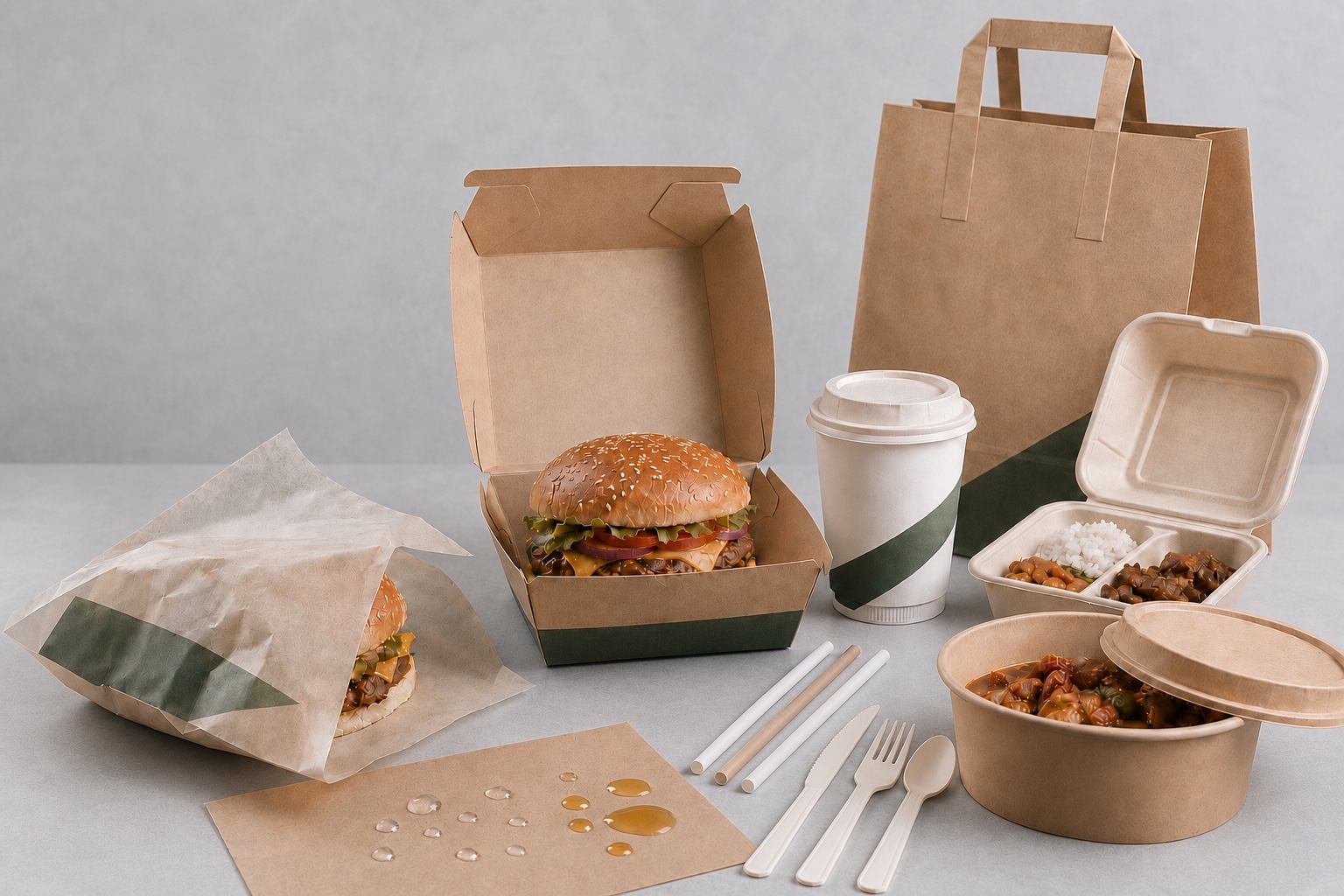
These questions are the starting point for long-term sourcing. Burger wraps are one visible entry point into a much wider range of applications, including sandwiches, hot dogs, filled wraps, meat, cheese and food interleaving papers.
Changing rules reshape
the reasons for choosing a material
The EU Packaging and Packaging Waste Regulation (PPWR) began applying in phases on 12 August 2026. Its PFAS concentration limits for food-contact packaging are already applicable, while requirements such as recyclability will be phased in from 2030.
Major brands are also changing their sourcing criteria. McDonald's incorporates material sourcing, management of fluorinated compounds, functionality and safety, and post-use handling into its packaging policies and supplier management. Brands must consider whether today's products can support the direction of change already set out.
Long-term sourcing depends not only on whether a paper works today, but also on whether its technology can continue to meet the needs of the target market.
This creates room to develop functional coatings at low coat weights, reduce reliance on polyethylene (PE) extrusion coatings and explore different end-of-life pathways. Recycling, home compostability and food-contact safety each require their own supporting evidence for the specific market and finished product.
Beyond burger wraps:
understanding the industry's scale
Nordic Paper's 2024 Annual and Sustainability Report, published in 2025, estimates global demand for all types of greaseproof paper at just under one million tonnes. North America and Europe are the largest markets.
This estimate includes natural greaseproof paper and other grease-resistant papers for wrapping, bags, baking and other uses. It provides context for the scale of the industry; it does not represent sales of burger wraps alone.
Look beyond a single type of burger: fast food requires convenient folding and wrapping, while premium freshly made burgers call for suitable sheet dimensions and handling. Sandwiches, hot dogs and filled wraps must cope with grease, sauces and water vapor. Chilled meat, fish and cheese introduce different requirements for wet performance and storage.
The opportunity is to develop distinct products around different foods, rather than give the same paper several different names.
Basis weight and functionality
follow the task the paper must perform
A paper's weight in grams usually refers to its mass per square meter, known as basis weight or grammage, rather than its thickness.
For example, delfort lists a basis-weight range of 25.5–45 g/m² for its fast-food packaging papers, and 43 g/m² and 47.3 g/m² grades for fish, meat and cheese wrapping. These examples show that food papers do not all need to start at 80 or 100 g/m², and that a premium product need not be thicker.
Hot-food wrapping papers must balance grease resistance, water resistance, fold resistance and water-vapor transmission. Limiting penetration by liquid oil and water while managing steam released by the food requires several functions to work together. Higher water-vapor transmission is not always better. For large burgers, sheet dimensions, folding and handling, and support for the food must also be considered together.
Chilled-food wrapping papers must be developed with food juices, low temperatures, wet strength and storage time in mind. The steam release needed for a hot burger and the moisture management required for chilled meat should not be assessed using a single common metric.
Food interleaving papers serve applications involving slices or layers of ham, cheese, meat patties and similar foods. Beyond grease resistance, they require evaluation of non-stick performance, clean release and food-contact safety. Grease resistance alone is not a measure of easy release.
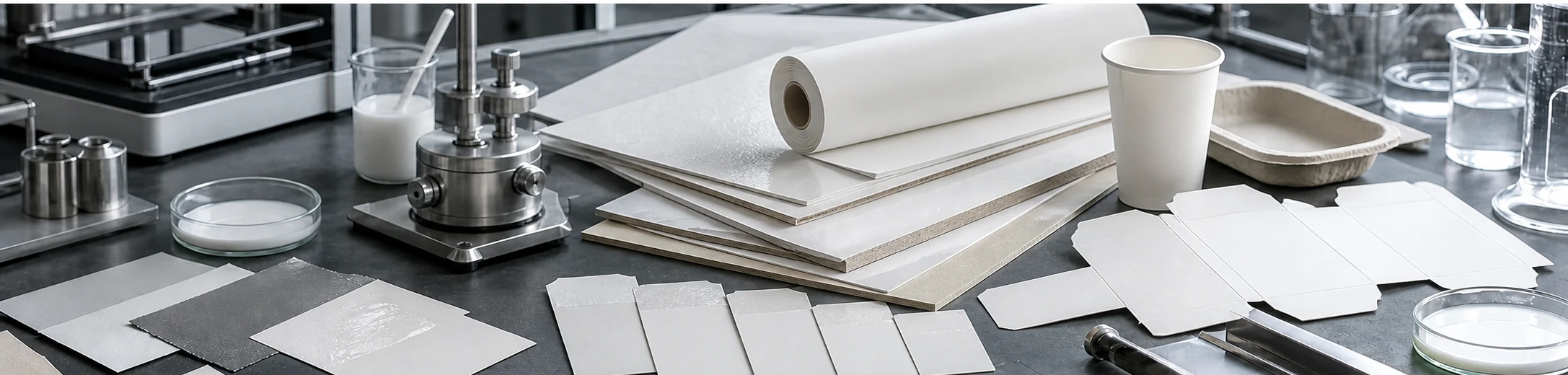
Different foods require different combinations of paper substrate, coating and converting processes. Development starts with the specific food.
BIOTEN's role:
connecting regulatory requirements with applications
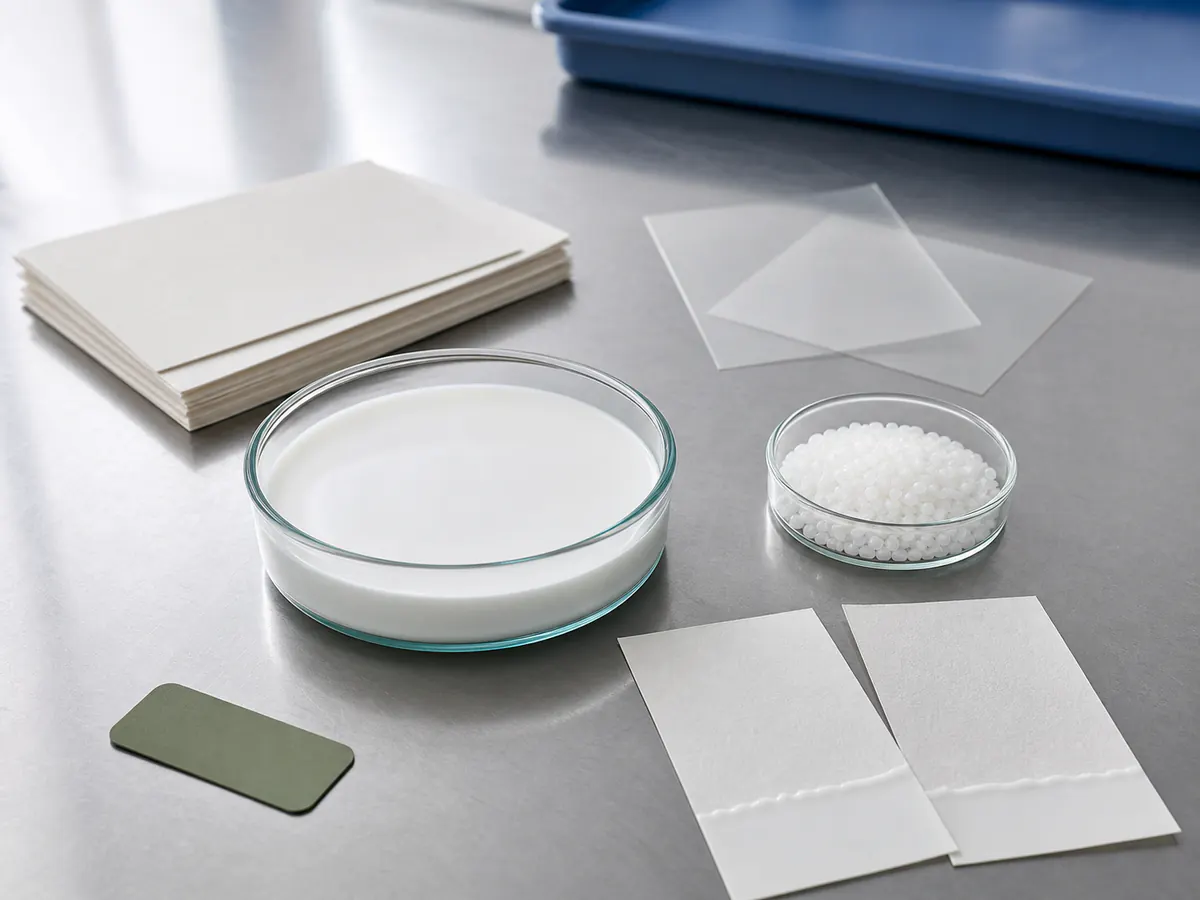
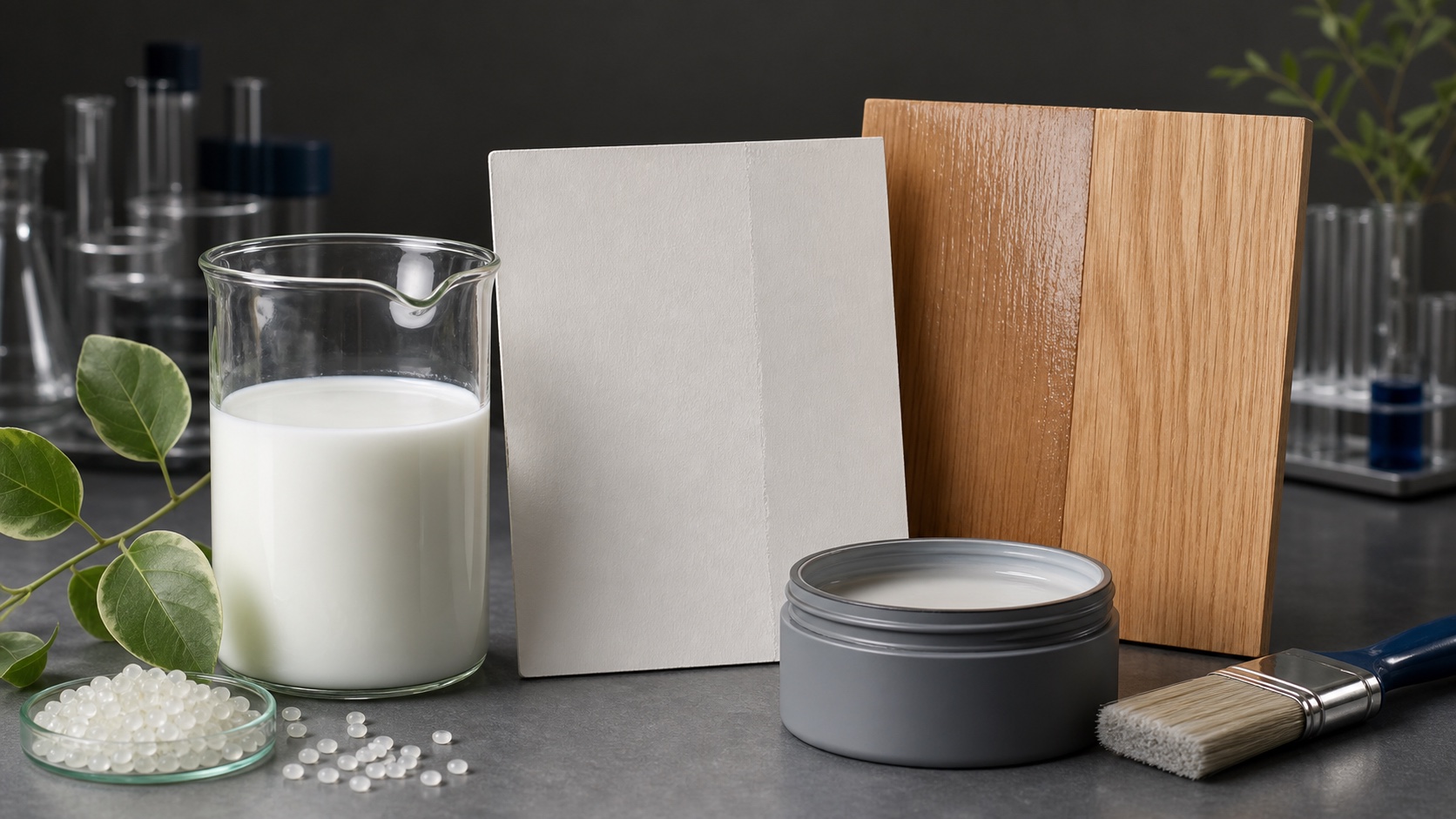
BIOTEN's PHA waterborne barrier approach uses functional coatings to replace conventional PE extrusion-coated structures in suitable wrapping applications. Development focuses on formulations with no intentionally added PFAS, compatibility with paper-fiber recovery and compostability as an optional end-of-life pathway.
Success depends on coordinating the paper substrate, coating distribution, film formation, drying, printing and converting. What matters is performance after wrapping, behavior in actual food contact and cost per conforming product, rather than maximizing a single test result.
BIOTEN states that a specific finished burger-wrap grade it plans to promote has obtained BPI home compostability certification and is supported by corresponding test documentation. Any collaboration will be tied to the relevant product grade, specifications and scope of a valid certificate.
BPI's home compostability certification is based on the French standard NF T 51-800 and requires commercial compostability certification as a prerequisite. It provides verifiable third-party evidence for customers with those requirements. Repulpability and other target-market requirements must still be addressed separately for the complete paper product construction.
Brands choose products for the long term when they perform the intended function, have clearly documented requirements and can continue to evolve with the market.
Master an application,
then build a stronger market presence
China's capabilities in papermaking, coating, printing and converting can be combined with materials innovation and application experience in target markets.
Lightweight-paper producers can specialize in wrapping and interleaving. Coating companies can develop combinations of functions and improve batch consistency. Converting and distribution partners can connect product specifications, brand customization and local service.
BIOTEN welcomes partners with relevant capabilities, respect for innovation and a commitment to sustained investment to jointly develop food wrapping papers. Exclusive cooperation arrangements may be discussed for specific countries or agreed territories, with products, channels, duration and responsibilities for fulfilling the agreement clearly defined.
Burger wraps are an entry point; improving the functionality of food wrapping papers is the larger opportunity. A thorough understanding of regulations, materials and applications can turn a small sheet of paper into a lasting business that global brands are willing to source from repeatedly.
Research note
Prepared by BIOTEN Packaging using regulatory materials, publicly available company information and application research, with verification current to 23 September 2026. The market scale is the industry estimate in the cited report; basis weights are examples of third-party products. Specific products are subject to their corresponding specifications and valid documentation. This article is for industry research and learning and does not constitute a procurement or performance guarantee. For corrections, clarification or removal requests, please contact the originating WeChat official account; requests will be reviewed and addressed within 24 hours.
BIOTEN Observer: data and verification sources
European Commission | Application of packaging rules and PFAS restrictions
Nordic Paper | 2024 Annual and Sustainability Report (published in 2025)
Delfort | Fast-food packaging papers and wrapping papers for fish, meat and cheese
BPI | Home compostability certification scheme
McDonald's | Packaging and supplier requirements
BIOTEN Packaging | Product and partnership information (company confirmation)